The Orchestra of Spring
“The orderly manner in which the universe is run shows that it is guided by some form of intelligence that permeates all created things.”
Paramahansa Yogananda
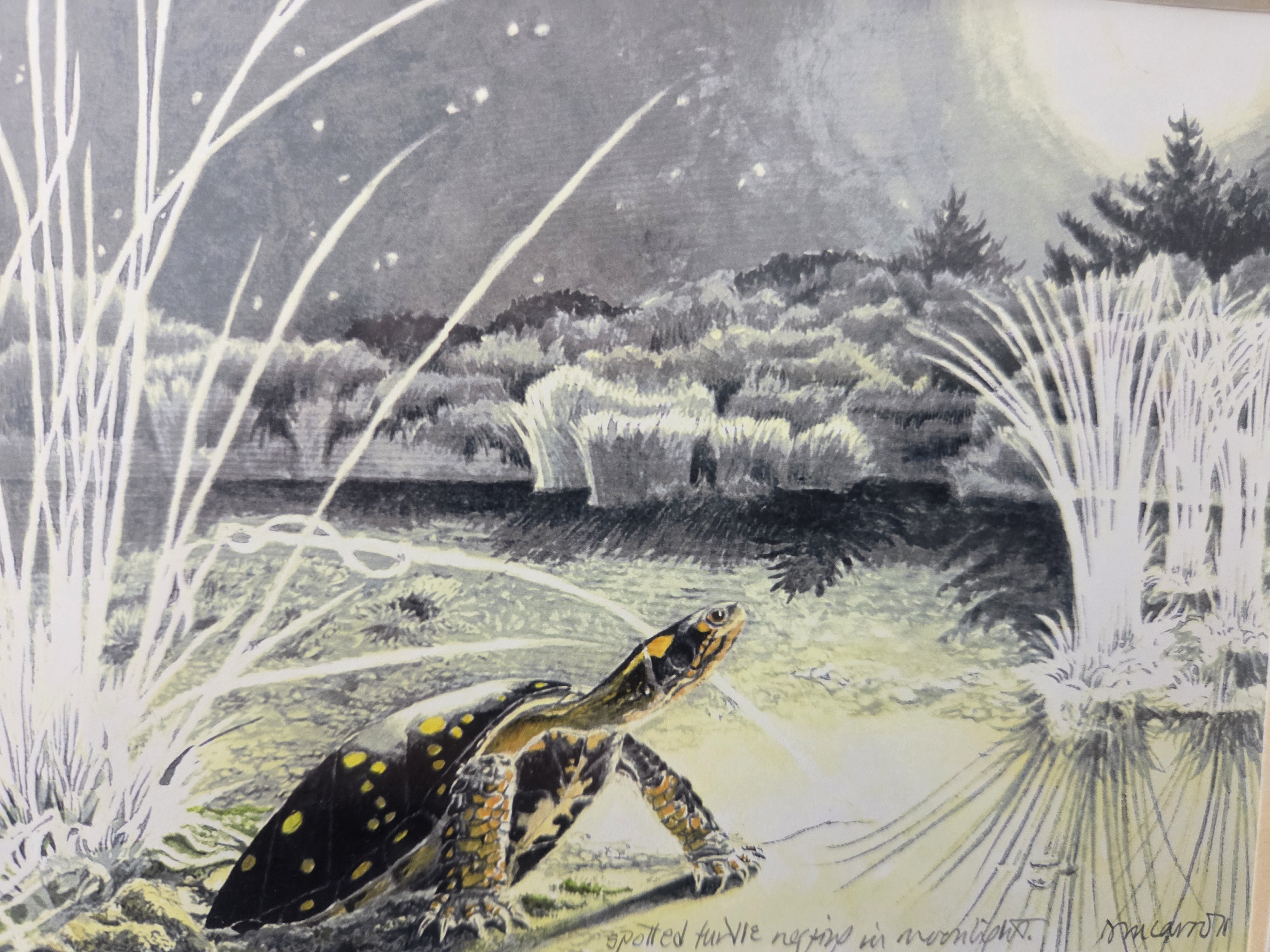
When nature awakens in late March or early April, sap starts flowing in the trees and ice changes to water marking the end of hibernation. This is the grand opening of the wetlands and the pilgrimage to the vernal pools as David M. Carroll writes in his “Swampwalker’s Journal: a Wetlands Year.” A vernal pool is a body of water which fills up in autumn and winter and is swollen in the spring but often dries up completely by the end of the summer. Carroll describes vernal pools so beautifully: “It is at snowmelt and ice-out, the last sleets, first rains, and the earliest warming breaths of spring that they beckon wood frogs, salamanders, and spring peepers from surrounding upland woods, where they have passed the winter in rotted-out trees roots [a reason not to ‘clean up’ the woods], under layers of bark and litter, in small mammal tunnels and other hibernacula in the earth.” The melting snow heralds the march of the amphibians. “Vernal pool habitats hold a galaxy of small things that come to life the instant ice and snow turn back into water.”
Carroll walks the swamps, as the title of his book suggests, in search of mating salamanders and spotted turtles, bogs, fens and all wetland flora and fauna. He tells us that there must be a certain collusion of events– several warm days in a row followed by a darkest of nights with temperatures ideally in the mid-50s with rain preferably two nights in a row. And then the magical migration begins. The salamanders begin their “annual pilgrimage” to the vernal pond to mate.
My husband and I were lucky enough to have a vernal pond on the property next door to us and when Spring sprang out of the depths of winter, the sound at night from that pond made us feel as if we are camping out next to a vast wetland. The music of the spring peepers played through the night throughout the house, often starting overeagerly in the late afternoon. This manic symphony thrilled us every year. It was the first sign of Spring for us. The quality of joyousness and the affirmation of life gladdened our souls. Going to sleep with that sound made us remember what we so often forget, to give thanks to our Creator for his magnificent creatures.
This story, however, does not have a happy ending. In his epilogue to the “Swampwalker’s Journal,” David Carroll explains why it took him more than 7 years to complete this book. He writes that he became involved in saving some of the wetlands in his book and says sadly nearly all of his interventions have or will become “losing battles.” He describes the plight of the wetlands, bogs and fens as a “landscape of loss.” And he scorns our human selfishness as he writes how it “reveals explicitly the extent to which we think of ourselves as owning all living things, along with the very earth, air, and water in which they live, as if we possessed some divinely mandated dominion over all creation.” He warns: “As we will learn in time none of this belongs to us.”
A Foretaste of Fall
(revised version)
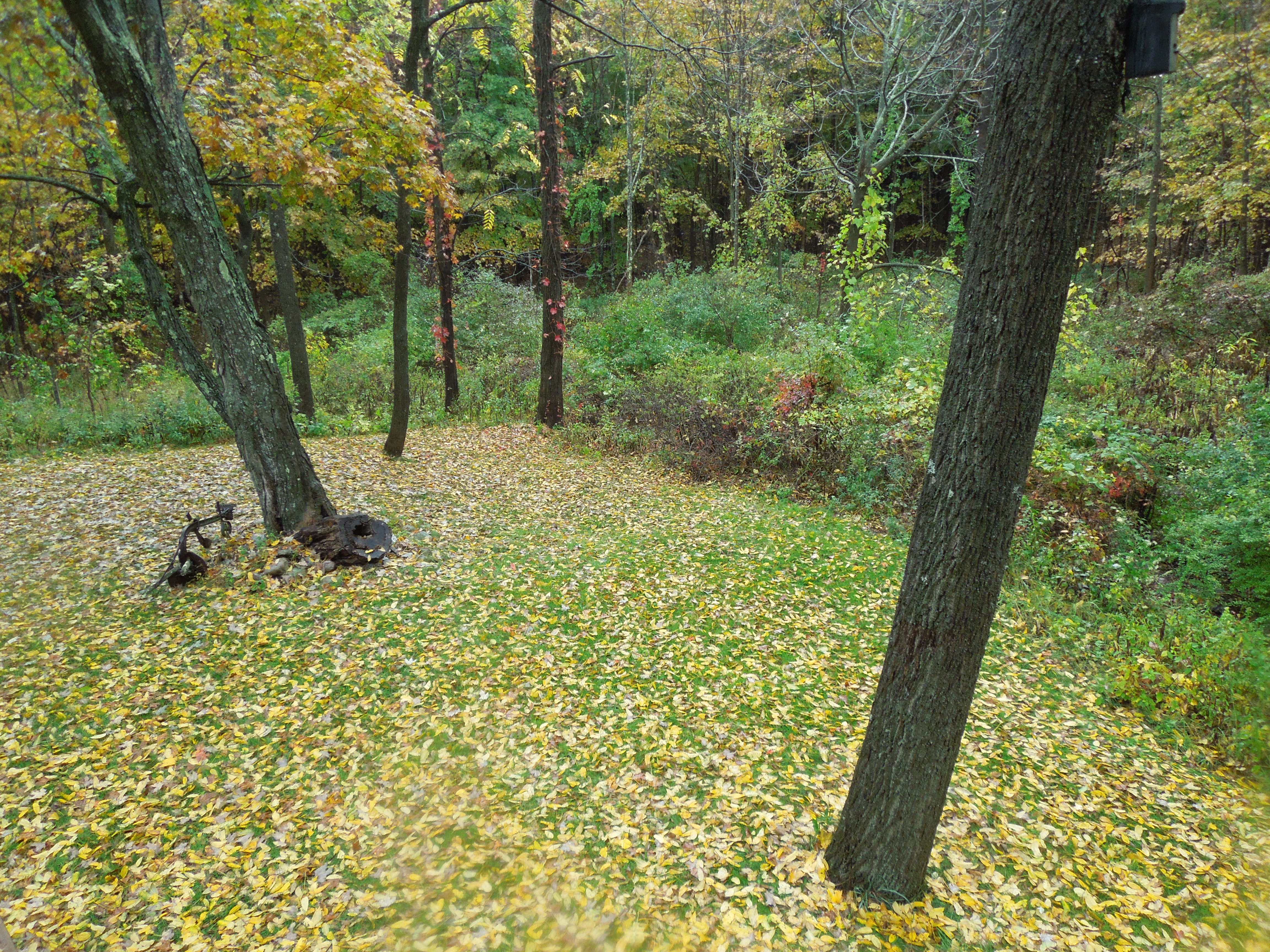
It is the school-imposed end of summer, Labor Day weekend, a weekend I look forward to all summer long for the love of Fall. It is not good to be this way. Religious leaders preach living in the present for that is all we have. I have yet to overcome this and many other bad ways of thinking. I look forward to the crisp days of September when a breeze shimmers through, what I call in my ignorance of the real name, the penny tree. It is so named because when the wind blows the leaves look like so many pennies shimmering down from Heaven. I live for the days when the sun is so hot it tingles on the skin– yet it is not the strong sun of July that burns quickly. The angle of the sun in its diurnal slant is different. Summer is definitely slipping away.
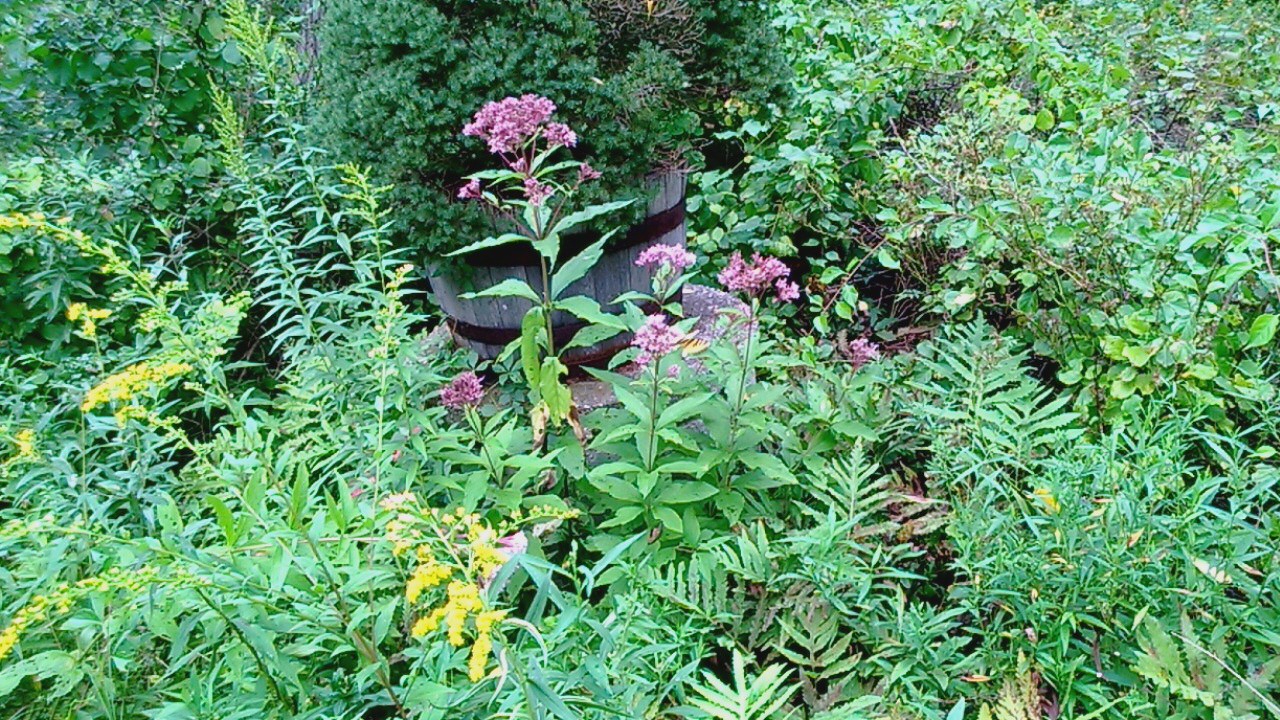
The bees, wasps and yellow jackets are having a heyday in the goldenrod, Joe Pye Weed and Purple Loosestrife. The marsh is thick with flying insects going this way and that. My eyes capture swallowtails. Happily the monarchs are still here. A turkey vulture circles overhead. Some carrion must be nearby. Earlier we saw two golden hawks fly sunlit into the back field. A wisp of a cloud floats by in an otherwise perfectly blue sky. This summer has flown by in the blink of an eye like a fritillary flits by the flowers in the marsh.
The smell of fresh cut lawn is intoxicating to my raw senses. Soon the grass will cease to grow and the lush green will look washed out. All of its inhabitants in the metropolis beneath our feet will dig deep underground or turn off their bodily systems to overwinter– an amazing concept to a mammal. Some fill their bodies with a type of antifreeze. Nature never ceases to astound. This summer I have made my peace with the insects. Terrified of them as a child I have come to love and respect them, indeed hold them in awe for the feats they accomplish. Our accomplishments pale as humans, supposedly so superior.
No longer do I see turtles sunning on rocks or snakes coming out to bask in the heat of the road. Some species of birds have left already– unbeknownst to me. I just know that some I used to see are gone and the bird song of the spring mating season is a fleeting memory. One lone humming bird flies around the marsh intermittently, causing excitement upon spotting him.
It is the time to dead head the flowers of summer. It is the time of Black-Eyed Susans and Peonies and Sebum. And soon it will be the time of the Mums.
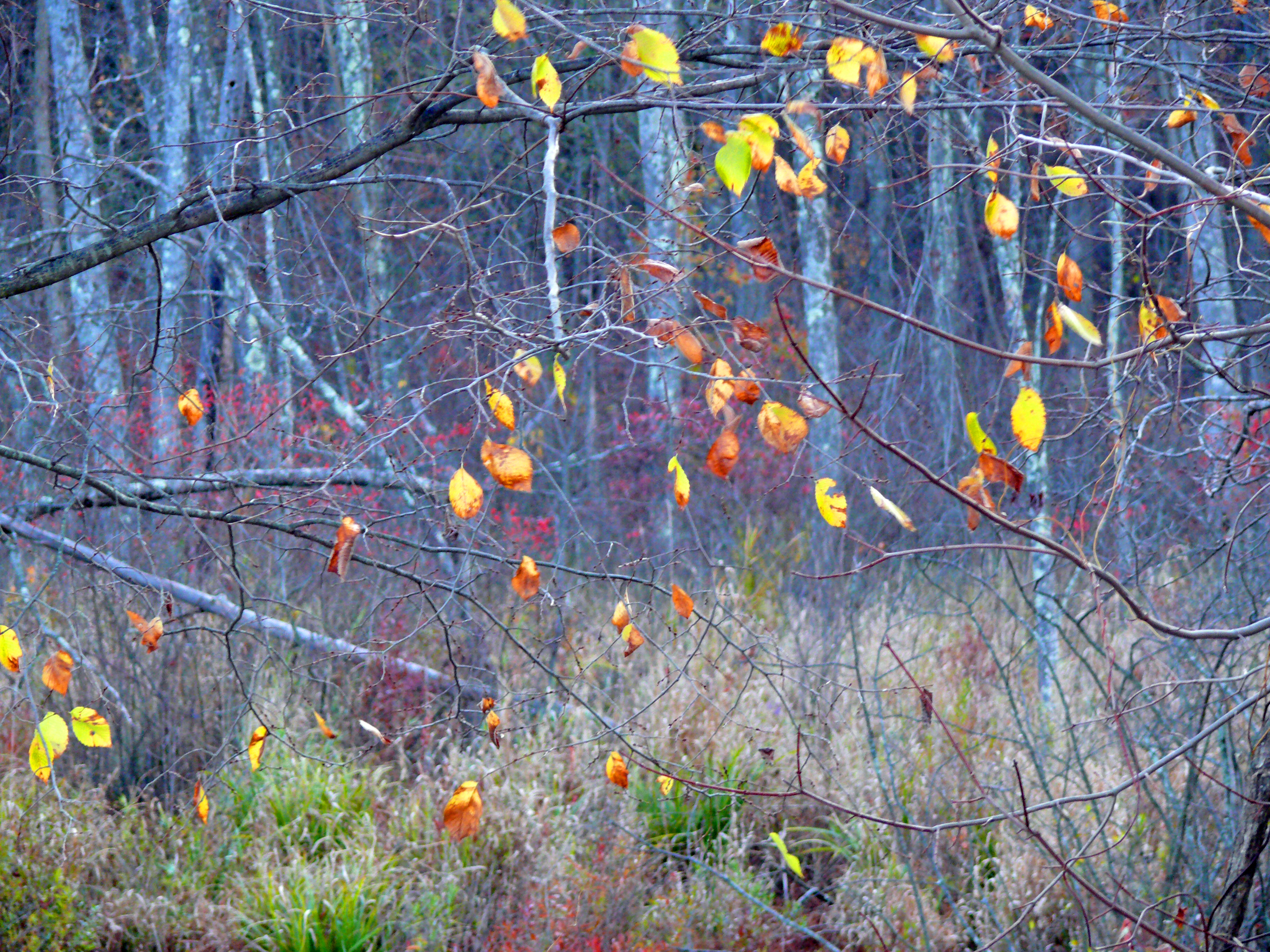
With each gust of wind yellow finger-like walnut leaves shower down on our heads– like large yellow snowflakes– a foretaste of snowfalls to come. The sun’s shadows grow long as twilight is near. Soon the white cloud “lions and tigers and bears” will retire into the black cave of night. And the summer will die and in dying, give birth to fall. The comfortable rhythm of the changing season beats in our sometimes unhearing hearts.
(Aknowledgements to “likes” and comments may be delayed. Recuperating from surgery.)
Oceanic Currents
Paramahansa Yogananda
“As soon as you lift your consciousness to the state of divine awareness, you see the oceanic current of God’s light flowing behind all matter.”
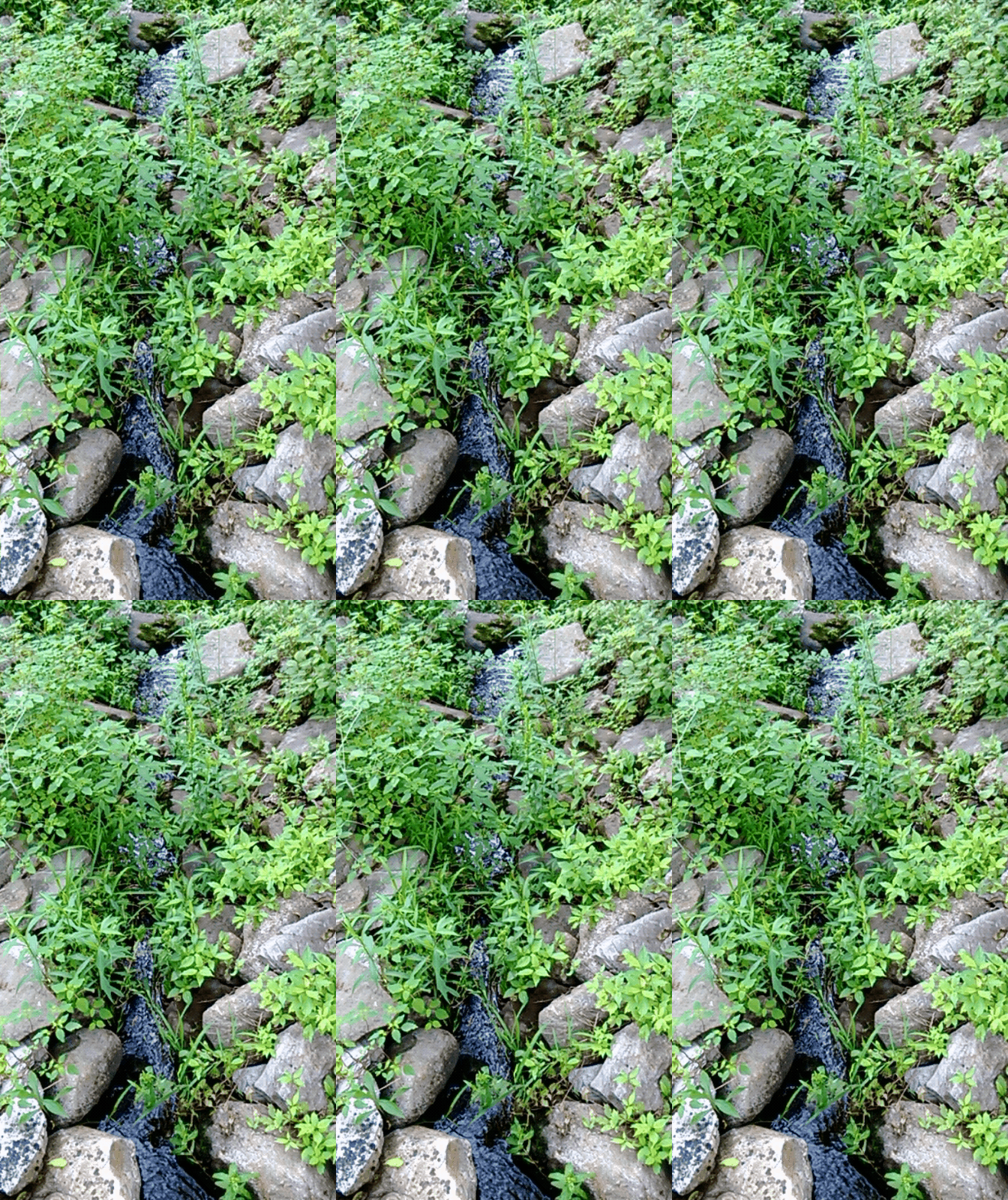
Stream in our backyard in Millbrook, New York that eventually flows into the Hudson River which in turn flows into the Atlantic Ocean, thereby hinting at global consciousness.










 MOONSIDE
You must be logged in to post a comment.