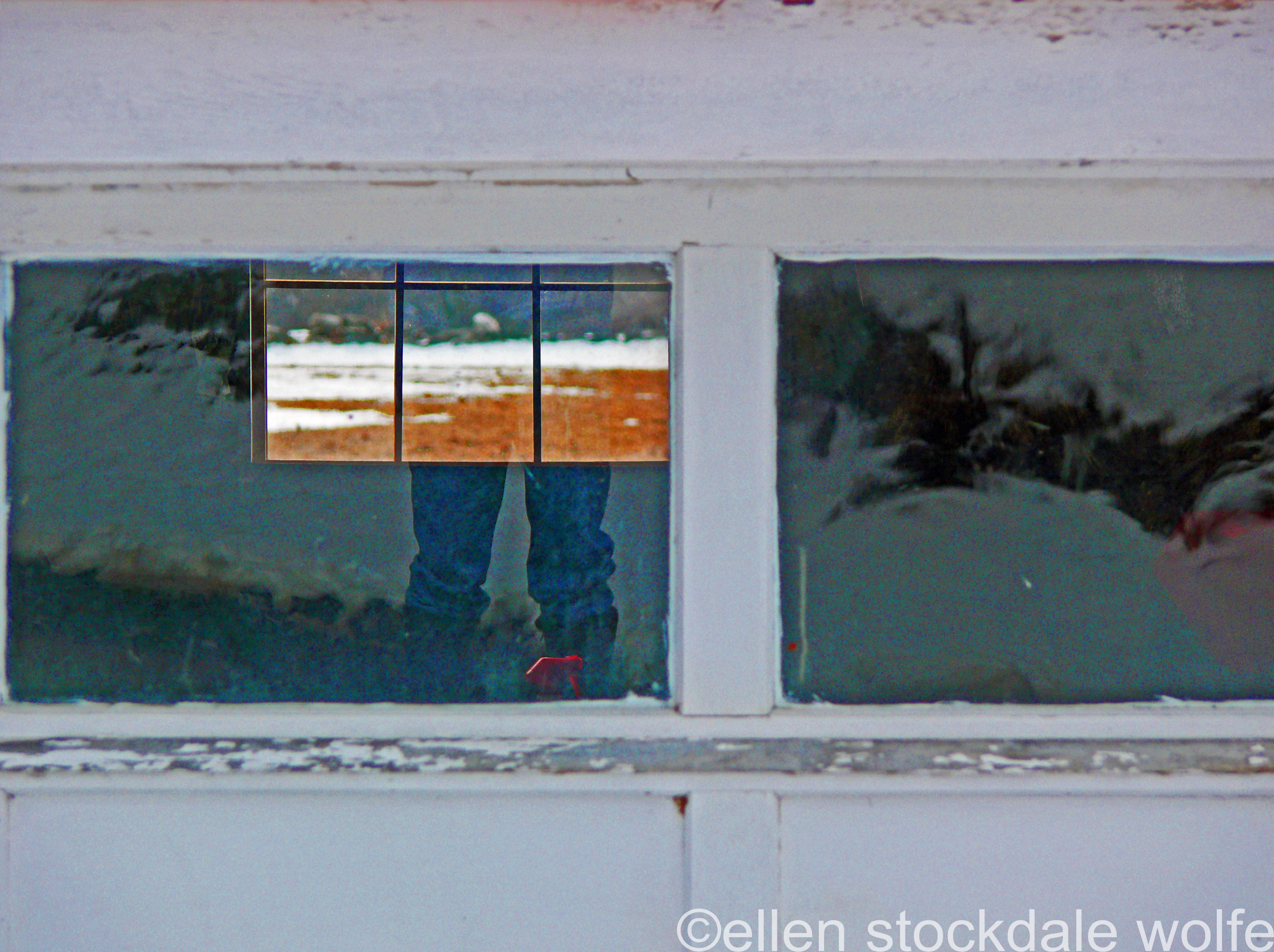

Old Barn with Window View

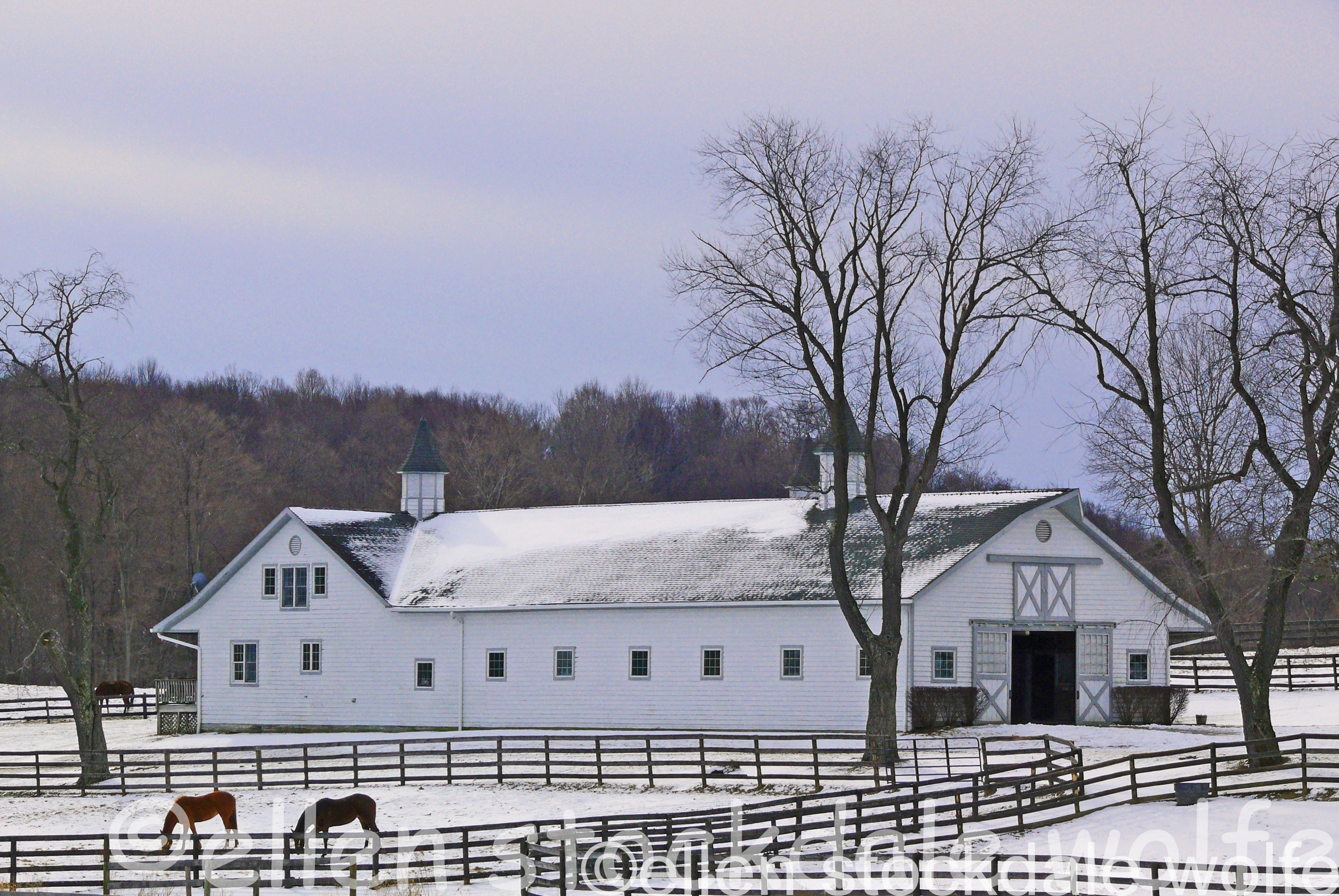
Could not resist the lovely curve of the roof of this little red barn– some might call old age sag.
Vestigial Remnants of Hibernation?
It is frigid outside and has been for a long time. It is very cold in many parts of the country. The holidays have come and gone. The hoopla of the inauguration is over. Now begins the nitty-gritty of hard winter work. I find myself listless and not wanting to go outside or exercise or paint or take pictures or do much of anything I usually love to do. I have a cold but that does not excuse this lassitude. When I go to my favorite deli, I find that Terry, the sandwich lady, is in the same mood. “I was ready to go home the moment I came in,” she says. My husband was dour and I was sour. What is the meaning of this discontent? Could it be some vestigial remnant of human hibernation? While man has never hibernated, science finds his metabolism slows down in winter and he becomes less active. Binging on food and drink over the holidays may not be the sole reason for weight gain in winter. Perhaps we should be sleeping off the extra pounds.
I who love winter and live for fall each summer, find myself longing to hear the music of the spring peepers. It is months away– well about a month and a half away. They signal for me the first harbingers of new life. Terry, who also loves winter, tells me today she is sick of winter as she makes our sandwiches. Perhaps it is this string of Arctic air and grey days and icy road conditions and snow every few days. Perhaps, and more likely, it is the human condition to always be dissatisfied.
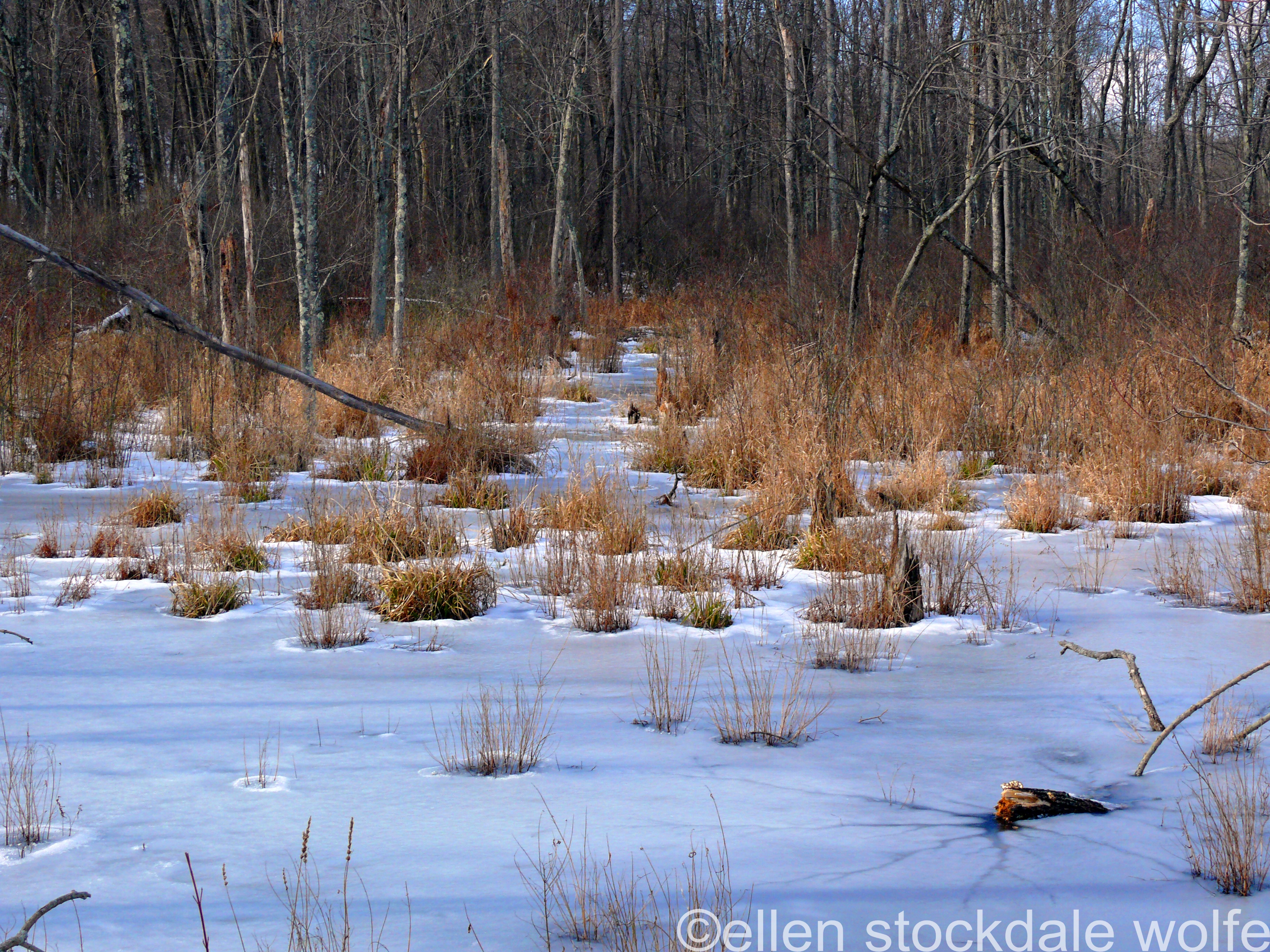 Hibernaculum for turtles and other animals
I miss the squirrels. It has been so cold and snowy they seem to be laying low in their nests. Judging from the tracks in the snow the animals most on the move are the deer. And as much as I love the silence of winter, I find myself longing for the sweet dulcet music of birdsong at mating season in spring.
We bought a calendar for the new year with a celestial map of the sky for each month so you can find the constellations in the night sky. We have yet to go out with flashlights and match the map with the canopy of stars. It has been too overcast or too cold or too something. But my dazzled psyche is humbled by the view of the stars through the stripped down trees that we see from bed every night.
Then again maybe it is laziness. Too many sugar highs in December have led to a deep low in February. And after a tease of spring one day in which the temperature reached almost 60 degrees we were let down even further. Not liking being unproductive, I think I can overcome this. But maybe I should just go with the flow and accept a period of inactivity, let the land lay fallow, so that an increase in productivity may eventually result.
I know I should focus on what is positive. Winter is the season of silent beauty that I so long for in the summer heat. I delight in the quiet of winter days. The snows bring a hushed stillness good for the soul. It is a time to regroup. Spring will come. Hopefully if man has not destroyed all the vernal pools, the spring peepers will return. And if pesticides have not destroyed all the birds, sweet mating songs will be sung. And if the weather turns more clement, our spirits will soar once again, and we will be busy bees making honey while the sun shines.


When the Snows Come
Sitting in our living room, with all the little, dairy barn windows alive with falling flakes of snow, it is as if my husband and I were on a ship, floating on a sea of white. The living room in our converted dairy barn has the feeling of a ship cabin, and I think it most beautiful when the snow is falling.
The glass doors in the kitchen give us perfect view of the bird feeder, our television in all seasons. In winter we watch male cardinals, bright red in the stark white, feed and contend with the beautiful, bullying blue jays. And the more modest, gentle, tiny juncos and sparrows touch our hearts with their humility.
One winter, when the snow had covered the ground for a month or so and turned to solid ice, we watched, horrified, as squirrels clawed at the feeder and fought with one another for a chance to feed, making shrill cries of territoriality. The ground was too frozen for them to retrieve the nuts they had buried in the fall. They were fighting off starvation.
Waking up in the morning there is no need for a weather report as we see the snow piled high on the surrounding trees and see the sky through what used to be the hayloft door, now a cathedral window. The thermometer tells us how cold it is though we can feel the chill in the air. We gauge the depth of the snowfall by watching the squirrels running along the limbs of the trees, cleaning off the heavy snow. They seem friskiest just after a snowfall.
And if we are lucky, and the snow is deep enough, we get out our snow-shoes and climb up the hill out back to what we were told was once a Christian Indian burial ground. There are no markers left but the spot has the air of the sacred and it affords mountain views in winter. High on the hill overlooking the valley, it seems a perfect place for a burial ground. The snowfall makes it easier to walk the hill. In the summer the path is too full of saplings and underbrush to walk the “meadow.”
On our half of the meadow there is a squat fir tree which provides a great shelter for deer in a storm and the deer love the meadow. There are a few blown over trees. And as we snow-shoe we see all kinds of animal tracks which we attempt to identify.
Like many barns, ours was built near the road so there is some traffic noise. But in the meadow we are far removed from the road. When it snows, it is so beautiful in the quiet, looking at the animal tracks, and feeling the spirits in the graveyard. A secret, little piece of Paradise. And to stand there in the virgin white silence, and see the abstract patterns of the snow on the surrounding hundreds of trees, is a taste of the Divine.
The Edge of Winter
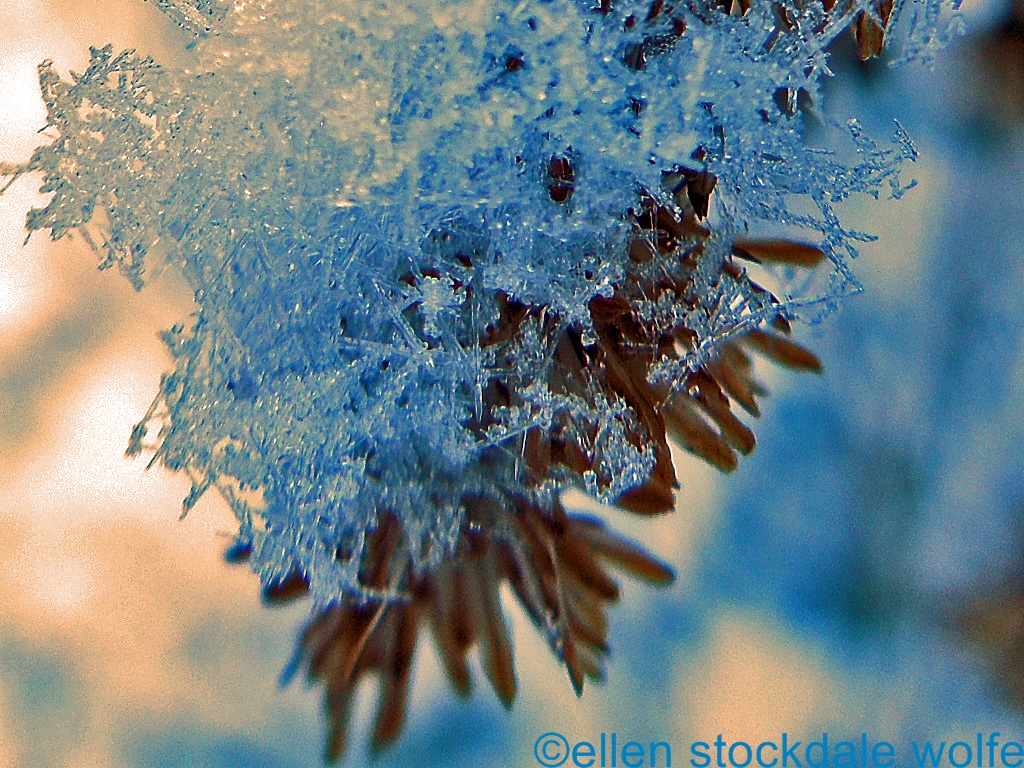
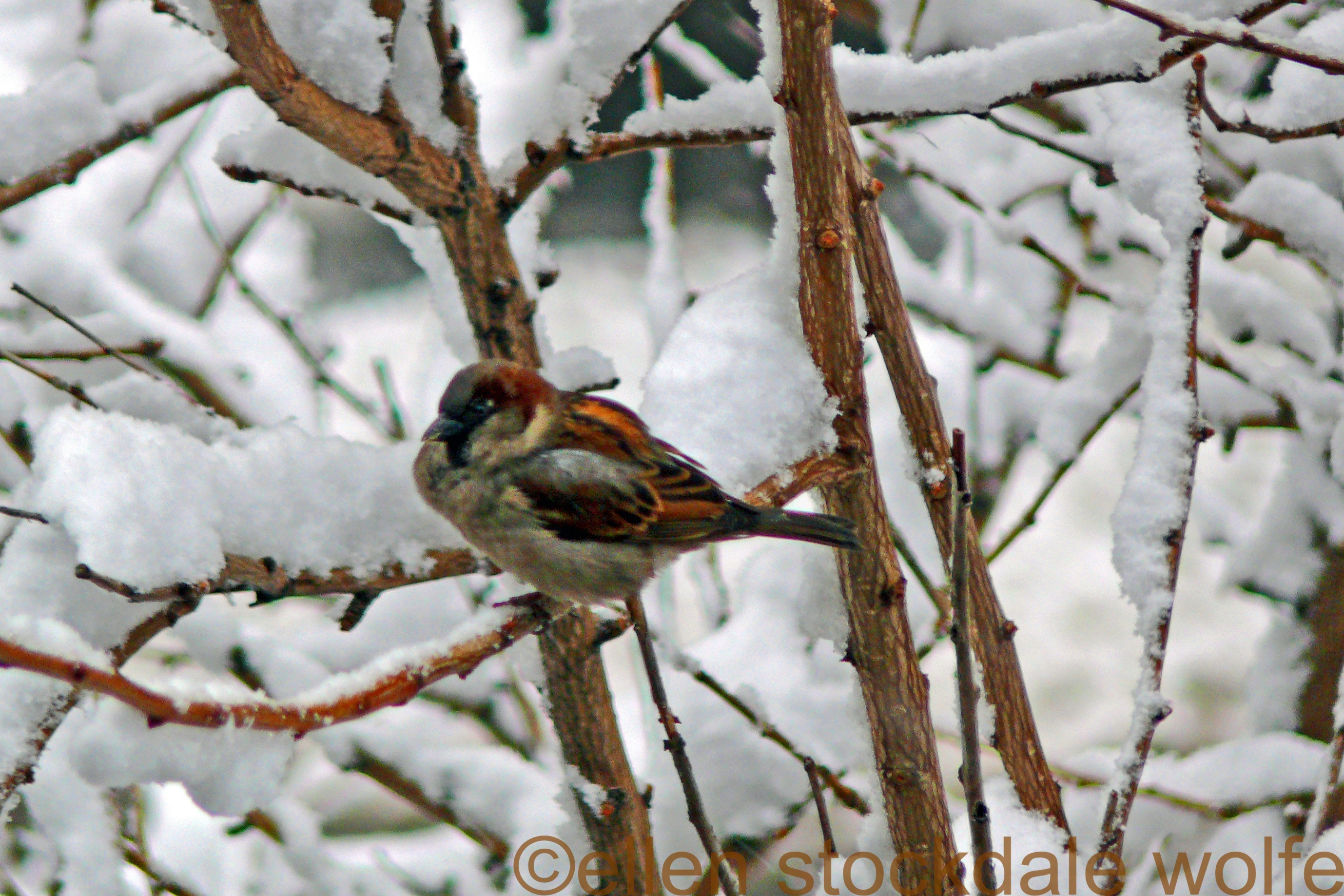 It is an overcast day. Brightly colored birds stand out like jewels in the greyness. The sparrows blend into the wooded grey/brown of snow-covered shrubs. The ever-present sparrows and the winter birds– jays and cardinals, juncos, black-capped chickadees, white-breasted nuthatches and downy woodpeckers– flock to the bird feeder which now has to be filled up almost every day. The red berries on the bushes are nearly all gone and the feeder is becoming a matter of survival. On our walks we see empty nests held in the bare arms of winter trees. An empty robin’s nest is filled with snow– the hatchlings and the mother long gone to fairer climes. The trees are stripped down to their souls. With ice storms they become tinkling chandeliers. In the rain the few remaining dead leaves drip drops of icy tears.
Occasionally a dove visits the feeder. The chipmunk, who gathered scattered seeds under the feeder all fall, is not to be seen. He must be in torpor in his den. According to Bernd Heinrich in: The Winter World: the Ingenuity of Animal Survival, the eastern chipmunk builds a twelve-foot storage system with a nest chamber some three feet down and a network of tunnels which includes a food storage chamber. Heinrich says chipmunks go in and out of torpor. He reasons that they would not gather food if they were to be in torpor all winter long. We will probably not see our chipmunk for the rest of the winter for, in his stuporous state, he would be easy prey. However he can be roused to eat and venture outdoors if need be, especially in March when there still may be snow on the ground but mating season begins.
The grey squirrels are busy clearing snow from branches as they run along tree limbs. On the ground they dig through the snow for the walnuts we watched them bury in the ground with their noses this fall. They do not need to hibernate for they have food stores which they built up in the autumn– and leafy, well-insulated nests. The red squirrels survive winter by putting on thick, insulating fur.
The back yard is a maze of tunnels. We think they are deer mouse tunnels as many have tunneled their way into our house. But they must get by the feral cat who sometimes waits out a snow storm under our deck. In the woods, the occasional deer waits out the same storm under a squat fir tree. The tracks in the snow tell the story of how they weathered a Nor’Easter.
Beneath the tracks in the snow, in the frozen leaf litter, the insect world is dormant. Some hibernate. Others fill their bodies with antifreeze, glycerol, to stay alive. Heinrich talks about woolly bears hibernating but they are also capable of freezing solid and surviving, coming to life again as they thaw in the spring. The pupae, however, don’t survive being frozen.
In Winter: an Ecological Handbook, authors, James C. Halfpenny, Elizabeth Besiot and Roy Douglas Ozonne, tell us that the reptiles and amphibians pick out a “microclimate for hibernation that does not freeze” for their winter, such as the “bottoms of ponds, streams, or deep in the ground.”
Our stream flows out back in the marsh under ice and snow and one can see the elongated bubbles of running water. In the pond next door the turtles lay beneath the ice in their hibernacula. At the end of the book, The Year of the Turtle, David M. Carroll, the naturalist, author and artist, has his watercolor of a spotted turtle hibernating. This picture is hypnotic and in its spell, I think of all the animals hibernating beneath our feet in lugubrious gloom. It reminds me of the penguins in the film, The March of the Penguins, huddled together for warmth in the harsh, strong winds and snow, taking turns being on the outside of the huddle. Winter can be magnificent in its transformations yet tragic in its harshness. Hibernating animals who freeze to death and deer starving in the snow are among the victims of its violence.
Carroll’s drawing shows the turtle all alone, withdrawn into its shell under less than two feet of water, lodged firmly in the mud under ice and under snow on a sunny winter’s day, a far better clime than the penguin’s– and yet it evokes a certain sadness for this little creature all alone beneath the snow, in a torpid state. The turtle is missing out on the days and nights, sleeping a deep sleep in a “half year of stillness.”
Carroll’s writing is sheer poetry as he describes the turtle’s hibernation: “Mounting layers of snow silently cover the ice. Night after night in the harshest depth of winter, as Orion and the Pleiades burn distant and brilliant in the black sky and strong winds howl off the mountain to the northwest, the turtles rest beneath the ice. With the life in them nearly suspended, reduced to its most tenuous hold, all but extinct in the vast, inhospitable regime that reaches above them to the limits of the universe, they lie within their shells, waiting for the earth to make its required turnings and return them to the sun that will awaken them to another season.”
I think of the turtles below, along with all the other beautiful creatures, and wish them a kind sleep from which they will safely stir as the life force surges through their veins again when the sun brings them to the fullness of life in spring. The death of some, and the half-life of so many, proffers the poignancy of winter.
The Trees of Winter
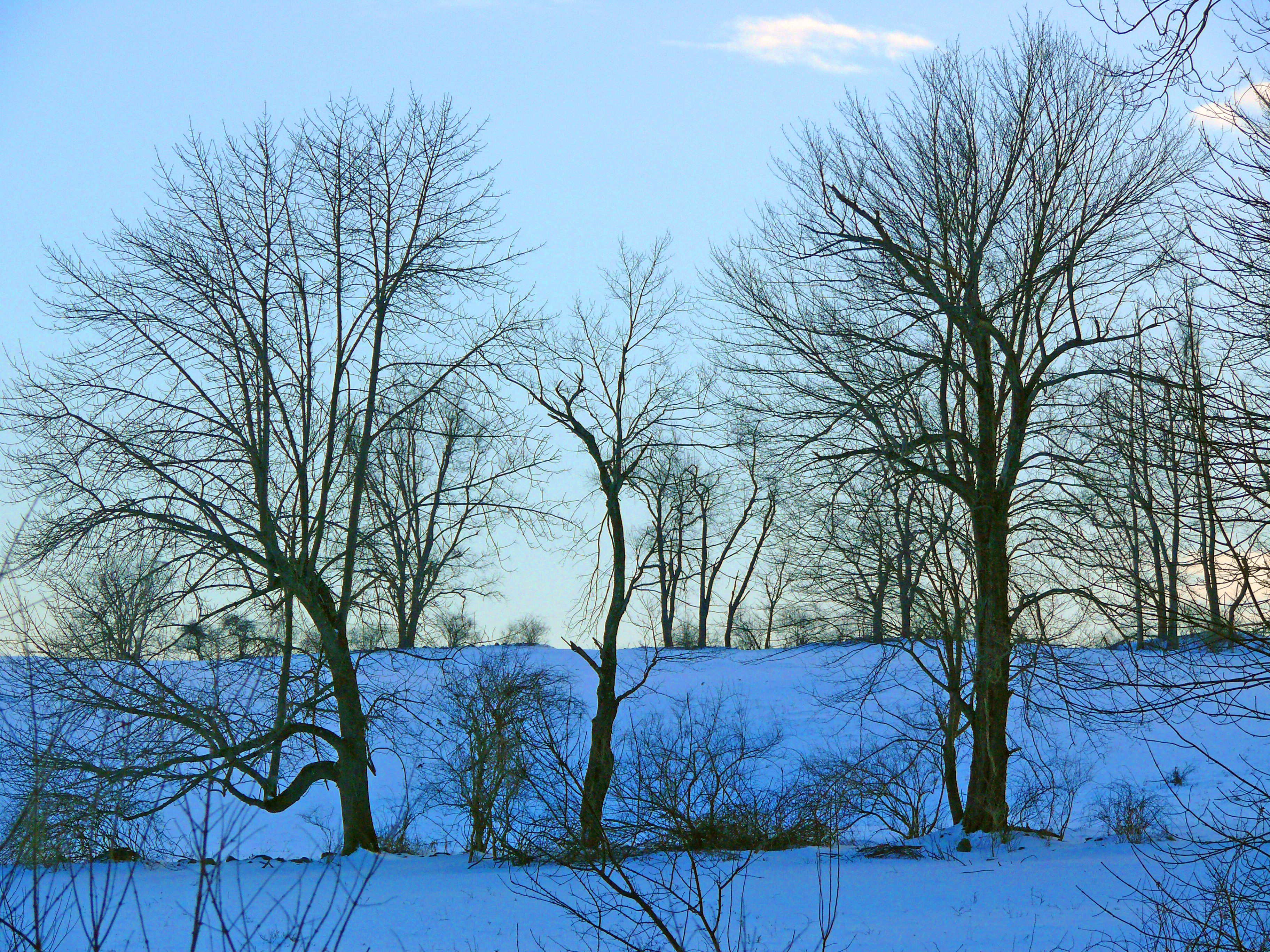 Every year what starts as a budding romance in autumn blossoms into a full-blown love affair in winter– my pitter-patter passion for trees. Trees that were drop-dead-gorgeous in their fall colors are now bare, with the exception of evergreens and a few stray deciduous trees that refuse to relinquish their leaves. Stripped down to their souls and the trees sing a siren song to the universe.
The tops of trees lift my spirit; brush-like they paint the sky with the baby pinks and blues of mornings, and the majestic magentas and violets of day’s end. Each tree has its signature shape against the sky, like a fingerprint or a snowflake– similar yet each unique. In their bare state, some treetops are shaped into fancy coiffures– others into wrought iron filigree. On distant mountains, against the snowy ground, still others assume the image of stubble on an old man’s unshaven face.
It is the colorful winter sky showing through, and showing off, the bare branches that woos me. The bare, curvaceous branches are stark, dark lines against the bright of day and the inky sky of night. These resplendent creatures are living lines that explode. Branches tangle like the lines in a Jackson Pollock painting. Others curve with the sensuous lines of a Brancusi sculpture. Buxom tree trunks stand strong surrounded by their dead blossoms and their burgeoning offspring like a Renaissance Madonna. In truth these trees are not like art at all. Rather art imitates them– their beauty provides the timeless inspiration for artists, writers and poets of all ages and styles.
Trees not only inspire, they are paragons of diversity. One look out of a car window while driving on the Taconic and one can see squat pines beside towering majestic firs, birches interspersed with maple and oak. And together the different brown and tan barks interspersed with evergreens create not only a mosaic of contrasting colors, but display an example to inspire humans to live together in peaceful unity.
These beneficent beings carry the heavy, dark grey clouds of winter. When it snows the tree trunks become canvases for the abstract patterns of windblown-snow, while the serpentine branches are outlined in white. In ice storms their branches become chandeliers, each with glassine ice crystals tinkling in the wind. In the melancholy of a winter rain, the branches become oiled skins of snakes weeping to the ground below. And finally, in the night sky, the branches hold the stars in their arms, those with leaves, in their hands, as they nurse the moon.
All trees, no matter what their species, age or height, stand tall in proud humility, their arms reaching up to the Heavens to our Creator in prayer– soft-spoken beings of peace and tranquility towering over us, while we, wee, little creatures race around distractedly in a dither below.

Cow Communication

All limited edition original photographs available in different sizes and formats.
Iced Berries no. 2
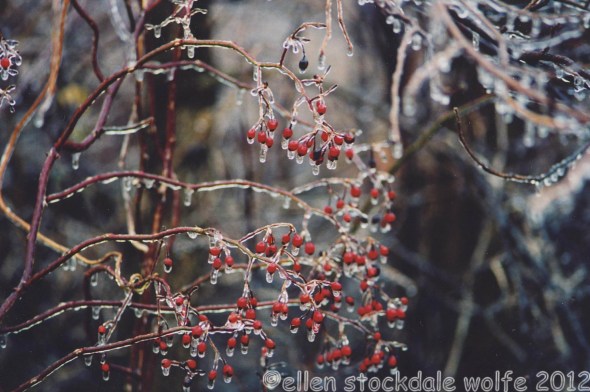
All limited edition original photographs available in different sizes and formats.
Winter Tree Filigree

All limited edition original photographs available in different sizes and
formats.
Moonrise Filigree
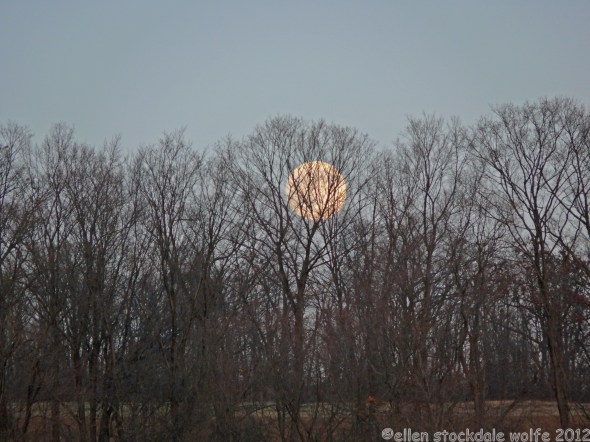
All limited edition original photographs available in different sizes and
formats.











 MOONSIDE
You must be logged in to post a comment.