The Oneness of It All
In this month of darkness, in this the darkest month, the light of the human spirit shines forth in a fullness shown by so many, in so many ways. As the days grow shorter, houses and trees are decorated, and snow falls. In the hushed silence of the nights, lights shine in windows, and the beauty is shared by all. For this season of giving brings the festivals of lights: Diwali (now past), Hanukkah, Christmas, Kwanzaa. Each tradition incorporates light in its ceremonies and decorations. But all is not well. Millions know no peace in any season.
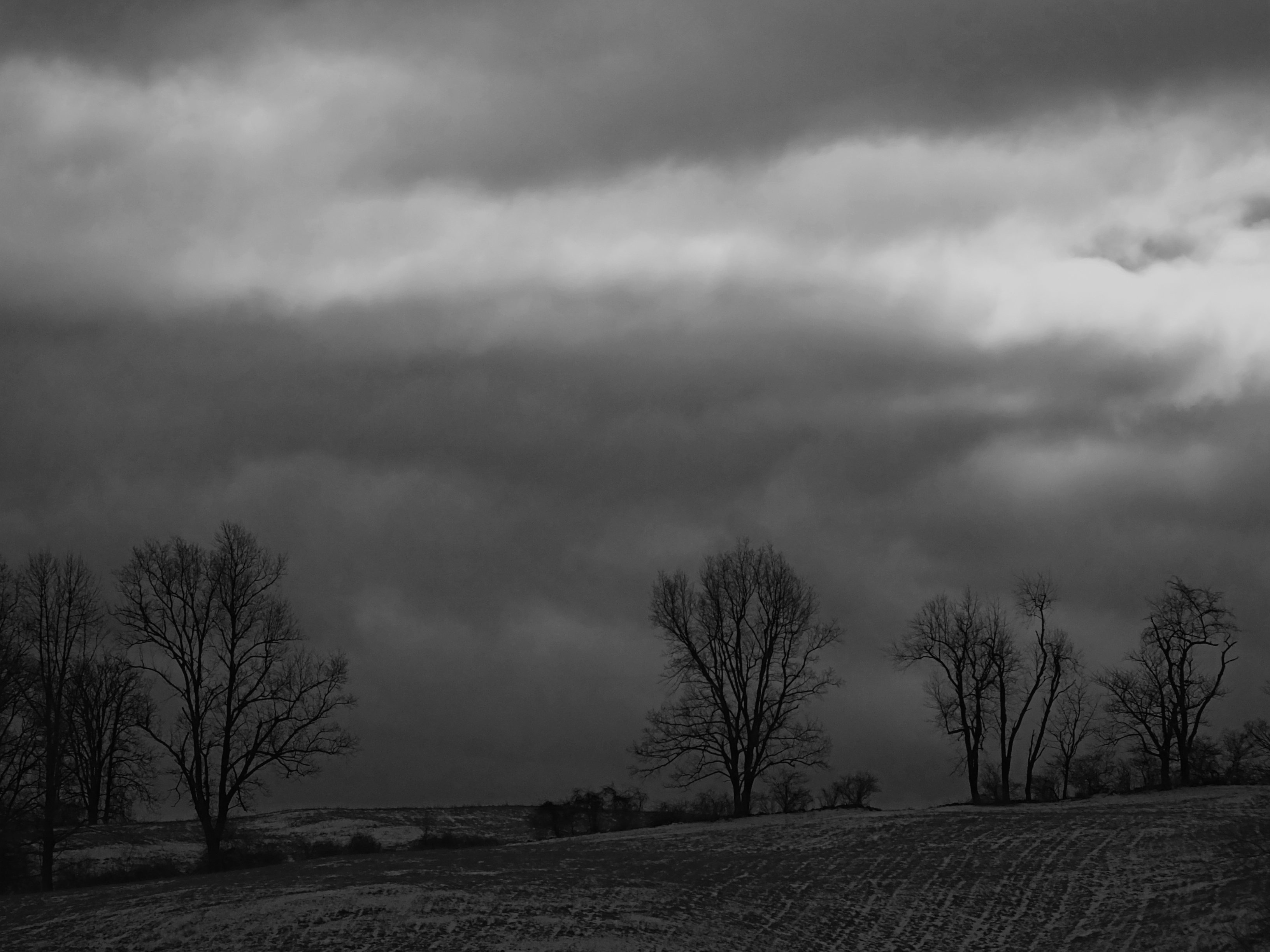
Yet even those living in the worst conditions show the light of the human spirit and celebrate the season of light in personal ways. For the human spirit is indomitable.
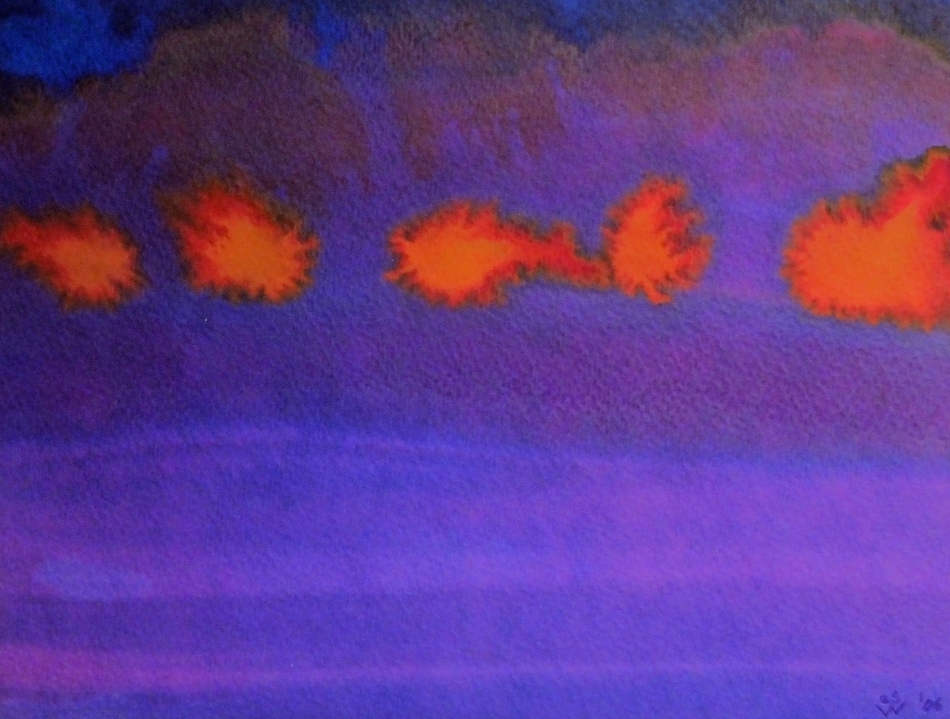
In December’s darkness we light lights. For we are beings of light. A light glows within each one of us. And, at the most basic level, we are beings of light because we are made from stardust. Perhaps that is why the stars hold such majesty for us– we are made from star material.

Einstein said: “A human being is part of the whole, called by us the ‘Universe”– a part limited in time and space. He experiences himself, his thoughts, and feelings, as something separated from the rest– a kind of optical delusion of his consciousness. This delusion is a kind of prison for us, restricting us to our personal desires and to affection for a few persons nearest us. Our task must be to free ourselves from this prison by widening our circles of compassion to embrace all living creatures and the whole of nature in its beauty.”
When Spiders Rule

A chill wind blows the yellowing leaves off the trees. They drift down to the ground like giant snowflakes. The air is pregnant with the feel of the coming holidays. Fall has truly come with the sudden drop in temperatures. November appears as a mirror image of March. November is the vibrant color of decay while March is the decaying color of about-to-burst-forth Spring.

The birds are at the bird feeder all the time now. They are not stopped by our presence when we come to fill the feeder or blow leaves under it. Nothing stops them. They swoop around the feeder and the surrounding trees like Kamikaze pilots, darting here and there recklessly. The squirrels are in a frenzy as well, stock piling and burying acorns and walnuts which they will retrieve without fail in a month or so in a snow-covered land.

The trees are most beautiful for me at this time of year, when many of them are bare and a scattering of leaves remain on dark brown branches. The leaves that remain on the trees blow on the limbs with dainty grace in their precarious positions. Yet these are the survivors. The other leaves have fallen and gone the way all living things eventually go. Most trees have lost all their leaves and they stand in stark contrast against the blue sky, the stormy sky, even the night sky. They are perhaps most beautiful at night, like arms reaching up to the darkness trying to grab at the stars twinkling between the branches. Moonlight dances on their limbs.
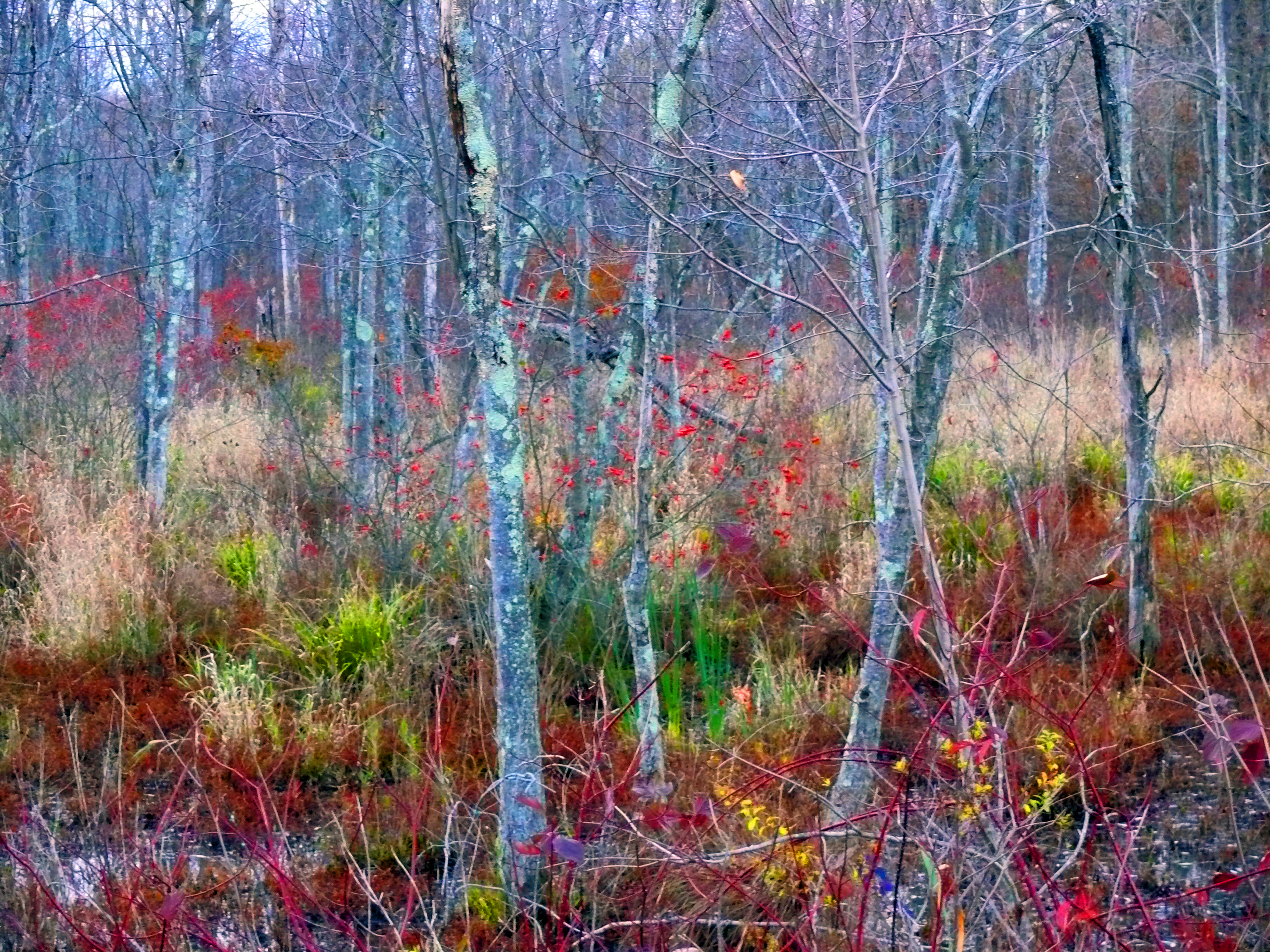
November is the last glimmer of color and in some places the color seems to be predominantly yellow. A carpet of yellow lines the woods now. And now one can see inside the woods, so dark and impenetrable in summer. Some forests have carpets of oak leaves– dark brown tan in color. Or there are forest paths with variegated colors– vibrant crimsons against yellows and faded greens and tawny tans. The unmown lawns are now taken over by the spiders and, at moments, one can see a world of webs covering fields that only appear in a certain slant of sunlight. It is the silent take over of the spiders before the snows come.

The yellow, the brown, the crimson leaves are complemented by the ubiquitous yellow, brown and crimson mums that appear on the roadside near mail boxes, on porches or along driveways. These tough little flowers withstand frosty chills and stand tall throughout most of November. Hearty souls and so giving in their colorful, velvety splendor.

Soon the season of lights will begin. Autumn, as a season, seems the fastest to come and go. I hold each moment in my hands as a treasure, but the moments all sift through my fingers like grains of sand. Then Christmas comes and fades in a flash, and we are into the Nor’Easter blizzards of January. Another year is gone. The years do go faster as you grow older. We go about living our lives, trying, against our natures, to treasure the good moments. Now in November, at Thanksgiving, it is our time to say thank you. Inspired by the Native Americans let us thank the earth. Let us say thank you to the trees for their constantly changing beauty, to the stars for their piercing presence in the night sky, to the leaves for their beauteous colors, to the sun for its life-giving power, to the Spring for its awakening hope, to the Summer for its warm, thriving growth, to the Fall for its bounty, to the Winter for a time of renewal, to the snow flakes for their hushed, white silence that transforms our world, to the animals for their pure souls, to our families and friends for their love, and, lastly but mostly, to the Higher Power of our belief.
Happy Thanksgiving and may you each be blessed with the all embracing, pervasive Love in nature.
A Foretaste of Fall
(revised version)
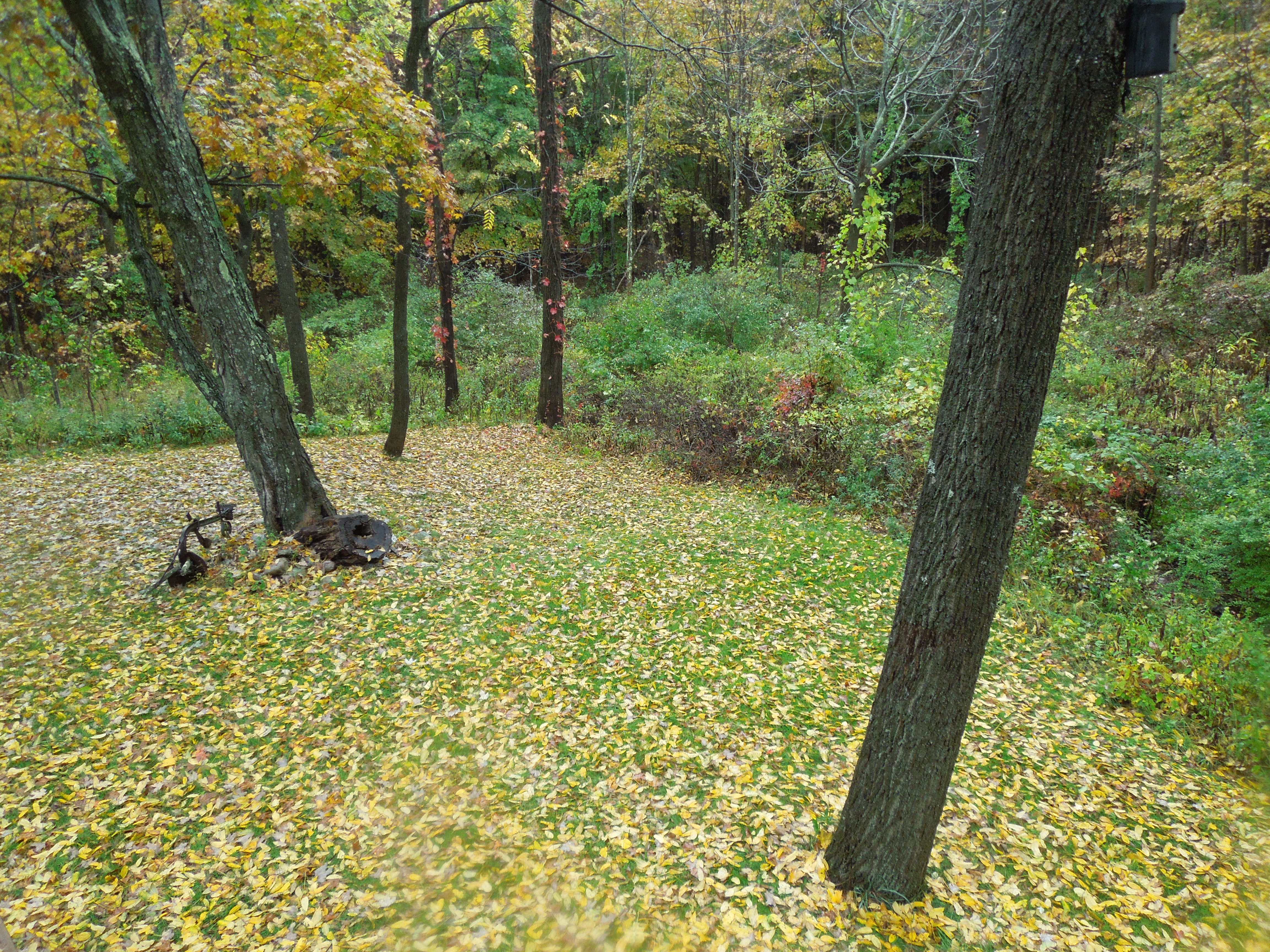
It is the school-imposed end of summer, Labor Day weekend, a weekend I look forward to all summer long for the love of Fall. It is not good to be this way. Religious leaders preach living in the present for that is all we have. I have yet to overcome this and many other bad ways of thinking. I look forward to the crisp days of September when a breeze shimmers through, what I call in my ignorance of the real name, the penny tree. It is so named because when the wind blows the leaves look like so many pennies shimmering down from Heaven. I live for the days when the sun is so hot it tingles on the skin– yet it is not the strong sun of July that burns quickly. The angle of the sun in its diurnal slant is different. Summer is definitely slipping away.
The bees, wasps and yellow jackets are having a heyday in the goldenrod, Joe Pye Weed and Purple Loosestrife. The marsh is thick with flying insects going this way and that. My eyes capture swallowtails. Happily the monarchs are still here. A turkey vulture circles overhead. Some carrion must be nearby. Earlier we saw two golden hawks fly sunlit into the back field. A wisp of a cloud floats by in an otherwise perfectly blue sky. This summer has flown by in the blink of an eye like a fritillary flits by the flowers in the marsh.
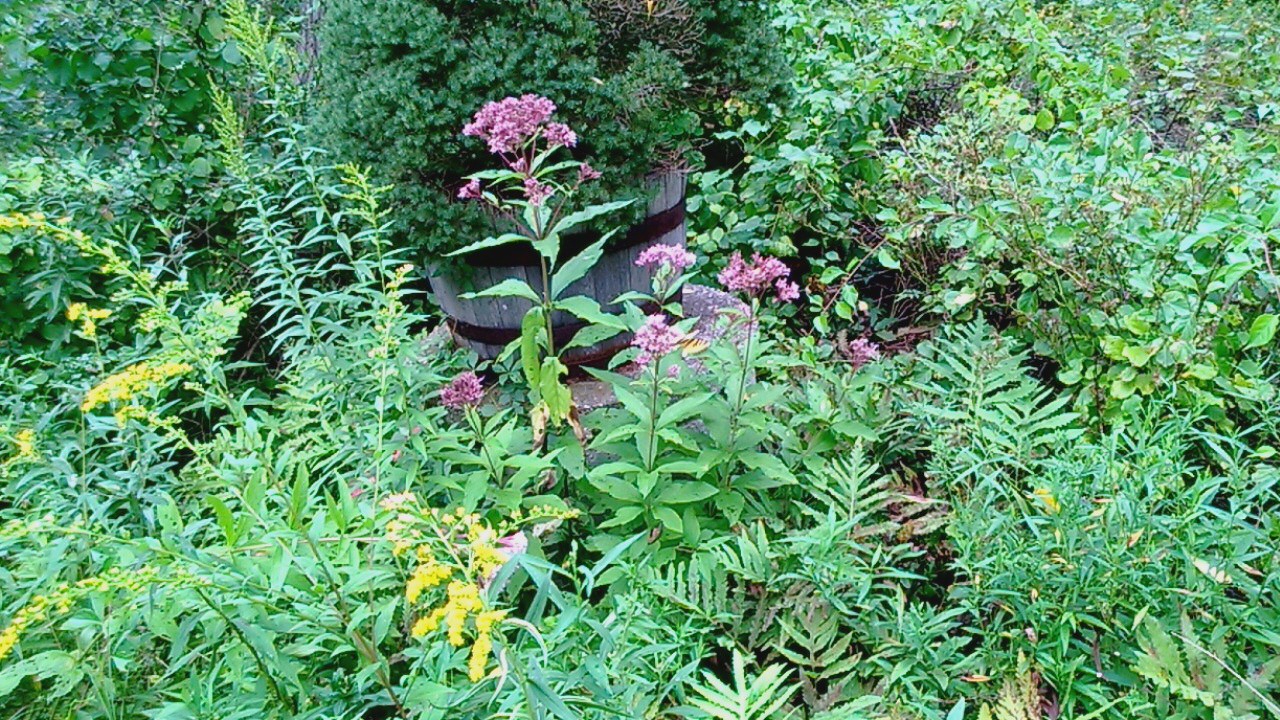
The smell of fresh cut lawn is intoxicating to my raw senses. Soon the grass will cease to grow and the lush green will look washed out. All of its inhabitants in the metropolis beneath our feet will dig deep underground or turn off their bodily systems to overwinter– an amazing concept to a mammal. Some fill their bodies with a type of antifreeze. Nature never ceases to astound. This summer I have made my peace with the insects. Terrified of them as a child I have come to love and respect them, indeed hold them in awe for the feats they accomplish. Our accomplishments pale as humans, supposedly so superior.
No longer do I see turtles sunning on rocks or snakes coming out to bask in the heat of the road. Some species of birds have left already– unbeknownst to me. I just know that some I used to see are gone and the bird song of the spring mating season is a fleeting memory. One lone humming bird flies around the marsh intermittently, causing excitement upon spotting him.
It is the time to dead head the flowers of summer. It is the time of Black-Eyed Susans and Peonies and Sebum. And soon it will be the time of the Mums.
With each gust of wind yellow finger-like walnut leaves shower down on our heads– like large yellow snowflakes– a foretaste of snowfalls to come. The sun’s shadows grow long as twilight is near. Soon the white cloud “lions and tigers and bears” will retire into the black cave of night. And the summer will die and in dying, give birth to fall. The comfortable rhythm of the changing season beats in our sometimes unhearing hearts.
(Aknowledgements to “likes” and comments may be delayed. Recuperating from surgery.)
A Midsummer’s Night’s Dream
As twilight falls, as we approach August, the little sparks of light appear nightly… fireflies, lightening bugs, glow worms, whatever one chooses to call them. They start early in July– one sees a few sparks here and there but as July draws to a close, twilights dawn with a display of tiny fireworks. Why do they hold such fascination for young and old alike? Why do they bring us such a sense of wonder as they flicker on and off in some rhythm unknown to us but sparkling in communication with one another?
Of course I remember, like everyone else, catching fireflies. It was a ritual my Sicilian grandfather reenacted with me every summer. Grandma would save me a peanut butter jar, nicely washed with little holes in the top she made with an old-fashioned can opener. Grandpa and I would go out for an after-dinner walk, a treat in itself. It was a journey with a purpose, a hunt to catch those bugs whose tail ends light up, on and off, I learned later, to signal mates.
Grandpa always managed to catch one and we would walk home victorious, with me clutching my precious jar with my favorite kind of bug residing within. There was the exciting story we would tell Grandma and she would give me a lettuce leaf in case the bug should be hungry in the night. Then to bed. And then the real waiting began… lying in the dark with the jar on the bedside table waiting for my captive bug to alight. I would wait and wait but no flickering light appeared and before long I would fall asleep in the arms of disappointment.
It was even worse in the morning. The lightening bug did not look well. His antennae would be damp and sticking to the jar in a bad way. He was not eating the lettuce leaf. And this was my first lesson in the perils of capturing and imprisoning a creature. They did not behave like they did when free. Finally in a child’s form of despair, I would let him go and he would leave so much the worse for wear.
Years later, on my husband’s great aunt’s farm in Ohio, the trees would be filled with lightening bugs mating. It was a sight I had never seen. Whole trees would light up at once and upon close examination one would find hundreds of fireflies. It was a cathedral of flickering lights that brought awe as we beheld the mystery with our hearts.
And now, living in a converted barn which allows many bugs to enter despite window screens, the lightening bugs within are no longer in a jar but free to fly about our house. They bring sheer delight as they light up in the darkness of our bedroom. I am a child again with my beloved grandfather, though now I no longer want to capture the mystery as I stay awake as long as possible, watching the little flickering lights inside the room and outside in the trees. I think of simpler days and after dinner walks with Grandpa. I think a lot of my grandparents, but in the nostalgia, the magic of this tiny bug amazes still. And the magic brings joy as we share it with our children, our grandchildren, our beloved, anyone who can watch with us this Midsummer Night’s dream.
The Edge of Winter

It is an overcast day. Brightly colored birds stand out like jewels in the greyness. The winter birds– jays and cardinals, juncos, black-capped chickadees, white-breasted nuthatches and downy woodpeckers flock to the bird feeder and it has to be filled up almost every day. The red berries on the bushes are nearly all gone and the feeder is becoming a matter of survival. On our walks we see empty nests held in the bare arms of winter trees. An empty robin’s nest is filled with snow– the hatchlings and the mother long gone to fairer climes. The trees are stripped down to their souls. With ice storms they become tinkling chandeliers. In the rain the few remaining dead leaves drip icy tear drops.
Occasionally a dove visits the feeder. The chipmunk, who gathered scattered seeds under the feeder all fall, is not to be seen. He must be in torpor in his den. According to Bernd Heinrich in: The Winter World: the Ingenuity of Animal Survival, the eastern chipmunk builds a twelve foot storage system with a nest chamber some three feet down and a tunnel system which includes a food storage chamber. Heinrich says chipmunks go in and out of torpor. He reasons that they would not gather food if they were to be in torpor all winter long. We will probably not see our chipmunk for the rest of the winter for, in his stuporous state, he would be easy prey. However he can be roused to eat and venture outdoors if need be, especially in March when there still may be snow on the ground but mating season begins.
The grey squirrels are busy clearing snow from branches as they run along tree limbs. On the ground they dig through the snow for the walnuts we watched them bury in the ground with their noses this fall. They do not need to hibernate for they have food stores which they built up in the autumn and leafy, well-insulated nests. The red squirrels survive winter by putting on a thick, insulating fur.
The back yard is a maze of tunnels. We think they are deer mouse tunnels as many have tunneled their way into our house. But they must get by the feral cat who sometimes waits out a snow storm under our deck. In the woods, the occasional deer waits out the same storm under a squat fir tree. The tracks in the snow tell the story of how they weathered a Nor’Easter.
Beneath the tracks in the snow, in the frozen leaf litter, the insect world is dormant. Some hibernate. Others fill their bodies with antifreeze, glycerol, to stay alive. Heinrich talks about woolly bears hibernating but they are also capable of freezing solid and surviving, coming to life again as they thaw in the spring. The pupae, however, don’t survive being frozen.
In Winter: an Ecological Handbook, authors, James C. Halfpenny, Elizabeth Besiot and Roy Douglas Ozonne, tell us that the reptiles and amphibians pick out a “microclimate for hibernation that does not freeze” for their winter, such as the “bottoms of ponds, streams, or deep in the ground.”
Our stream flows out back in the marsh under ice and snow and one can see the elongated bubbles of running water. In the pond next door the turtles lay beneath the ice in their hibernacula. At the end of the book, The Year of the Turtle, David M. Carroll, the naturalist, author and artist, has his watercolor of a spotted turtle hibernating. This picture is hypnotic and in its spell, I think of all the animals hibernating beneath our feet in lugubrious gloom. It reminds me of the penguins in the film, The March of the Penguins, in the dead of an Antarctic winter, huddled together for warmth in the harsh, strong winds and snow, taking turns being on the outside of the huddle. Winter can be magnificent in its transformations yet tragic in its harshness: hibernating animals who freeze to death and deer starving to death in the snow among the victims of its violence.
Carroll’s drawing shows the turtle all alone, withdrawn into its shell under less than two feet of water lodged firmly in the mud under ice under snow in a sunny winter’s day, a far better clime than the penguin’s– and yet it evokes a certain sadness for this little creature all alone beneath the snow, in a torpid state. The turtle is missing out on a sunny day, sleeping a deep sleep in a “half year of stillness.”
Carroll’s writing is sheer poetry as he describes the turtle’s hibernation: “Mounting layers of snow silently cover the ice. Night after night in the harshest depth of winter, as Orion and the Pleiades burn distant and brilliant in the black sky and strong winds howl off the mountain to the northwest, the turtles rest beneath the ice. With the life in them nearly suspended, reduced to its most tenuous hold, all but extinct in the vast, inhospitable regime that reaches above them to the limits of the universe, they lie within their shells, waiting for the earth to make its required turnings and return them to the sun that will awaken them to another season.”
I think of the turtles below, along with all the other beautiful creatures. I wish them a kind sleep from which they will safely stir with the life force surging through their veins as the sun brings them to the fullness of life again. The death of some, and the half life of so many, proffers the poignancy of winter.
When the Walnut Leaves Begin to Fall
It is the school-imposed end of summer, Labor Day weekend has come and gone and I am looking forward to Fall. It is not good to be this way. Ideally one should be living in the present… for that is all we have. I have yet to overcome this and many other bad ways of thinking. A breeze shimmers through what I call (in my ignorance of the real name) the penny tree for when the wind blows the leaves look like so many pennies shimmering down from Heaven. The sun is so hot it tingles on the skin– yet it is not the strong sun of July that burns quickly. The angle of the sun in its diurnal slant is different. Summer is definitely slipping away.

The bees, wasps and yellow jackets are having a heyday in the goldenrod, Joe Pye Weed and Purple Loosestrife. The marsh is thick with flying insects going this way and that. My eyes capture swallowtails. Happily the monarchs are still here. A turkey vulture circles overhead. Some carrion must be nearby. Earlier we saw two golden hawks fly sunlit into the back field. A wisp of a cloud floats by in an otherwise perfectly blue sky. This summer has flown by in the blink of an eye like a fritillary flits by the flowers in the marsh.

The smell of fresh cut lawn is intoxicating to my raw senses. Soon the grass will cease to grow and the lush green will look washed out. All of its inhabitants in the metropolis beneath our feet will dig deep underground or turn off their bodily systems to overwinter– an amazing concept to a mammal. Some fill their bodies with a type of antifreeze. Nature never ceases to astound. This summer I have made my peace with the insects. Terrified of them as a child I have come to love and respect them, indeed hold them in awe for the feats they accomplish. Our accomplishments pale as humans, supposedly so superior.

No longer do I see turtles sunning on rocks or snakes coming out to bask in the heat of the road. Some species of birds have left already– unbeknownst to me. I just know that some I used to see are gone and the bird song of the spring mating season is a fleeting memory. One lone humming bird flies around the marsh intermittently, causing frantic excitement upon spotting him.

It is the time to dead head the flowers of summer. It is the time of Black-Eyed Susans and Peonies and Sebum. And soon it will be the time of the Mums.
With each gust of wind yellow finger-like walnut leaves shower down on our heads– like large yellow snowflakes– a foretaste of snowfalls to come. The sun’s shadows grow long as twilight is near. Soon the white cloud “lions and tigers and bears” will retire into the black cave of night. And the summer will die and in dying, give birth to fall. The comfortable rhythm of the changing season beats in our sometimes unhearing hearts.

A Personal Look at Autism Spectrum Disorder
THANK YOU, Tina Brown, for your guest essay to the New York Times. (See below) My husband, of 35+ years, and I, like your son, are on the Spectrum and have other mental health issues at ages 71 and 74, respectively. We feel the bewilderment and intense-to-the-point-of-unbearable emotion that Gus Walz showed at the DNC while applauding his Dad, often in our own daily struggles with neurotypical friends and neighbors. My husband forwarded your article to me amidst a struggle I was facing at my age with a friendship! Yes, the worst time for those of us on the spectrum is not during our school years! It comes afterwards. My husband and I are among the lucky ones, blessed by God to find each other, and to be given the ability to help and console each other. My husband is a retired Psychiatric Social Worker, who helped many of the disadvantaged mentally-ill in his job, as I helped him help them, and as we help each other daily. Coach Walz, we, and all neurodivergents, need you and President Harris to win for SO many reasons, and, among those, to champion the cause.
Guest Essay to the New York Times by Tina Brown
Ms. Brown is the author, most recently, of “The Palace Papers: Inside the House of Windsor — the Truth and the Turmoil.”
My Son and Gus Walz Deserve a Champion Like Tim Walz
Aug. 23, 2024

The sight at the Democratic convention on Wednesday night of Tim Walz’s 17-year-old son leaping to his feet, with streaming eyes, a hand to his chest with a cry of “That’s my Dad” was heart piercing.
As the mother of Georgie, a 38-year-old on the spectrum who still lives with me, I recognized him immediately as one of “ours,” a sweet, unfiltered, slightly bewildered-looking young man who wasn’t quite sure what was expected of him in this epic moment of political adulation.
Gus Walz has, according to his parents, a nonverbal learning disorder, A.D.H.D. and an anxiety disorder, all of which they regard not as a setback but as his “secret power,” that makes him “brilliant” and “hyperaware.”
I know exactly what they mean. One of the joys of my life in the social churn of New York is living with a son whose inability to read the room makes him incapable of telling anything but the truth. Once, as my husband, Harry Evans, and I left a pretentious social gathering in the Hamptons, Georgie told the host sunnily: “Thank you very much. No one spoke to me really, so it was a very boring evening. The food was OK. I doubt I will come again.”
“I have never been prouder of you in my life!” shouted my husband in the car. How many times have all of us wanted to say that as we gushed about the fabulous time we just hadn’t had? Then there was the moment he went up to Anna Wintour at one of my book parties and asked if she was Camilla Parker Bowles. And the time at the intake meeting for a supported work program, when the therapist asked Georgie, “Has anyone ever molested you?” “Unfortunately not,” he replied. Georgie teaches me every day how much we depend on social lies to make the world go round. His sister — his forever best friend — and I feel so lucky to have him in our lives. So did his dad, who died in 2020.
And yet for people who are different and have no support, the world can be bleak. Their loneliness can be agonizing. Some people assume the school days are the hardest, but it’s the years after that are the social desert. Having a friendly, forgiving workplace to go to is critical. It’s often their only taste of community and what makes them such reliable and rewarding employees. The work from home movement has been a killer for people with special needs, often depriving them of the only social connections they have.
There’s something of a trend at the moment for certain businesses to say they encourage the hiring of people who are neurodivergent. Sadly, it can be just virtue signaling. Employers like to think that a person who is neurodivergent is some secretly brilliant introvert who writes code in his apartment all day, not the more likely candidate: an awkward kid with a gentle smile who takes time to get the hang of things and talks too much about the same subjects.
One of my son’s quirks is that he likes to wear bandannas and nail polish, and tends to say so in the first five minutes of every job interview. More often than not he’s told that no, that would not be “appropriate.” Appropriate? Being inappropriate is the very definition of Georgie’s condition, and for his family, his most treasured trait.
The most painful thing for a parent is to pick up on the scorn of strangers that her child often doesn’t notice; the whispered insults or titter at the next table. Remember Donald Trump Jr.’s sneer at the 2023 Conservative Political Action Conference? Referring to Senator John Fetterman’s struggles to recover after his stroke, Mr. Trump said that Pennsylvania had “managed to elect a vegetable.”
“I’d love for John Fetterman to have, like, good gainful employment,” he continued. “Maybe he could be, like, a bag guy at a grocery store.” Is it possible to go any lower than that?
But how could Don Jr. be any different from his father? The elder Donald Trump has never missed the chance to denigrate people with disabilities, and already the MAGA crowd is mocking Gus Walz’s emotional embrace with his dad. “Talk about weird …” the conservative media ghoul Ann Coulter posted (and later deleted).
If the Harris-Walz ticket wins, will parents of people who struggle with being different at last find a powerful advocate in the White House? This voiceless community is in desperate need of a new, mighty champion. Coach Walz, you who have been such an inspiring role model to kids all your life, and were caring enough to offer your own credibility to the role of faculty adviser of a new high school gay-straight alliance. I urge you: please make this your cause.
Jeepers Peepers

Above: the vernal pool not yet unfrozen and below: the YouTube video to hear the song of the Spring Peepers
It is late afternoon and it is spring according to the calendar although still quite cool. I have just spent the late afternoon listening to “music.” Some have likened it to the sound to bells. Others to bird song. And still others, with unimaginable disdain, to “some kind of nature noise.” For me it is one of the happiest of sounds. The act of creation transformed into sound decibels for all to hear. A sound that comes from the earth and resounds to the heavens, unwittingly praising the Almighty. I hate to leave, and wish I lived even closer to the pond, so that the sound would surround me totally, filling my ears every evening with the sound of perhaps the single-most highlight of spring for me. The siren song of the Spring Peepers.
How have they cast their spell over so many? I cannot say except that their song is uplifting and filled with hope despite the natural perils they face daily. For, as true of all of us, they may die at any moment– say as a meal for a nearby perching crow or underneath murky waters eaten by a snapping turtle. They call for a mate without ceasing, without fear, single-mindedly, without a thought for their own safety. It is nature at its most elemental, in its most singular scope. They all sing out vying to be heard– so many voices. In some spots, I am told, their song is deafening. How nice to be there; I cannot get enough of their sweet music. It moves me to tears– these tiny creatures singing out their heart’s desire.
As I return home to family “situations” and domestic duties, I yearn for the simplicity of their song. Their total fervor. For if they sing then all is right in that small part of the world. Progress has not paved over their pond. Disdainful humans have not drained a “vernal pool.” David Carroll writes about vernal pools in one of his books on turtles called The Swampwalker’s Journal. As the title suggests, Carroll walks through such places in search of turtles and other amphibians. He defines a vernal pool as a pool of water that fills up in Fall and Winter and freezes, swells in the Spring and often dries up by end of Summer. But a vernal pool is utmost a place of magic, not only where turtles lurk, but also where mating frogs deposit gelatinous eggs, which turn first into tadpoles, and then, later, become frogs. Vernal pool habitats hold a galaxy of small things that come to life the instant ice and snow turn back into water. And after a requisite series of warm days, followed by spring rains, on the first dark night, vernal pools become the site of the “salamander night.” Salamanders leave their hibernacula to go for a night of endless mating and then return to leaf litter in the woods to disappear for the rest of the year. Some people, who know nothing of vernal pools and their function, deem them a nuisance, a “big puddle” to be filled in or drained. Some people know little of spring peepers except that they are “noisy,” “like some sort of insect.” (Poor insects being made out to be the pesky lowest of the low.) The natural symphony of hormonal, harmonic sounds sometimes falls on deaf ears.
And when, after finishing my evening chores, I try to read, I find the haunting sound of the spring peepers deep within my psyche, making me restless and anxious and wishing to be at that pond, surrounded on all sides by their sex song, inebriated by the unbridled joy in the air, immersed in the utter power of nature manifesting in one of her gentler forms. In the song of the Spring Peepers nature celebrates life-to-be rather than taking lives away. For most of all the song of the Spring Peepers is a song of tremendous faith, faith in love, and faith that love will propagate and new life will emerge untouched by the often destructive hand of man.
************
To read about and/or give to Michael’s foundation for orphan and street children in Uganda, click on the link below the picture of Michael and Angie:

http://www.gofundme.com/f/sustainability-support-for-the-Makindye-Foundation
Just Renters
The house that we think of as “our” house does not belong to us. Not because we are still paying the mortgage on it. This becomes evident one morning while sitting in a moment of calm before the day has begun, watching the bird feeder which my husband lovingly is filling. He has dumped out the seeds too big to fit through the wire mesh of the feeder. About 10 little birds, sparrows and juncos and sometimes a dashing male cardinal, are feeding on the seeds on the snow-covered ground. They are not scared off by the lone squirrel who comes to eat the peanuts from the mix. Larger birds flock to the now-full feeder. The largest birds, too big to land on the feeder, sometime take over the small bird territory, eating seeds on the ground.
The snow is falling as we prepare to go to work, cleaning up the kitchen and locking up the house. The birds fly around in my mind. So vulnerable they seem yet so brave, so tiny yet enormous in their freedom to take to the air. I want to hold them in my hand and stroke their soft, downy feathers, give them love. But truth is, this is purely a selfish wish on my part for they don’t need my love. They don’t really even need the bird seed my husband religiously puts in the feeder. There are bushes out back with berries which they love. It is I who need them, to make me feel happy, to make me feel loving, to make me feel alive and connected to something larger than myself.
As we pull out of the driveway I take another lingering look at the birds in the brightening light. And then it hits me. They get to stay there all day as we drive off through the snow to our respective jobs in the cement jungle of a nearby city. We drive past horses, grazing in a neighboring meadow. Same deal. Often I make an effort to remember the birds and the squirrels and the horses to bring calm to a fraught work day. Yet I usually get so caught up in my frenetic, little life that I forget to think of them. Or if I manage to conjure them up, the image of them in my mind is thin, pale and lacking in substance.
I imagine the animals laughing at us as we have to drive off to go to work. Our house belongs to them. Sometimes they even invade our living quarters. When we first bought the house, it had 50 or so little brown bats in the attic who would occasionally fly around the bedroom at night. One year we had a pair of squirrels. We even had the company of a milk snake one afternoon. And every fall as the weather turns frigid, the field mice run in.
A little more thought on the subject reveals to me that in actuality we own nothing. Not our house, our spouse, our children nor our pets, not even the body we inhabit. All of these things are on loan to us, rented to us if you will, by the Maker of the sun and the moon and the stars. Such a wealth of beauteous bounty is there for us, ours to enjoy for the mere act of attention. The trees, the summer breeze, the blanket of snow in winter, the flowers of summer, the butterflies, the deer who eat our lilies, the possum, the ever-changing species of birds, the occasional coyote and the thousands, if not millions of insects underfoot in a terrestrial universe, to say nothing of the universe above our heads and the trillions or gazillions of stars, the planets, the sun, the moon. And yet we are so caught up in the dramas of our mundane lives that we fail to duly honor the ever-present gifts except in periodic snatches, when we turn our attention outside ourselves to the piece of earth we rent. We may pay a sum to rent a piece of the earth but that piece contains a seemingly infinite multitude of gifts given for the taking. Or rather, I should say, for the renting.

The Trees of Winter

Every year what budded in autumn, blossoms full blown in winter– my love affair with trees. Trees that were drop-dead gorgeous in their fall colors are now bare, with the exception of evergreens and a few stray deciduous trees that refuse to relinquish their leaves. Now the trees are stripped down to their souls and their souls sing a siren song to the universe.
The tops of trees lift my spirit; brushlike they paint the sky the baby pinks and blues of mornings, and the majestic magentas and violets of day’s end. Each tree has its signature shape against the sky, like a fingerprint or a snowflake, similar yet each unique. Some treetops in their bare state are shaped like a fancy coiffure; others look like wrought iron filigree. On distant mountains, against the snowy ground, some look like stubble on an old man’s unshaven face.
It is the colorful winter sky showing through, and showing off, the bare branches that woo me. The bare curvaceous branches are stark, dark lines against the bright of day and the inky sky of night. These resplendent creatures are living lines that explode. Branches tangle like the lines in a Jackson Pollock painting. Others curve in the sensuous lines of a Brancusi sculpture. Buxom tree trunks stand strong surrounded by their dead blossoms and their burgeoning offspring like a Renaissance Madonna. In truth these trees are not like art at all. Rather art imitates them– their beauty provides the timeless inspiration for artists, writers and poets of all ages and styles.
Trees not only inspire, they themselves are paragons of diversity. One look out of a car window while driving on the Taconic and one can see squat pines alongside towering majestic firs, birches interspersed with maple and oak. And together the different brown and tan barks interspersed with evergreens create not only a mosaic of contrasting colors, but display an example to inspire humans to live together in peaceful unity.
These beneficent beings carry the heavy, dark grey clouds of winter. When it snows the tree trunks become canvases for the abstract patterns of windblown-snow, while the serpentine branches are outlined in white. In ice storms their branches become chandeliers, each enveloped in glassine ice, tinkling in the wind. While in the melancholy of a winter rain, the branches become oiled skins of snakes weeping to the ground below. And finally, in the night sky, the branches hold the stars in their arms, those with leaves holding them in their hands, as they nurse the moon.
All trees, no matter what their species, age or height, stand tall in proud humility, their arms reaching up to the Heavens to our Creator in prayer– soft-spoken beings of peace and tranquility towering over us, while the little creatures race around distractedly below.
Sounds of Summer

(Click to enlarge photos)
Coming out of the winter silence– a silence so deep that one can hear the sound of one’s own nervous system– slowly nature’s musicians warm up in Spring. Gradually they gather and by summer we are hearing the full orchestra of the wilderness. There are so many sounds, one might talk of layers of sound.
Distant sounds waft through the air like a bank of clouds floating towards us. We hear the raucous cry of a murder of crows flying over some carrion far off in the forest. We hear the dogs down the road barking at some intruder into their world. From deep inside the dark woods comes the unmistakable throaty call of a turkey. And from the field across the way, the cooing of a dove.
And then the sounds of nearness, so familiar perhaps we no longer notice them: The wind blowing through the dark green summer leaves, each type of tree with its distinctive rustle. The chirping of sparrows and other frequenters of the back yard. The whine of a pair of grackles. The frequent complaint of the ever-present blue jay. The crystalline voice of a yellow warbler singing an aria. The plaintiff cries of a gaggle of geese flying far above. While in a nest under the eaves fledglings squeak waiting to be fed.
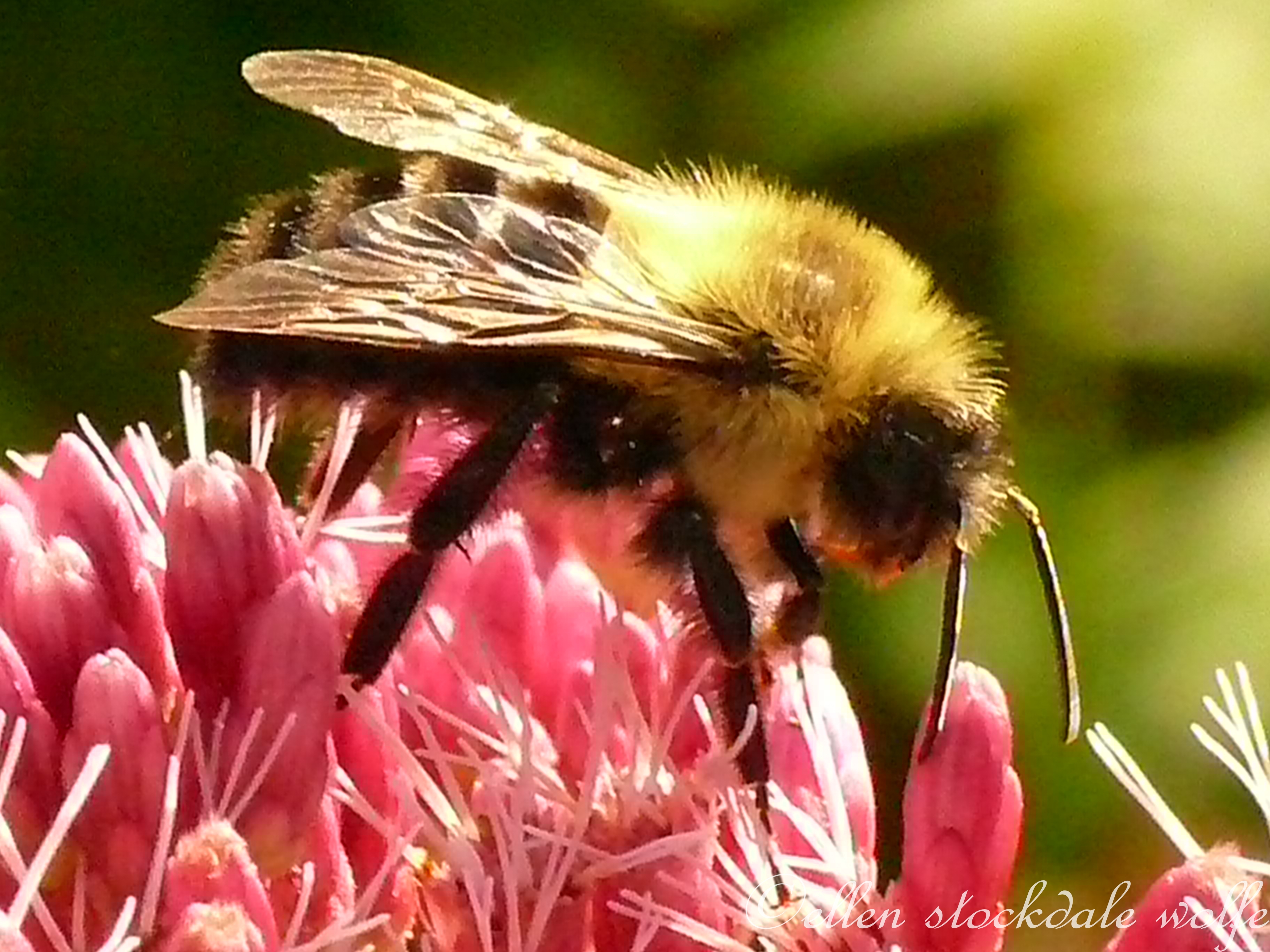
Bumblebees buzz across the lawn, miraculously defying gravity with their weight and size. They mix with the menacing whirr of wasps in a huge nest overhead. Flies and mosquitos hum literally in our ears as the occasional vibrating zum of a humming bird, jewel-like in the sun, flies around in the Joe Pie Weed. Dragon and damsel flies whizz by and hover in the air, occasionally even landing on us. All this reaches our ears above the constant background drone of crickets and cicadas.
As the day progresses, the late afternoon brings the intermittent twang of wood frogs hidden in the bushes, calling to each other from all directions. It seems we are surrounded by wood frogs and tree frogs who have replaced the frenetic, unceasing peeps of the spring peepers. Bird song reaches a crescendo and then dies down to silence for the night. The day sounds are replaced at night by the haunting hoo-hoo of a very close, but invisible, owl. The occasional crying baby sound of a bobcat cuts through the cricketed silence, and in the full moon the poignant howling of coyote fills the black night air, illuminated by silent fireflies.
And then there are the sounds of man and his machines. Noise pollution. Lawn tractors, airplanes, cars on the road, all terrain vehicles, weed wackers, motorcycles, trucks, lawn mowers, steam shovels. The list continues and grows in strength drowning out nature’s sounds of summer. With natural habitat dwindling, all the creatures of the wilderness are dying out or moving to last holds of their breeding grounds. Villages have become cities, masses of land covered in concrete and asphalt and steel, punctuated by tiny pockets of manicured nature.
Certain species of frog are becoming extinct around the world. The bee populations are dwindling leaving us to wonder who will pollinate the flowers. And the songbirds are dying out. Conservation biologist, Bridget Stutchbury in her book, Silence of the Songbirds, says this is partially due to habitat loss and predation but she believes the real culprit is pesticides. She says we are losing barn swallows, Eastern kingbirds, Kentucky warblers, bobolinks and wood thrushes. Pesticide can kill 7 to 25 songbirds per acre of application. As Stutchbury says we can stop this destruction by buying local and organic produce, in-season food and shade-grown coffee. As she points out, the balance of ecosystems is at stake because birds eat the caterpillars that fell forests. “If you take birds out of the forest, bugs are going to win.”
Though the current state of affairs looks grim there are activities one can do online to safeguard the future of the wilderness and its inhabitants. On one website you can click for free every day to give food and aid to animals. The address is http://www.animalrescuesite.com. On other websites, if you click on the “take action” button you can become involved in lobbying for animal rights and conservation of the wilderness with a modicum of effort, signing a letter, for example. And although you absolutely don’t have to, you can always make a donation. A select group follows …
http://www.sierraclub.org (The Sierra Club)
http://animallegaldefensefund.org (The Animal Legal Defense Fund)
http://farmsanctuary.com (The Farm Sanctuary)
http://www.peta.org (People for the Ethical Treatment of Animals)
http://humanesociety.org (The Humane Society)
http://defendersofwildlife.com (Defenders of Wildlife)
Add your voice to the sounds of summer, speak for those who can not, and insure the future of the symphonies of summer.
Welcome to samples of my work in various art forms showcasing “Eye-locks and Other Fearsome Things.” “Eye-locks” is a Bipolar/Asperger’s memoir in narrative form that describes the triumph of love over mental illness.
Jeepers, Peepers
When nature awakens in late March or early April, sap starts flowing in the trees and ice changes to water marking the end of hibernation. This is the grand opening of the wetlands and the pilgrimage to the vernal pools as David M. Carroll writes in his “Swampwalker’s Journal: a Wetlands Year.” A vernal pool is a body of water which fills up in autumn and winter and is swollen in the spring but often dries up completely by the end of the summer. Carroll describes vernal pools so beautifully: “It is at snowmelt and ice-out, the last sleets, first rains, and the earliest warming breaths of spring that they beckon wood frogs, salamanders, and spring peepers from surrounding upland woods, where they have passed the winter in rotted-out trees roots [a reason not to ‘clean up’ the woods], under layers of bark and litter, in small mammal tunnels and other hibernacula in the earth.” The melting snow heralds the march of the amphibians. “Vernal pool habitats hold a galaxy of small things that come to life the instant ice and snow turn back into water.”
Carroll walks the swamps, as the title of his book suggests, in search of mating salamanders and spotted turtles, bogs, fens and all wetland flora and fauna. He tells us that there must be a certain collusion of events– several warm days in a row followed by a darkest of nights with temperatures ideally in the mid-50s with rain preferably two nights in a row. And then the magical migration begins. The salamanders begin their “annual pilgrimage” to the vernal pond to mate.
My husband and I are lucky enough to have a vernal pond on the property next door to us and when Spring comes the sound at night from that pond makes us feel as if we are camping out next to a vast wetland. The music of the spring peepers plays through the night throughout the house, often starting overeagerly in the late afternoon. This manic symphony thrills us every year. It is the first sign of Spring for us. The quality of joyousness and the affirmation of life gladdens our souls. Going to sleep with that sound makes us remember what we so often forget, to give thanks to our Creator for his magnificent creatures.
Inspired by Carroll, one year we awaited the first dark, rainy warm night after a succession of warm days. In our rain gear, armed with flashlights we set out around 11PM to look for the march of the salamanders. We walked to the nearby pond. Nothing. We walked quite aways down a nearby dirt road that has run off but is not quite a vernal pond. We shone the flashlight this way and that. Nothing. We finally headed home disappointed and dejected and my husband started towards the front door when I yet out a yelp. There in the doorway was a 6 inch spotted salamander in all its glory! We never found the march of the salamanders but we were greeted by one of these fantastic amphibians right at our front door!
This story, however, does not have a happy ending. In his epilogue to the “Swampwalker’s Journal,” David Carroll explains why it took him more than 7 years to complete this book. He writes that he became involved in saving some of the wetlands in his book and says sadly nearly all of his interventions have or will become “losing battles.” He describes the plight of the wetlands, bogs and fens as a “landscape of loss.” And he scorns our human selfishness as he writes how it “reveals explicitly the extent to which we think of ourselves as owning all living things, along with the very earth, air, and water in which they live, as if we possessed some divinely mandated dominion over all creation.” He warns: “As we will learn in time none of this belongs to us.” I read these words, knowing them to be true and I think of the soon-to-be-extinct bog turtle and other creatures with the same possible fate. I think of the spotted salamander who came to our door, as did Shelley, the snapping turtle who returns to our drive way every year to lay her eggs and I think of the spring peepers whose joyous song heralds spring and I fear for their future.
Winter Doldrums
(Click to enlarge)
It is frigid outside and has been for a few days now. It is frigid in many parts of the country. The holidays have come and gone. Now begins the nitty gritty of hard winter work. I find myself listless and not wanting to go out or exercise or paint or take pictures or do much of anything I usually love to do. I have a cold but that does not excuse this lassitude and when I go to my favorite deli, I find that Terry is in the same mood. “I was ready to go home the moment I came in,” she said. And I wondered. My husband was dour and I was sour. What is this? Could it be some vestigial remnants of human hibernation? Maybe we should hibernate for awhile each winter. We binge on food and drink over the holidays. Perhaps we should be sleeping off the extra pounds.
I who love winter and live for Fall each summer find myself longing to hear the music of the spring peepers. It is months away– well, about a month and a half away. They are the first harbingers of new life for me. Terry, who also loves winter, tells me today she is sick of winter. Perhaps it is this string of Arctic air and grey days and icy road conditions. Perhaps it is the human condition to always be dissatisfied with something or other.
I miss the squirrels. It has been so cold they seem to be laying low in their nests. Judging from the tracks in the back yard the only animals on the move are the deer. And as much as I love the silence of winter, I find myself longing for the sweet dulcet music of birdsong at mating season in spring.
We bought this calendar that has a celestial map of the sky for each month so you can find the constellations in the night sky. But it has been too overcast or too cold or too something. We have yet to go out with flashlights and match the map with the canopy of stars. But I am still humbled in a dazzled psyche over the view of the stars through the stripped down trees that we see out our window from bed every night.
Then again maybe it is laziness. Too many sugar highs in December have led to a deep low in February. And with a tease of spring one day in which the temperature reached almost 50 degrees maybe we were let down even further. Not liking being unproductive I think I can overcome this– but maybe the thing is to go with the flow and allow a period of inactivity, let the land lay fallow, so that an increase in productivity may eventually result.
Maybe the thing to do is not to panic. Spring will come. Hopefully, if man has not destroyed all the vernal pools, the spring peepers will return and, if pesticides have not destroyed all the birds, sweet mating songs will be sung and bees and other insects will buzz. And if the weather turns more clement, our spirits will once again soar and we will be busy buzzing with the business of living.

(Click to enlarge)
The Betrayal of the Young Ones of Today

When I was a Child…
When I was little I swore to myself that I would not be one of those grown-ups who told children “When I was a child, I walked 10 miles back and forth to school every day in all weather– blizzards and ice storms, and I carried 15 pounds of books on my back and I took care of my eight little sisters and brothers and such and such and such and such.” But here I am, not telling it to my grandchildren, but worse, writing it in a blog post. My excuse? I feel almost an obligation to tell young people what they are missing and point the finger at the cause. There seems to have been a fundamental shift in reality as we know it. Maybe every generation feels this and that is why there are these older people going around saying: “When I was a child…”
When I was a child, I remember autumns so brisk you could feel the frost on your cheeks in October rather than a sun beating down 80 degrees in “unseasonably warm” weeks of extended summer. I remember Thanksgivings so cold the grown-ups drank hot toddies at the Thanksgiving Day parade and we children would go home with frozen fingers and red cheeks and warm by the fire before the grand feast began. It was never 70 degrees in November or God forbid in December!! And I remember ice skating on a frozen pond in January and going home with toes so frozen they hurt when you put them near the radiator to warm up. And swollen red fingers. But the hurt felt good and the fresh air felt good and the icy cheeks felt good, for you knew you were really alive, with a keen mind and an invigoration that rivaled any cup of Frapaccino from Starbucks. And I remember springs so cool you needed to have a spring coat or jacket. Winter did not just stop one day and summer begin the next with 90 degree days in April. My memories are precious and the young today may never know such memories in great thanks to Global Warming. Now it is approaching normal to have 70 degrees in November and 90 degrees in April.
And most of all when I was little I remember looking at the night sky and seeing a phantasmagoram of stars. Some readers may remember 50 years ago looking up at the Sputnik passing overhead and they may recall the stars seeming brighter then. They were. Today thanks to light pollution we see “less than one per cent of what Galileo would have been able to see without a telescope” as David Owen writes in his recent article The Dark Side. This light pollution is called “sky glow” and basically it means that because of air pollution the atmosphere is more reflective rather than being transparent making it harder to see the stars.
Of course this brings up the outrage and perils of air pollution which clouds the skies night and day!!!
On top of that so much illumination from the earth has faded the stars above thanks to things called “glare bombs” which are light fixtures that spread light sideways right into our eyes. Owen explains that the “eye adapts to the brightest thing in sight… when you have glare, the eye adapts to the glare, but then you can’t see anything darker.” It has to do with the rods and cones in our eyes. Rods are what allow us to see at night and cones give us color vision. The rods are very sensitive and can take an hour to readjust to the dark after being exposed to a light. The brighter the light, the longer it takes to adjust. So we are making it harder to see with these bright light packs that Owen points out make it easier for crime to occur because it is harder for people to see in the dark areas. This is why deer, who have superior night vision due to a greater concentration of rods, are blinded by headlights of cars. It has nothing to do with their intelligence and again, like all of this, plenty to do with man’s so called “progress.” And these light packs are so bright, Owen reckons they could probably be seen from earth with a hobbyist’s telescope if they were put on the moon. He points out that in a “truly dark sky” one can see more shooting stars than one can count. I have never seen a shooting star. My husband saw one as a child in camp in Wisconsin.
“I need a place where I can see the stars,” my husband said when we decided to buy our renovated barn in Stanfordville. And when we gaze at the night sky it sometimes takes our breath away and indeed on some nights we just stand outside gazing upwards speechless. It is the “awe” factor and seeing ourselves within the perspective of the infinite. But in the 5 years we have been here, the sky has become brighter and the stars harder to see. Poughkeepsie is a bright glow on the horizon and just a few weeks ago some sort of electrical transformer was installed on our road with a piercing green light maybe one inch in diameter that illumines the road and the whole front of our house at night. My husband calls it “the green eye of Mordor.” This light makes star gazing more difficult.
I mourn the frosty falls, the cold winters, the cool springs and the brilliant night sky. But at least people of my generation have their memories. The young people of today have been short-changed by my generation who have squandered nature. The youth of today have grown up deprived of some of the most brilliant shows of natural beauty and variety in climate. Global warming and pollution are the criminals here. They have robbed today’s children of some of life’s greatest treasures– treasures that turn into warm memories, themselves treasures, of “When I was a child…”

Welcome to samples of my writing showcasing “Eye-locks and Other Fearsome Things.” “Eye-locks” is a Bipolar/Asperger’s memoir in narrative form that describes the triumph of love over mental illness.
BEINGS OF LIGHT

(Click to enlarge)
December is my favorite time of year. In this the month of darkness, in this the darkest month, the light of the human spirit shines forth in a fullness shown by so many, in so many ways. As the days grow shorter in North America, houses and trees are decorated, and snow falls. In the hushed silence of the nights, lights shine in windows, and the beauty is shared by passersby. For this season of giving brings the festivals of lights: Hanukkah, Christmas, Kwanza. Each tradition incorporates light in its ceremonies and decorations.
An animal friend who lived down the road, a donkey in his stable, reminded me of the story of another manger over 2000 years ago. And seeing him snug in his stable with snow on the ground gave the illusion that all was right in the world. But all was not well and all is not right now. Thousands know no peace in any season. Millions are cold and starving. Racism and religious wars prevail. Climate change advances in leaps and bounds, faster than most predicted.
Those who live closer to the land are especially blessed. They share their lives with animals who are constant reminders of humility and simplicity in this rapid, complex, multi-tasking world. They can drive around on a December night and see houses covered in lights with illuminated trees, houses warmed by fires, imagining them filled with laughter and conversation and love, and feel blessed. Blessed to have so much when others have so little. Blessed to be able to celebrate as they wish when others cannot.
Yet even those living in the worst conditions show the light of the human spirit and celebrate the season of light in personal ways. For the human spirit is indomitable.
(Click to enlarge)
Einstein said: “A human being is part of the whole, called by us the ‘Universe”– a part limited in time and space. He experiences himself, his thoughts, and feelings, as something separated from the rest– a kind of optical delusion of his consciousness. This delusion is a kind of prison for us, restricting us to our personal desires and to affection for a few persons nearest us. Our task must be to free ourselves from this prison by widening our circles of compassion to embrace all living creatures and the whole of nature in its beauty.” We are all cut from the same cloth and our inner light unites us.
In December’s darkness we light lights. For we are beings of light. A light glows within each one of us. And, at the most basic level, we are all beings of light because we are made from stardust. Perhaps that is why the stars hold such majesty for us– we are all– Muslim, Christian, Jew, Hindu, Buddhist– whatever– we are all made from star material.
And in this holiday season we behold the night sky as Christians say shepherds did over two thousand years ago on the birth of the holy infant, in a stable like the one down the road. On that night they say a star lit the whole sky to guide the shepherds to the stable of the infant, Jesus, the son of God.
In these deep, long, silent nights as we light our houses, our candles, our trees, let us look inside and try to find the glow that may guide us each, alone but intrinsically one, to the LIGHT!

(Click to enlarge)
Welcome to samples of my writing and art work showcasing “Eye-locks and Other Fearsome Things.” “Eye-locks” is a Bipolar/Asperger’s memoir in narrative form that describes the triumph of love over mental illness.
The Edge of Winter
(Click to enlarge)
It is an overcast day. Brightly colored birds stand out like jewels in the greyness. The winter birds– jays and cardinals, juncos, black-capped chickadees, white-breasted nuthatches and downy woodpeckers flock to the bird feeder and it has to be filled up almost every day. The red berries on the bushes are nearly all gone and the feeder is becoming a matter of survival. On our walks we see empty nests held in the bare arms of winter trees. An empty robin’s nest is filled with snow– the hatchlings and the mother long gone to fairer climes. The trees are stripped down to their souls. With ice storms they become tinkling chandeliers. In the rain the few remaining dead leaves drip icy tear drops.
Occasionally a dove visits the feeder. The chipmunk, who gathered scattered seeds under the feeder all fall, is not to be seen. He must be in torpor in his den. According to Bernd Heinrich in: The Winter World: the Ingenuity of Animal Survival, the eastern chipmunk builds a twelve foot storage system with a nest chamber some three feet down and a tunnel system which includes a food storage chamber. Heinrich says chipmunks go in and out of torpor. He reasons that they would not gather food if they were to be in torpor all winter long. We will probably not see our chipmunk for the rest of the winter for, in his stuporous state, he would be easy prey. However he can be roused to eat and venture outdoors if need be, especially in March when there still may be snow on the ground but mating season begins.
The grey squirrels are busy clearing snow from branches as they run along tree limbs. On the ground they dig through the snow for the walnuts we watched them bury in the ground with their noses this fall. They do not need to hibernate for they have food stores which they built up in the autumn and leafy, well-insulated nests. The red squirrels survive winter by putting on a thick, insulating fur.
The back yard is a maze of tunnels. We think they are deer mouse tunnels as many have tunneled their way into our house. But they must get by the feral cat who sometimes waits out a snow storm under our deck. In the woods, the occasional deer waits out the same storm under a squat fir tree. The tracks in the snow tell the story of how they weathered a Nor’Easter.
Beneath the tracks in the snow, in the frozen leaf litter, the insect world is dormant. Some hibernate. Others fill their bodies with antifreeze, glycerol, to stay alive. Heinrich talks about woolly bears hibernating but they are also capable of freezing solid and surviving, coming to life again as they thaw in the spring. The pupae, however, don’t survive being frozen.
In Winter: an Ecological Handbook, authors, James C. Halfpenny, Elizabeth Besiot and Roy Douglas Ozonne, tell us that the reptiles and amphibians pick out a “microclimate for hibernation that does not freeze” for their winter, such as the “bottoms of ponds, streams, or deep in the ground.”
Our stream flows out back in the marsh under ice and snow and one can see the elongated bubbles of running water. In the pond next door the turtles lay beneath the ice in their hibernacula. At the end of the book, The Year of the Turtle, David M. Carroll, the naturalist, author and artist, has his watercolor of a spotted turtle hibernating. This picture is hypnotic and in its spell, I think of all the animals hibernating beneath our feet in lugubrious gloom. It reminds me of the penguins in the film, The March of the Penguins, in the dead of an Antarctic winter, huddled together for warmth in the harsh, strong winds and snow, taking turns being on the outside of the huddle. Winter can be magnificent in its transformations yet tragic in its harshness: hibernating animals who freeze to death and deer starving to death in the snow among the victims of its violence.
Carroll’s drawing shows the turtle all alone, withdrawn into its shell under less than two feet of water lodged firmly in the mud under ice under snow in a sunny winter’s day, a far better clime than the penguin’s– and yet it evokes a certain sadness for this little creature all alone beneath the snow, in a torpid state. The turtle is missing out on a sunny day, sleeping a deep sleep in a “half year of stillness.”
Carroll’s writing is sheer poetry as he describes the turtle’s hibernation: “Mounting layers of snow silently cover the ice. Night after night in the harshest depth of winter, as Orion and the Pleiades burn distant and brilliant in the black sky and strong winds howl off the mountain to the northwest, the turtles rest beneath the ice. With the life in them nearly suspended, reduced to its most tenuous hold, all but extinct in the vast, inhospitable regime that reaches above them to the limits of the universe, they lie within their shells, waiting for the earth to make its required turnings and return them to the sun that will awaken them to another season.”
I think of the turtles below, along with all the other beautiful creatures. I wish them a kind sleep from which they will safely stir with the life force surging through their veins as the sun brings them to the fullness of life again. The death of some, and the half life of so many, proffers the poignancy of winter.
(Click to enlarge)
Welcome to samples of my writing and art work showcasing “Eye-locks and Other Fearsome Things.” “Eye-locks” is a Bipolar/Asperger’s memoir in narrative form that describes the triumph of love over mental illness.
The Trees of Late Fall & the Promise of Winter
(Click to enlarge)
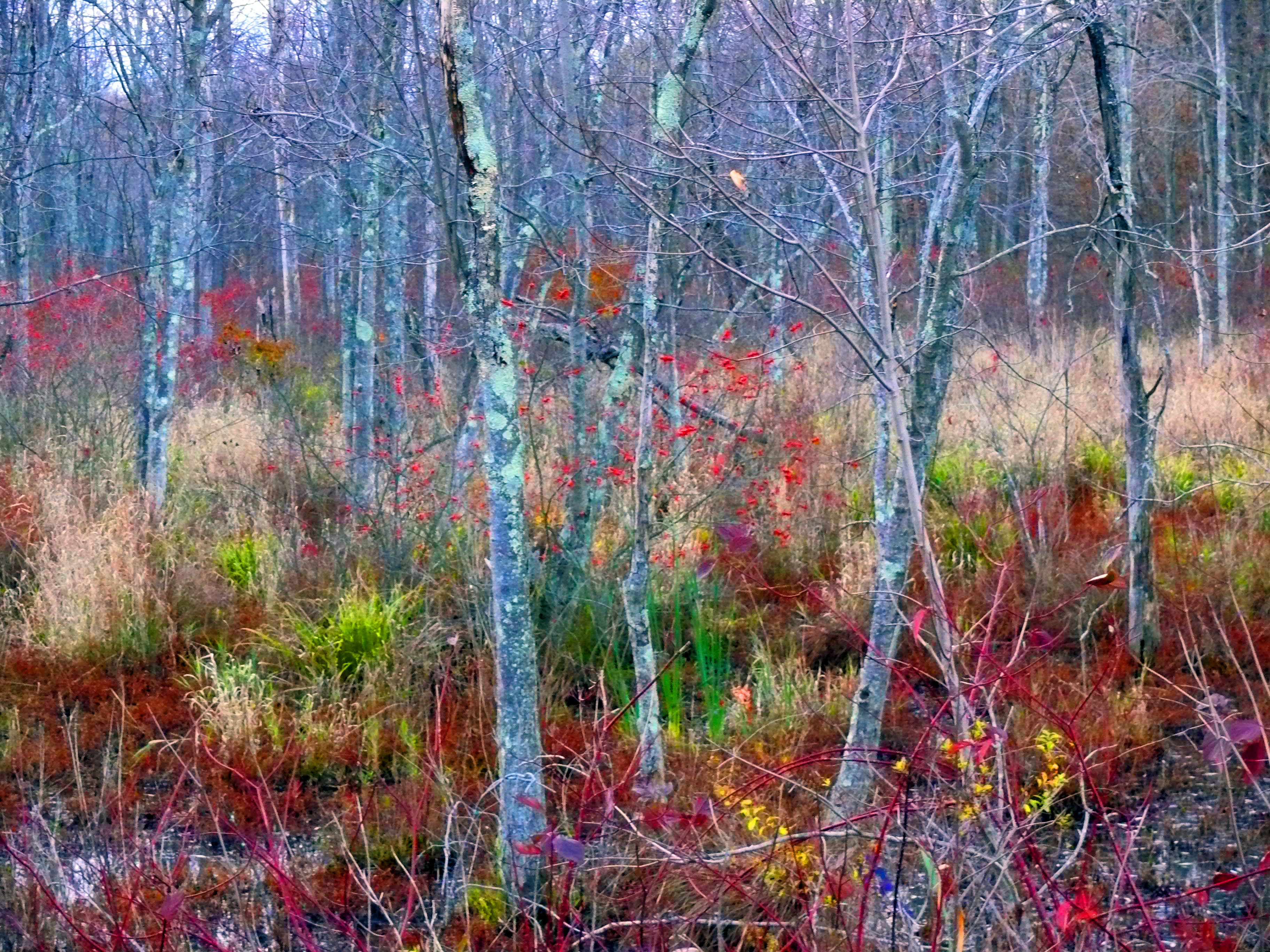
Bontecou Lake Swamp, Millbrook, New York
Every year what budded in autumn blossoms full blown in the weeks before official winter– my love affair with trees. Trees that were drop-dead gorgeous in their fall colors are now bare, with the exception of evergreens and a few stray deciduous trees that refuse to relinquish their leaves. Now the trees are stripped down to their souls and their souls sing a siren song to the universe.
The tops of trees lift my spirit; brushlike they paint the sky the baby pinks and blues of mornings, and the majestic magentas and violets of day’s end. Each tree has its signature shape against the sky, like a fingerprint or a snowflake, similar yet each unique. Some treetops in their bare state are shaped like a fancy coiffure; others look like wrought iron filigree. On distant mountains, against the snowy ground, some look like stubble on an old man’s unshaven face.
It is the cold, colorful pre-winter sky showing through, and showing off, the bare branches that woos me. The bare curvaceous branches are stark, dark lines against the bright of day and the inky sky of night. These resplendent creatures are living lines that explode. Branches tangle like the lines in a Jackson Pollock painting. Others curve in the sensuous lines of a Brancusi sculpture. Buxom tree trunks stand strong surrounded by their colorful, dead blossoms amid the ground cover and their burgeoning berries, the offspring of a Renaissance Madonna. In truth these trees are not like art at all. Rather art imitates them– their beauty provides the timeless inspiration for artists, writers and poets of all ages and styles.
Trees not only inspire, they themselves are paragons of diversity. One look out of a car window while driving on the Taconic and one can see squat pines alongside towering majestic firs, birches interspersed with maple and oak. And together the different brown and tan barks interspersed with evergreens create not only a mosaic of contrasting colors, but display an example to inspire humans to live together in peaceful unity.
These beneficent beings carry the heavy, dark grey clouds of winter. When it snows the tree trunks become canvases for the abstract patterns of windblown-snow, while the serpentine branches are outlined in white. In ice storms their branches become chandeliers, each enveloped in glassine ice. While in the melancholy of a winter rain, the branches become oiled skins of snakes weeping to the ground below. And finally, in the night sky, the branches hold the stars in their arms, those with leaves holding them in their hands, as they nurse the moon.
All trees, no matter what their species, age or height, stand tall in proud humility, their arms reaching up to the Heavens to our Creator in prayer– soft-spoken beings of peace and tranquility towering over us, while we wee, little creatures race around distractedly below.

(Click to enlarge)
Hammond Road, Millbrook, NY










 MOONSIDE
You must be logged in to post a comment.