In the Hush of it All…
As Christmas recedes into yesteryear, and as turtles and other creatures sleep in frozen slumber, and the New Year dawns after the birth of winter, let us weather the sorrows and “Fully enjoy the wonder and beauty of each instant.”
Paramahansa Yogananda
HAPPY NEW YEAR!

The Edge of Winter

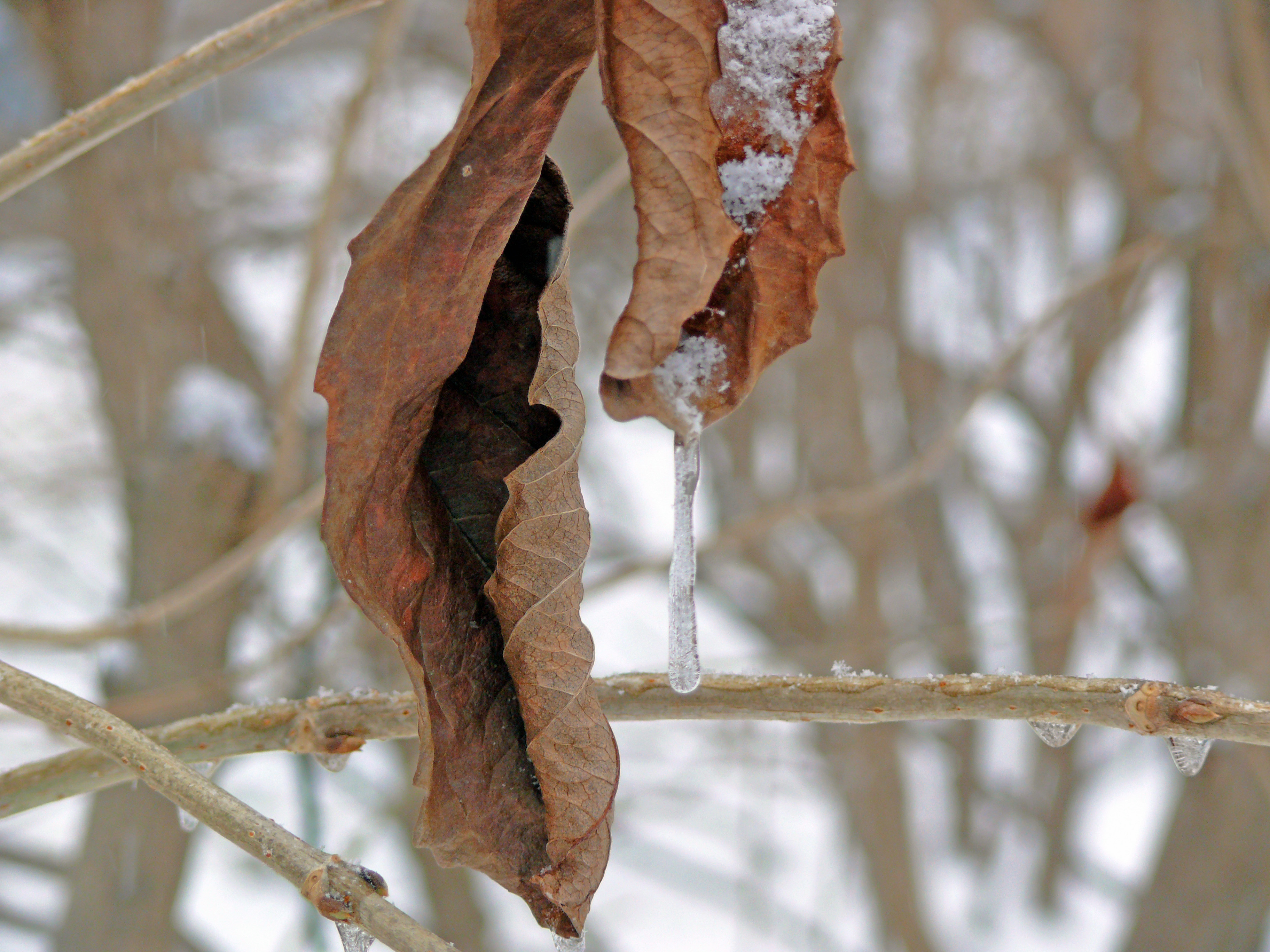
It is an overcast day. Brightly colored birds stand out like jewels in the greyness. The winter birds– jays and cardinals, juncos, black-capped chickadees, white-breasted nuthatches and downy woodpeckers flock to the bird feeder and it has to be filled up almost every day. The red berries on the bushes are nearly all gone and the feeder is becoming a matter of survival. On our walks we see empty nests held in the bare arms of winter trees. An empty robin’s nest is filled with snow– the hatchlings and the mother long gone to fairer climes. The trees are stripped down to their souls. With ice storms they become tinkling chandeliers. In the rain the few remaining dead leaves drip icy tear drops.
Occasionally a dove visits the feeder. The chipmunk, who gathered scattered seeds under the feeder all fall, is not to be seen. He must be in torpor in his den. According to Bernd Heinrich in: The Winter World: the Ingenuity of Animal Survival, the eastern chipmunk builds a twelve foot storage system with a nest chamber some three feet down and a tunnel system which includes a food storage chamber. Heinrich says chipmunks go in and out of torpor. He reasons that they would not gather food if they were to be in torpor all winter long. We will probably not see our chipmunk for the rest of the winter for, in his stuporous state, he would be easy prey. However he can be roused to eat and venture outdoors if need be, especially in March when there still may be snow on the ground but mating season begins.
The grey squirrels are busy clearing snow from branches as they run along tree limbs. On the ground they dig through the snow for the walnuts we watched them bury in the ground with their noses this fall. They do not need to hibernate for they have food stores which they built up in the autumn and leafy, well-insulated nests. The red squirrels survive winter by putting on a thick, insulating fur.
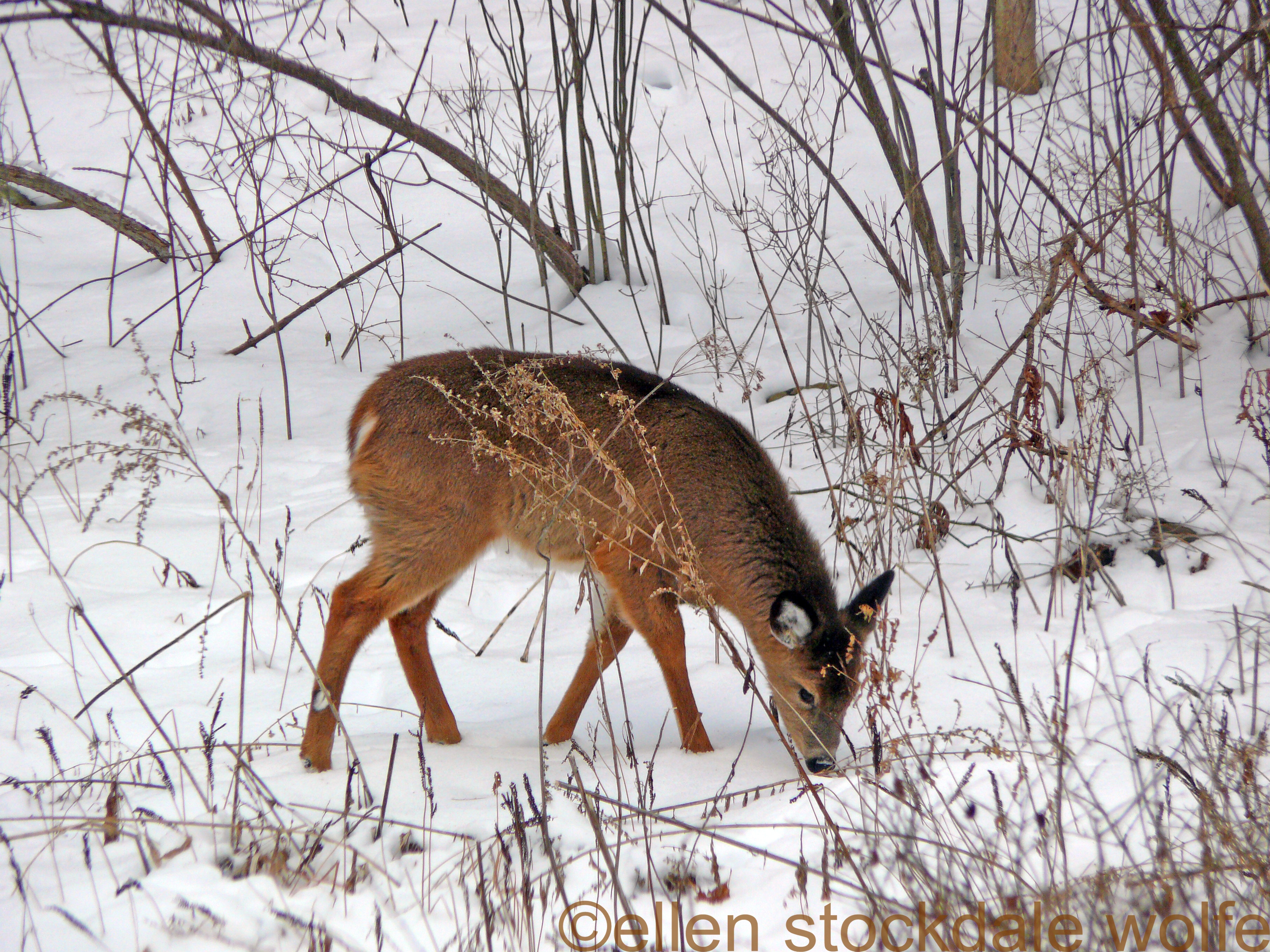
The back yard is a maze of tunnels. We think they are deer mouse tunnels as many have tunneled their way into our house. But they must get by the feral cat who sometimes waits out a snow storm under our deck. In the woods, the occasional deer waits out the same storm under a squat fir tree. The tracks in the snow tell the story of how they weathered a Nor’Easter.
Beneath the tracks in the snow, in the frozen leaf litter, the insect world is dormant. Some hibernate. Others fill their bodies with antifreeze, glycerol, to stay alive. Heinrich talks about woolly bears hibernating but they are also capable of freezing solid and surviving, coming to life again as they thaw in the spring. The pupae, however, don’t survive being frozen.
In Winter: an Ecological Handbook, authors, James C. Halfpenny, Elizabeth Besiot and Roy Douglas Ozonne, tell us that the reptiles and amphibians pick out a “microclimate for hibernation that does not freeze” for their winter, such as the “bottoms of ponds, streams, or deep in the ground.”
Our stream flows out back in the marsh under ice and snow and one can see the elongated bubbles of running water. In the pond next door the turtles lay beneath the ice in their hibernacula. At the end of the book, The Year of the Turtle, David M. Carroll, the naturalist, author and artist, has his watercolor of a spotted turtle hibernating. This picture is hypnotic and in its spell, I think of all the animals hibernating beneath our feet in lugubrious gloom. It reminds me of the penguins in the film, The March of the Penguins, in the dead of an Antarctic winter, huddled together for warmth in the harsh, strong winds and snow, taking turns being on the outside of the huddle. Winter can be magnificent in its transformations yet tragic in its harshness: hibernating animals who freeze to death and deer starving to death in the snow among the victims of its violence.
Carroll’s drawing shows the turtle all alone, withdrawn into its shell under less than two feet of water lodged firmly in the mud under ice under snow in a sunny winter’s day, a far better clime than the penguin’s– and yet it evokes a certain sadness for this little creature all alone beneath the snow, in a torpid state. The turtle is missing out on a sunny day, sleeping a deep sleep in a “half year of stillness.”
Carroll’s writing is sheer poetry as he describes the turtle’s hibernation: “Mounting layers of snow silently cover the ice. Night after night in the harshest depth of winter, as Orion and the Pleiades burn distant and brilliant in the black sky and strong winds howl off the mountain to the northwest, the turtles rest beneath the ice. With the life in them nearly suspended, reduced to its most tenuous hold, all but extinct in the vast, inhospitable regime that reaches above them to the limits of the universe, they lie within their shells, waiting for the earth to make its required turnings and return them to the sun that will awaken them to another season.”
I think of the turtles below, along with all the other beautiful creatures. I wish them a kind sleep from which they will safely stir with the life force surging through their veins as the sun brings them to the fullness of life again. The death of some, and the half life of so many, proffers the poignancy of winter.
When the Snows Come

My husband and I sit in our living room with all the little still-intact dairy barn windows showing flakes falling as if we are on ship at sea in a snowfall. Except for the high ceiling the living room has the feeling of a ship cabin, our converted dairy barn, and I think it is most beautiful when the snow is falling.
The glass doors at the pentagon of the far end of the barn gives us perfect view of the suet bird feeder. We only feed the birds suet in winter because in summer a fat raccoon comes and eats the whole suet cake in one sitting. The bird feeder in winter is our television. We watch male cardinals, bright red in the stark white, feed and contend with the beautiful, bullying blue jays. And the more modest and gentle little juncos and sparrows touch our hearts with their humility.
One winter, when the snow had covered the ground for a month or so and turned to solid ice we watched horrified as squirrels clawed at the feeder and fought with one another for a chance to feed making their shrill cries of territoriality. That hasn’t happened since and we think the ground was too frozen for them to retrieve the nuts and such that they buried in the fall and they were fighting off starvation.
Waking up in the morning there is no need for a weather report as we see the snow piled high on the surrounding trees and we see the sky through the second story doorway in the barn where they used to bring hay inside, now a cathedral window in our bedroom. The thermometer in the former hay loft tells us how cold it is though we can feel how chill the air is. It is great to wake up to see the squirrels running along the limbs of the trees, cleaning off the heavy snow. They seem friskiest just aftter a snowfall.
And if we are lucky and the snow is deep enough we get out our snow shoes and climb up the hill behind our little barn to what we were once told was a Christian Indian burial ground. There are no markers left but the spot has the air of the sacred and it affords a small view of the Catskills in winter. High on the hill overlooking the valley, it seems a perfect place for a burial ground. The snowfall makes it easier to walk the hill which in the summer is too full of saplings and underbrush to be able to walk the “meadow” as we call it. We only get it brush hog mowed once a year.
Our property does not include the entire meadow but on our half of the meadow there is a squat fir tree there which provides a great shelter for deer in a storm and the deer love the meadow. There are a few blown over trees. And as we snow shoe we see all kinds of animal tracks which we attempt to identify. And animal shelters from the harsh elements.
Like many barns, ours was built near the road so we do get some traffic noise. But in the meadow we are far removed from the road and its bustle. And when it snows, it is so beautiful in the quiet, looking at the animal tracks and feeling the spirits in the graveyard. Our secret little piece of Paradise. And to stand there in the silence, in the virgin white, and see the abstract patterns of the snow on the surrounding hundreds of trees is divine.

Welcome to samples of my writing and art work showcasing “Eye-locks and Other Fearsome Things.” “Eye-locks” is a Bipolar/Asperger’s memoir in narrative form that describes the triumph of love over mental illness.
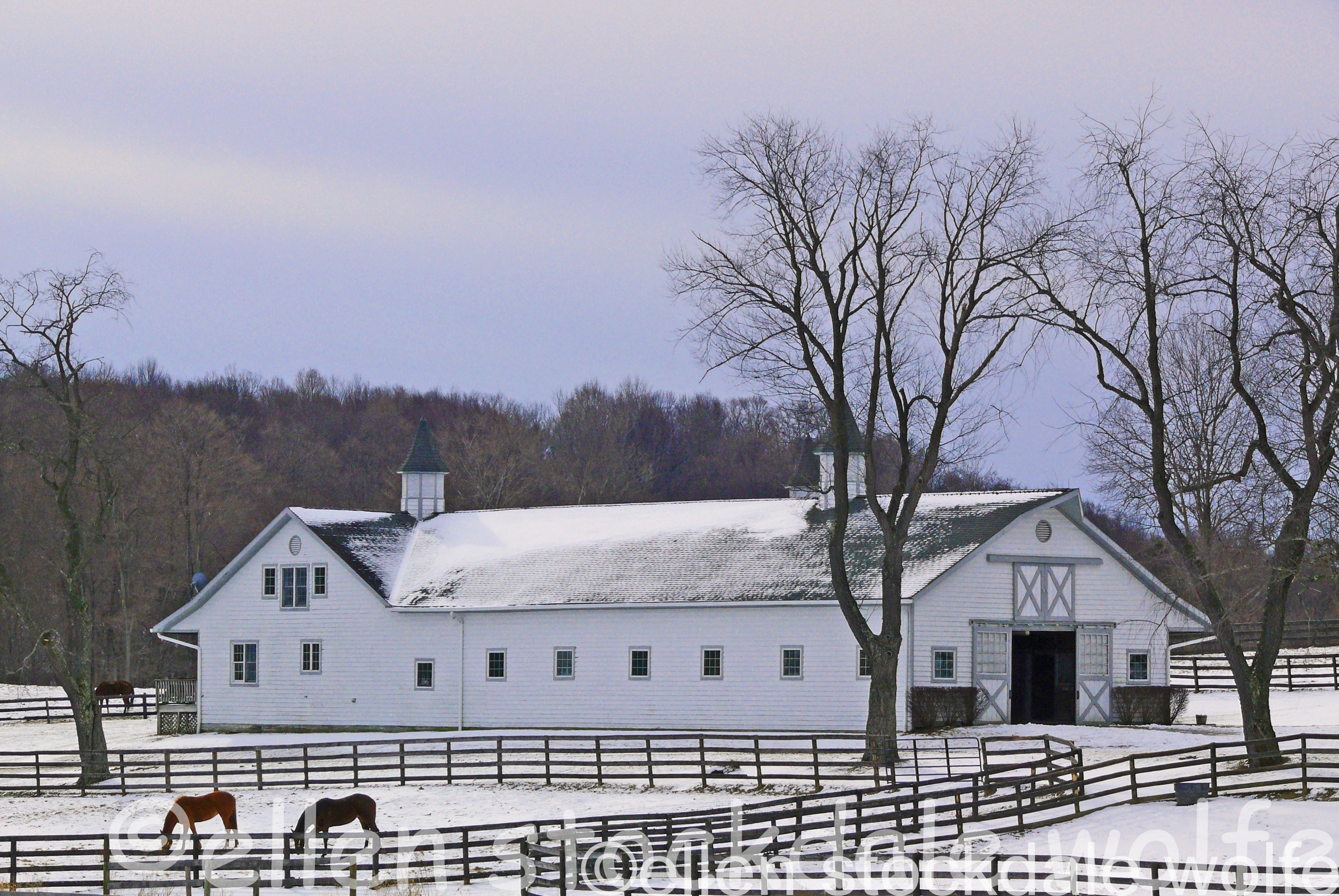
The Spirit of Snow
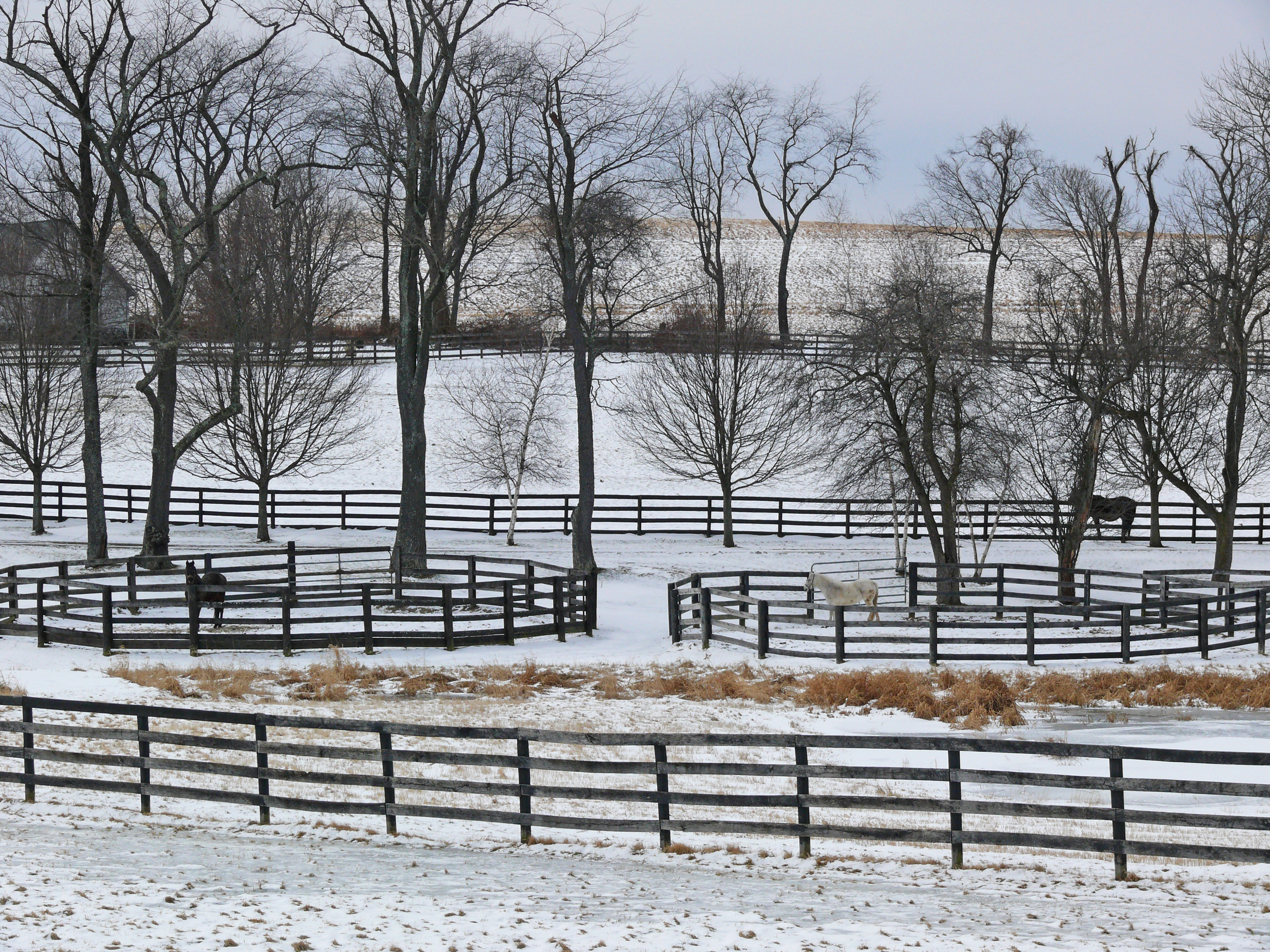
The Spirit of snow
highlights the love of line
the loving grace of trees in winter
bare and spiritual
the horses a gift of color
in otherwise black and white



The Light Within
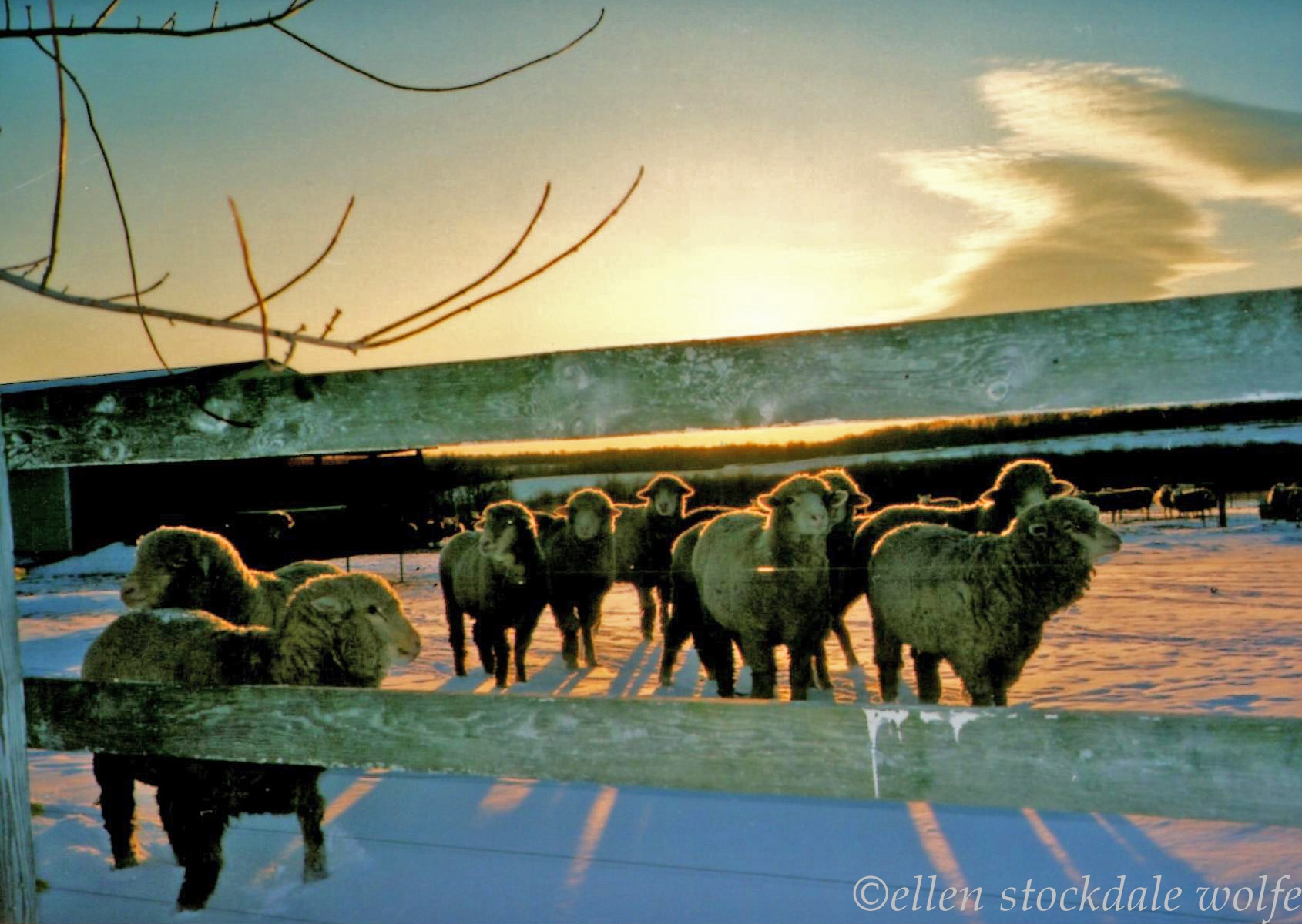
December is my favorite time of year. In this month of darkness, in this the darkest month, the light of the human spirit shines forth in a fullness shown by so many, in so many ways. As the days grow shorter, houses and trees are decorated, and snow falls. In the hushed silence of the nights, lights shine in windows, and the beauty is shared by all. For this season of giving brings the festivals of lights: Hanukkah, Christmas, Kwanza. Each tradition incorporates light in its ceremonies and decorations.
In December’s darkness we light lights. For we are beings of light. A light glows within each one of us. And, at the most basic level, we are beings of light because we are made from stardust. Perhaps that is why the stars hold such majesty for us– we are made from star material.
Einstein said: “A human being is part of the whole, called by us the ‘Universe”– a part limited in time and space. He experiences himself, his thoughts, and feelings, as something separated from the rest– a kind of optical delusion of his consciousness. This delusion is a kind of prison for us, restricting us to our personal desires and to affection for a few persons nearest us. Our task must be to free ourselves from this prison by widening our circles of compassion to embrace all living creatures and the whole of nature in its beauty.” We are all cut from the same cloth and our inner light unites us.
And in this holiday season we behold the night sky as shepherds did two thousand years ago on the birth of the holy infant, in a stable like the one down the road where my donkey friend lives. That night a star lit the whole sky to guide the shepherds, and on these deep, long, silent nights as we light our houses, our candles, our trees, let us look inside ourselves and find the glow that may guide us to The Light
A holy Hanukkah, a magical Christmas and the ecstasy of Sadhguru to all for the New Year! May we awaken from Maya and realize the wonders we are… for inside each of us burns the Sacred Light of the Universe.
A Barn in Winter

Bare branches
yearning towards
turquoise sky
with fast floating
sunlit white clouds
white above
white below
the snow
hides the land
of insects
and mice
and moles
and snakes
and in the vernal pool
next door
turtles sleep
in their hernaculum
while frogs lay
dormant in the mud
I sit in sleepy
surrender
glad to be
in our little hideaway
in the woods
of our young dreams
wondering
if we will all
awaken
to another Spring.
When the Snows Come

My husband and I sit in our living room with all the little still-intact dairy barn windows showing flakes falling as if we are on ship at sea in a snowfall. Except for the high ceiling the living room has the feeling of a ship cabin, our converted dairy barn, and I think it is most beautiful when the snow is falling.
The glass doors at the pentagon of the far end of the barn gives us perfect view of the suet bird feeder. The bird feeder in winter is our television. We watch male cardinals, bright red in the stark white, feed and contend with the beautiful, bullying blue jays. And the more modest and gentle little juncos and sparrows touch our hearts with their humility.
Like many barns, ours was built near the road so we do get some traffic noise. But in the meadow out back beyond the marsh and stream, we are far removed from the road and from all. And when it snows, it is so beautiful in the quiet, looking at the animal tracks and feeling the spirits in the nearby now-graveless graveyard. Our secret little piece of Paradise. And to stand there in the silence, in the virgin white, and see the abstract patterns of the snow on the surrounding hundreds of trees is Divine.
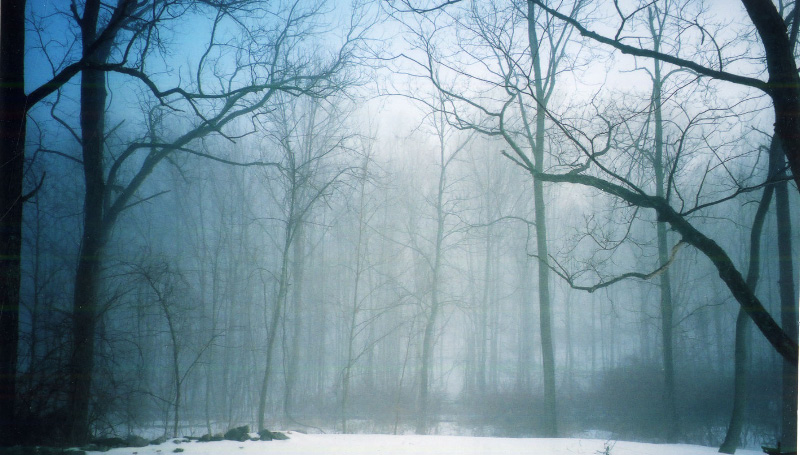
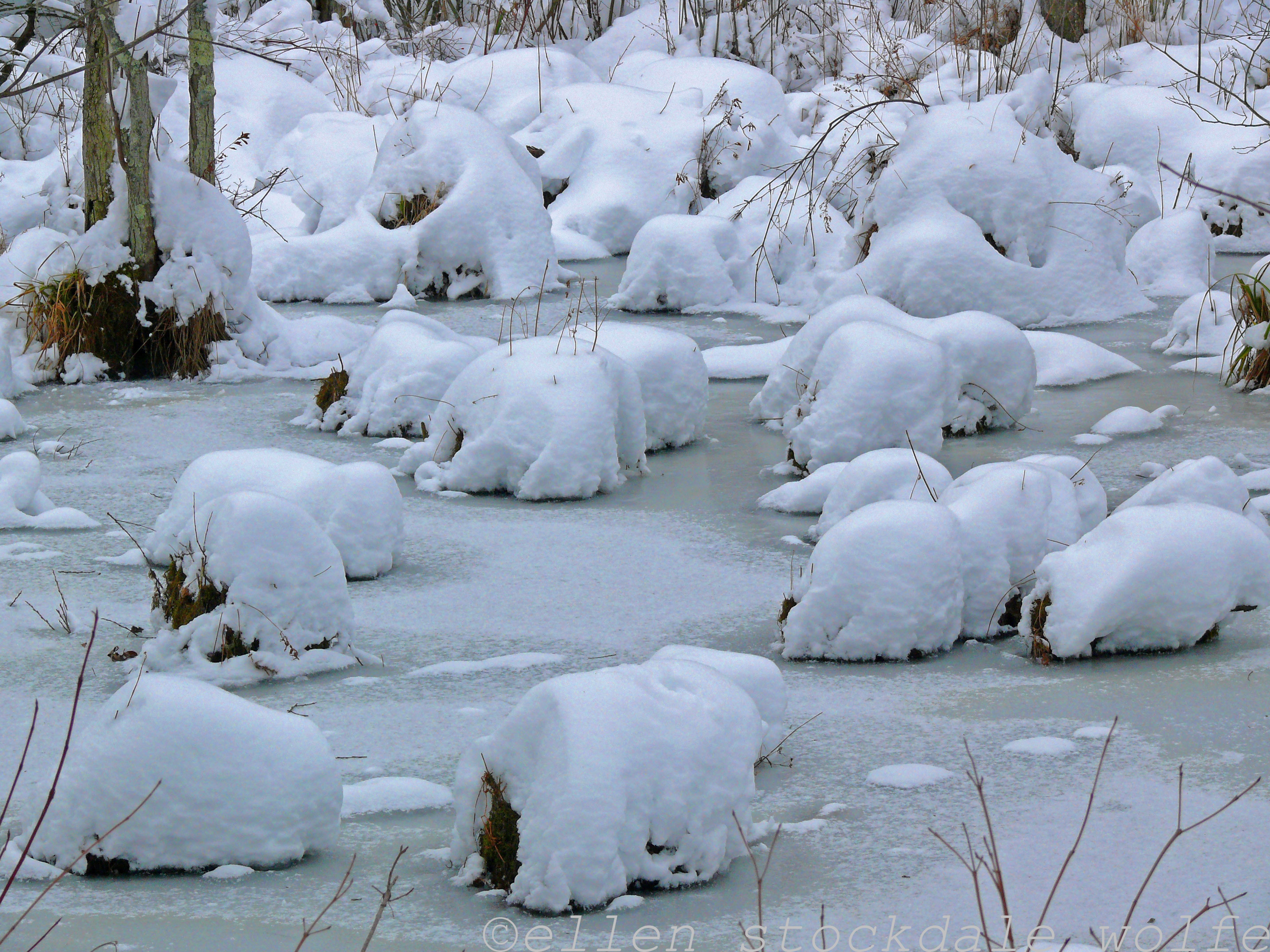
Blessings of the Winter Solstice

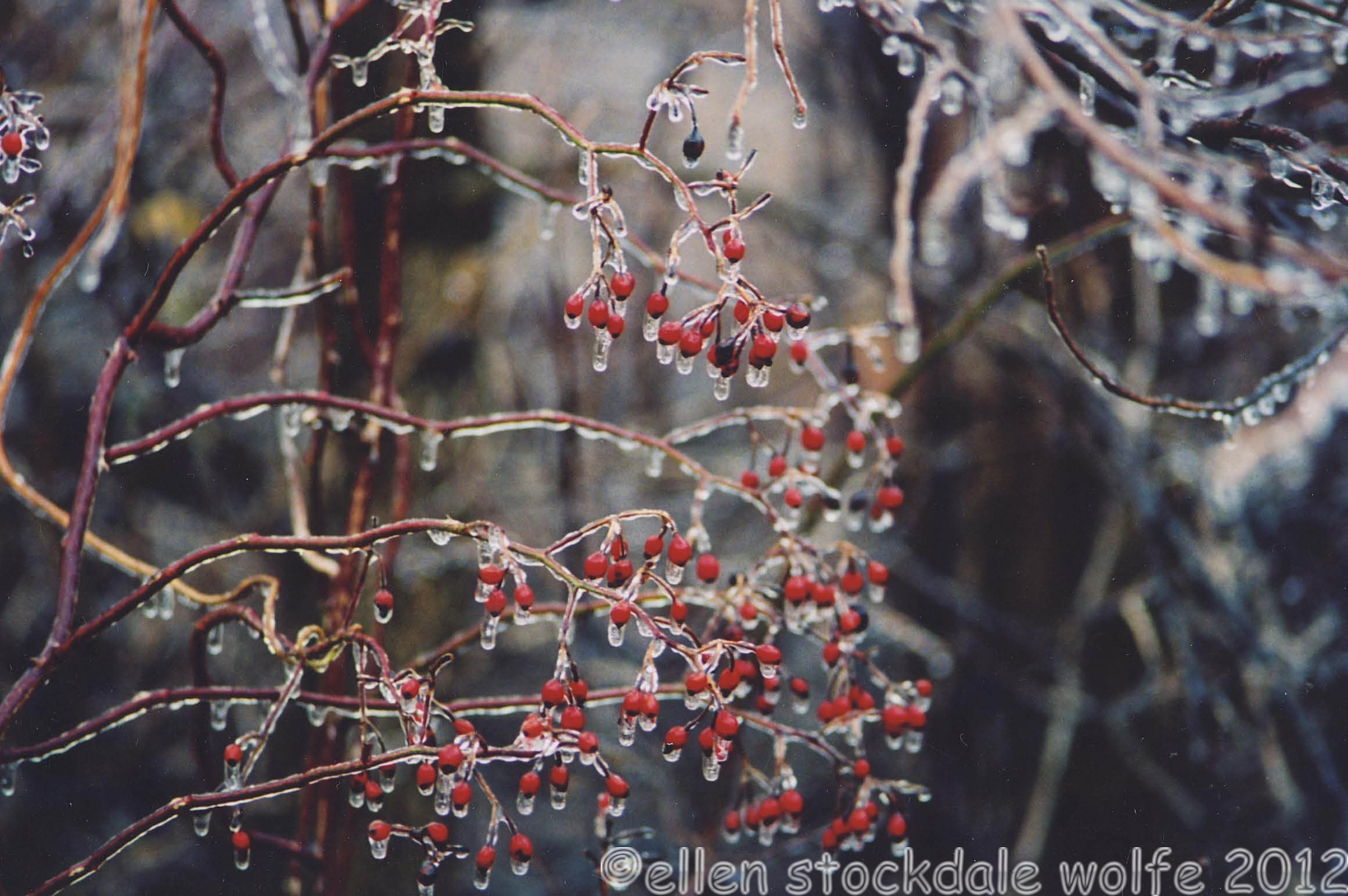


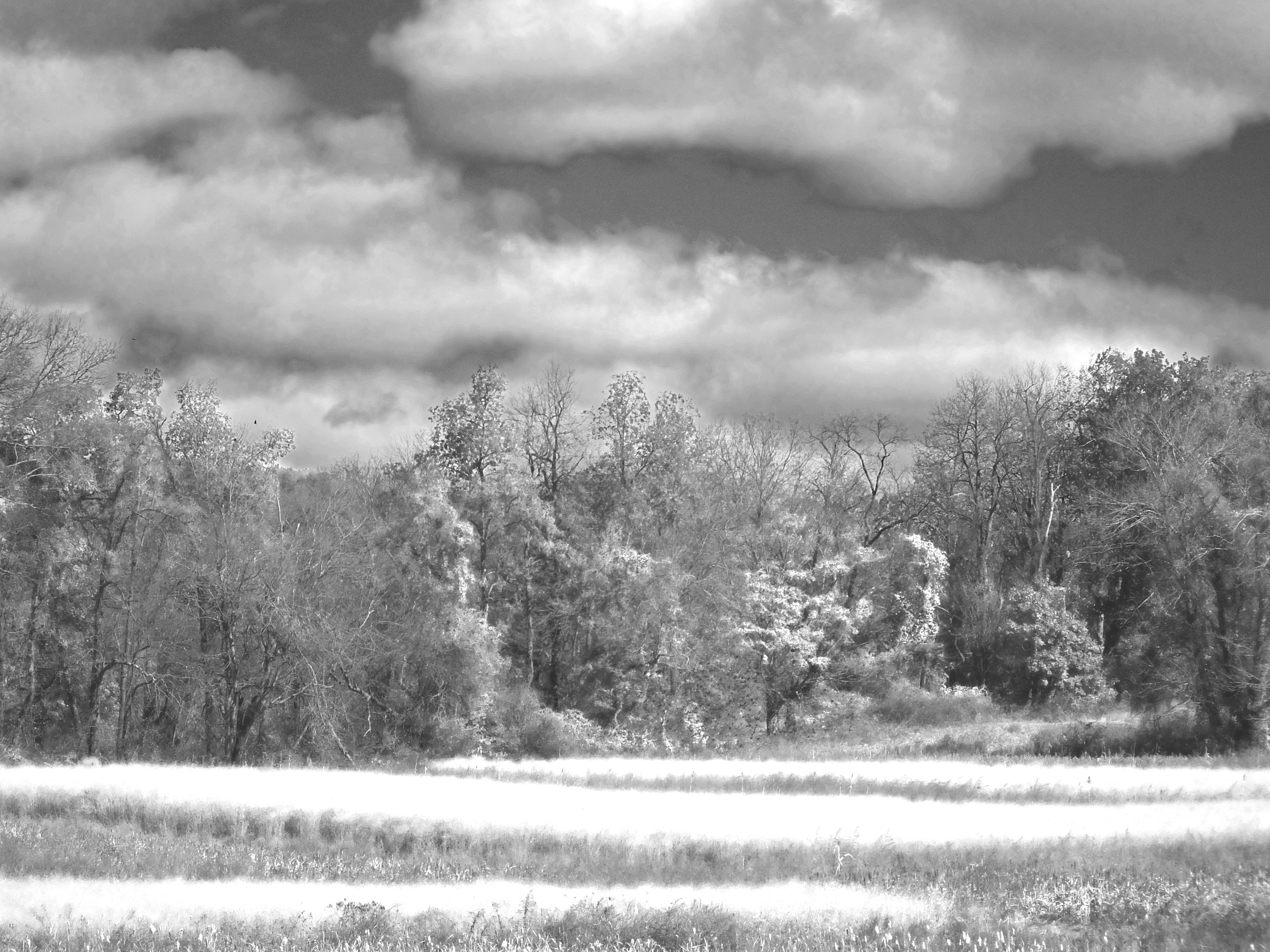
Christmas and Winter Solstice blessings to all those who have visited Moonside and especially to those to whom I was unable to respond due to physical or mental illness, a HUGE THANK YOU!!
And to all… may you feel the joy of Christmas no matter what your circumstance, color, creed or faith and be blessed by health, happiness and peace in the New Year!
Love, Ellen



Home Sweet Home
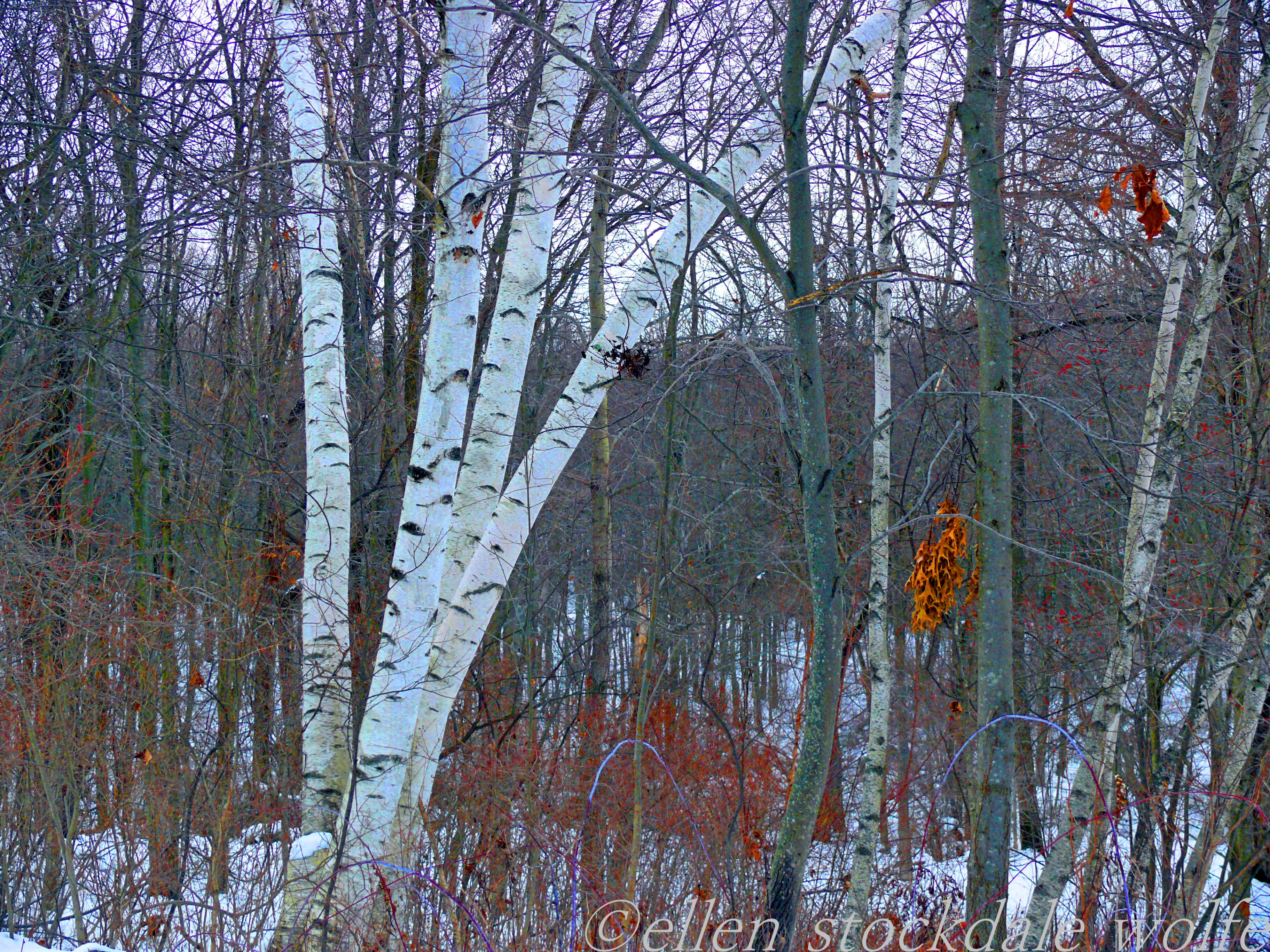
How horrid to be homeless
for
home
is
shelter
safety
security
Like this home
for creatures from the deep


Photons of Golden Light

Photons of gold
the tail end of winter’s light
up close
and far away
the tail end of the light of day
bright yet almost night
wafting with whispers
of a new season
a new reason
to live.
The Silent Cathedral
Listen
to the silence
of the trees
they communicate
in ways
science knows not
yet
and
the fog and the snow and the mist
the incense
suffusing
the silent cathedral
Gone is the Magic

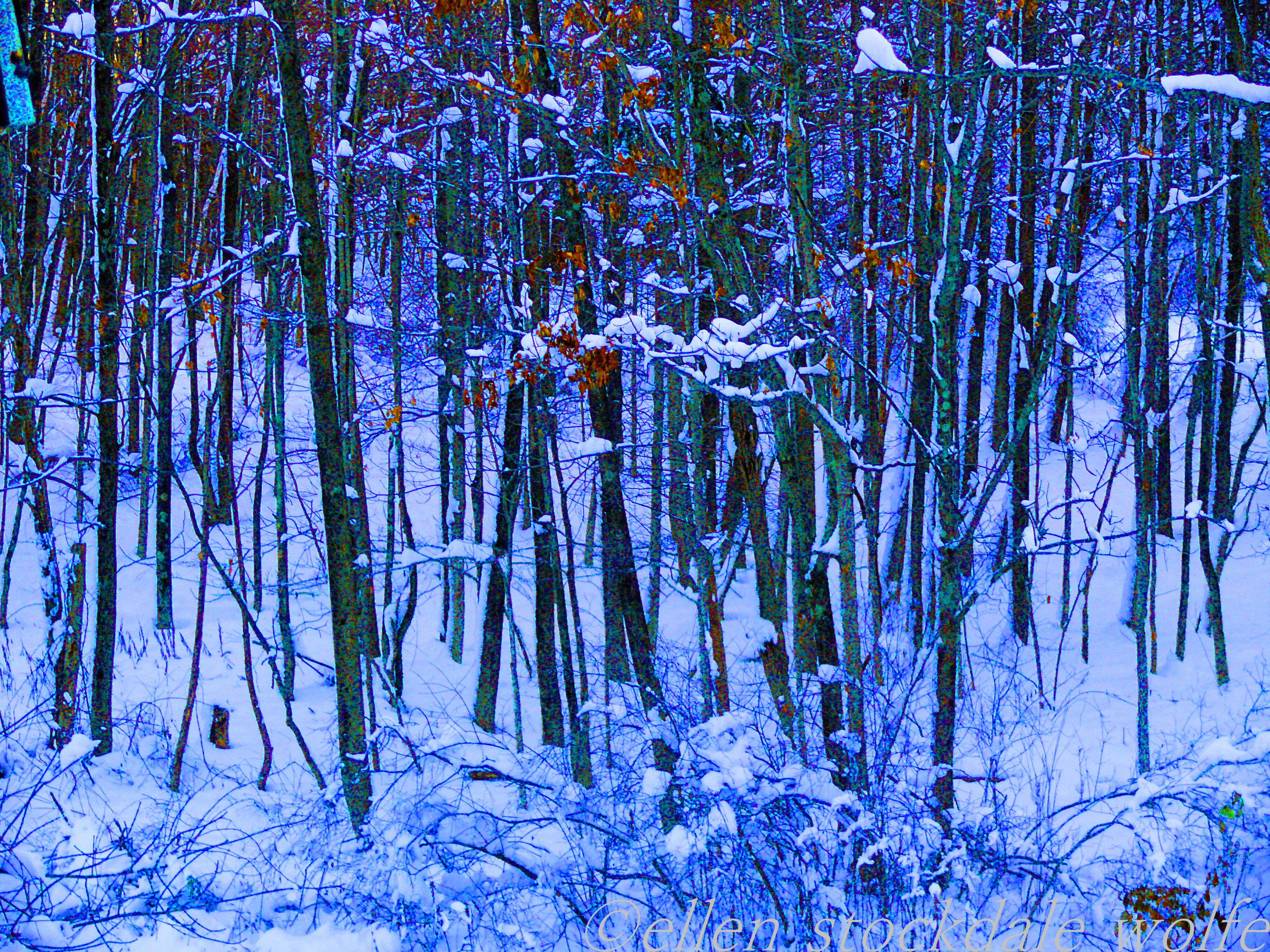
Snow falls
in hushed tones
magically transforming all,
dressing trees in white,
lace-like filigree.
These trees now gone,
on the old dirt path,
victims of a wilderness
lost to landscaping,
taming the wild
into manicured parks,
leaving many animals now
homeless,
leaving a loss
of beauty that once reigned
supreme.
Starbursts
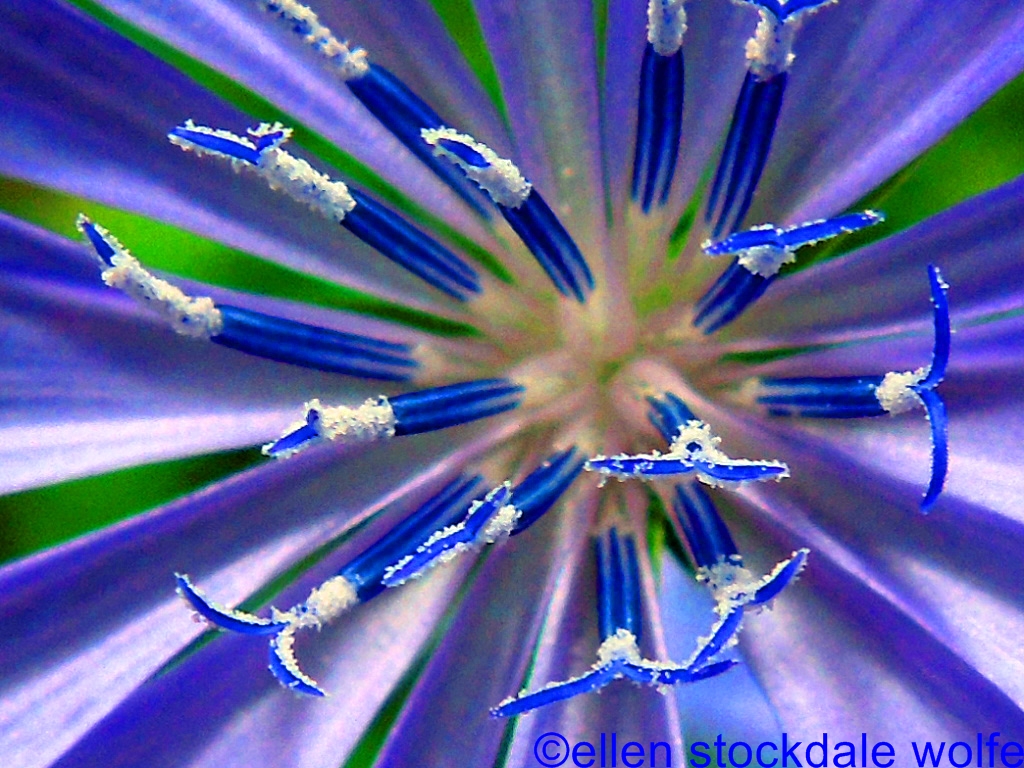
Starlike
explosions of blue
with an
out of season
dusting of snow
a foretaste
of the approach of winter
a sugary confection
one is tempted to ingest
a similar temptation
(I suppose)
as those tempted by coca.
“Landscape of Loss”

Sap is flowing through ice and snow
When nature awakens in late March or early April, sap starts flowing in the trees and ice changes to water marking the end of hibernation. This is the grand opening of the wetlands and the pilgrimage to the vernal pools as David M. Carroll writes in his “Swampwalker’s Journal: a Wetlands Year.” A vernal pool is a body of water which fills up in autumn and winter and is swollen in the spring but often dries up completely by the end of the summer. Carroll describes vernal pools so beautifully: “It is at snowmelt and ice-out, the last sleets, first rains, and the earliest warming breaths of spring that they beckon wood frogs, salamanders, and spring peepers from surrounding upland woods, where they have passed the winter in rotted-out trees roots [a reason not to ‘clean up’ the woods], under layers of bark and litter, in small mammal tunnels and other hibernacula in the earth.” The melting snow heralds the march of the amphibians. “Vernal pool habitats hold a galaxy of small things that come to life the instant ice and snow turn back into water.”
Carroll walks the swamps, as the title of his book suggests, in search of mating salamanders and spotted turtles, bogs, fens and all wetland flora and fauna. He tells us that there must be a certain collusion of events– several warm days in a row followed by a darkest of nights with temperatures ideally in the mid-50s with rain preferably two nights in a row. And then the magical migration begins. The salamanders begin their “annual pilgrimage” to the vernal pond to mate.
My husband and I are lucky enough to have a vernal pond on the property next door to us and when Spring comes the sound at night from that pond makes us feel as if we are camping out next to a vast wetland. The music of the spring peepers plays through the night throughout the house, often starting overeagerly in the late afternoon. This manic symphony thrills us every year. It is the first sign of Spring for us. The quality of joyousness and the affirmation of life gladdens our souls. Going to sleep with that sound makes us remember what we so often forget, to give thanks to our Creator for His magnificent creatures.
Inspired by Carroll, one year we awaited the first dark, rainy warm night after a succession of warm days. In our rain gear, armed with flashlights we set out around 11PM to look for the march of the salamanders. We walked to the nearby pond. Nothing. We walked quite aways down a nearby dirt road that has run off but is not quite a vernal pond. We shone the flashlight this way and that. Nothing. We finally headed home disappointed and dejected and my husband started towards the front door when I let out a yelp. There in the doorway was a 6 inch spotted salamander in all its glory! We never found the march of the salamanders but we were greeted by one of these fantastic amphibians right at our front door!
This story, however, does not have a happy ending. In his epilogue to the “Swampwalker’s Journal,” David Carroll explains why it took him more than 7 years to complete this book. He writes that he became involved in saving some of the wetlands in his book and says sadly nearly all of his interventions have or will become “losing battles.” He describes the plight of the wetlands, bogs and fens as a “landscape of loss.” And he scorns our human selfishness as he writes how it “reveals explicitly the extent to which we think of ourselves as owning all living things, along with the very earth, air, and water in which they live, as if we possessed some divinely mandated dominion over all creation.” He warns: “As we will learn in time none of this belongs to us.” I read these words, knowing them to be true and I think of the soon-to-be-extinct bog turtle and other creatures with the same possible fate. I think of the spotted salamander who came to our door, as did Shelley, the snapping turtle who used to return to our drive way every year to lay her eggs. I think of the spring peepers whose joyous song heralds spring next door every year, and I fear for the future of them all.

When the Snows Come
Sitting in our living room, with all the little, dairy barn windows alive with falling flakes of snow, it is as if my husband and I were on a ship, floating on a sea of white. The living room in our converted dairy barn has the feeling of a ship cabin, and I think it most beautiful when the snow is falling.
The glass doors in the kitchen give us perfect view of the bird feeder, our television in all seasons. In winter we watch male cardinals, bright red in the stark white, feed and contend with the beautiful, bullying blue jays. And the more modest, gentle, tiny juncos and sparrows touch our hearts with their humility.
One winter, when the snow had covered the ground for a month or so and turned to solid ice, we watched, horrified, as squirrels clawed at the feeder and fought with one another for a chance to feed, making shrill cries of territoriality. The ground was too frozen for them to retrieve the nuts they had buried in the fall. They were fighting off starvation.
Waking up in the morning there is no need for a weather report as we see the snow piled high on the surrounding trees and see the sky through what used to be the hayloft door, now a cathedral window. The thermometer tells us how cold it is though we can feel the chill in the air. We gauge the depth of the snowfall by watching the squirrels running along the limbs of the trees, cleaning off the heavy snow. They seem friskiest just after a snowfall.
And if we are lucky, and the snow is deep enough, we get out our snow-shoes and climb up the hill out back to what we were told was once a Christian Indian burial ground. There are no markers left but the spot has the air of the sacred and it affords mountain views in winter. High on the hill overlooking the valley, it seems a perfect place for a burial ground. The snowfall makes it easier to walk the hill. In the summer the path is too full of saplings and underbrush to walk the “meadow.”
On our half of the meadow there is a squat fir tree which provides a great shelter for deer in a storm and the deer love the meadow. There are a few blown over trees. And as we snow-shoe we see all kinds of animal tracks which we attempt to identify.
Like many barns, ours was built near the road so there is some traffic noise. But in the meadow we are far removed from the road. When it snows, it is so beautiful in the quiet, looking at the animal tracks, and feeling the spirits in the graveyard. A secret, little piece of Paradise. And to stand there in the virgin white silence, and see the abstract patterns of the snow on the surrounding hundreds of trees, is a taste of the Divine.
Transformations no. 2
“It is so interesting to see the marvelous evolution of complex matter from the singular consciousness of Spirit. How intricate it is, and yet so simple” ~ Paramahansa Yogananda










 MOONSIDE
You must be logged in to post a comment.