“Landscape of Loss”

Sap is flowing through ice and snow
When nature awakens in late March or early April, sap starts flowing in the trees and ice changes to water marking the end of hibernation. This is the grand opening of the wetlands and the pilgrimage to the vernal pools as David M. Carroll writes in his “Swampwalker’s Journal: a Wetlands Year.” A vernal pool is a body of water which fills up in autumn and winter and is swollen in the spring but often dries up completely by the end of the summer. Carroll describes vernal pools so beautifully: “It is at snowmelt and ice-out, the last sleets, first rains, and the earliest warming breaths of spring that they beckon wood frogs, salamanders, and spring peepers from surrounding upland woods, where they have passed the winter in rotted-out trees roots [a reason not to ‘clean up’ the woods], under layers of bark and litter, in small mammal tunnels and other hibernacula in the earth.” The melting snow heralds the march of the amphibians. “Vernal pool habitats hold a galaxy of small things that come to life the instant ice and snow turn back into water.”
Carroll walks the swamps, as the title of his book suggests, in search of mating salamanders and spotted turtles, bogs, fens and all wetland flora and fauna. He tells us that there must be a certain collusion of events– several warm days in a row followed by a darkest of nights with temperatures ideally in the mid-50s with rain preferably two nights in a row. And then the magical migration begins. The salamanders begin their “annual pilgrimage” to the vernal pond to mate.
My husband and I are lucky enough to have a vernal pond on the property next door to us and when Spring comes the sound at night from that pond makes us feel as if we are camping out next to a vast wetland. The music of the spring peepers plays through the night throughout the house, often starting overeagerly in the late afternoon. This manic symphony thrills us every year. It is the first sign of Spring for us. The quality of joyousness and the affirmation of life gladdens our souls. Going to sleep with that sound makes us remember what we so often forget, to give thanks to our Creator for His magnificent creatures.
Inspired by Carroll, one year we awaited the first dark, rainy warm night after a succession of warm days. In our rain gear, armed with flashlights we set out around 11PM to look for the march of the salamanders. We walked to the nearby pond. Nothing. We walked quite aways down a nearby dirt road that has run off but is not quite a vernal pond. We shone the flashlight this way and that. Nothing. We finally headed home disappointed and dejected and my husband started towards the front door when I let out a yelp. There in the doorway was a 6 inch spotted salamander in all its glory! We never found the march of the salamanders but we were greeted by one of these fantastic amphibians right at our front door!
This story, however, does not have a happy ending. In his epilogue to the “Swampwalker’s Journal,” David Carroll explains why it took him more than 7 years to complete this book. He writes that he became involved in saving some of the wetlands in his book and says sadly nearly all of his interventions have or will become “losing battles.” He describes the plight of the wetlands, bogs and fens as a “landscape of loss.” And he scorns our human selfishness as he writes how it “reveals explicitly the extent to which we think of ourselves as owning all living things, along with the very earth, air, and water in which they live, as if we possessed some divinely mandated dominion over all creation.” He warns: “As we will learn in time none of this belongs to us.” I read these words, knowing them to be true and I think of the soon-to-be-extinct bog turtle and other creatures with the same possible fate. I think of the spotted salamander who came to our door, as did Shelley, the snapping turtle who used to return to our drive way every year to lay her eggs. I think of the spring peepers whose joyous song heralds spring next door every year, and I fear for the future of them all.
Ducks in the Morning, Ducks in the Evening…
Thought Moonside could use a little levity on this Vernal Equinox Eve with Peter Cook and Dudley Moore in their Art Gallery comedy Skit that features ducks. Ducks have now returned to the
the few ponds and lakes that have defrosted, gathering in large groups. I caught one lone duck apart from the rest– perhaps an Asperger’s duck (I think I can say that being Aspie myself with an Aspie husband). Enjoy the clip on ducks from the skit in the video below.
Fleeting Filigree
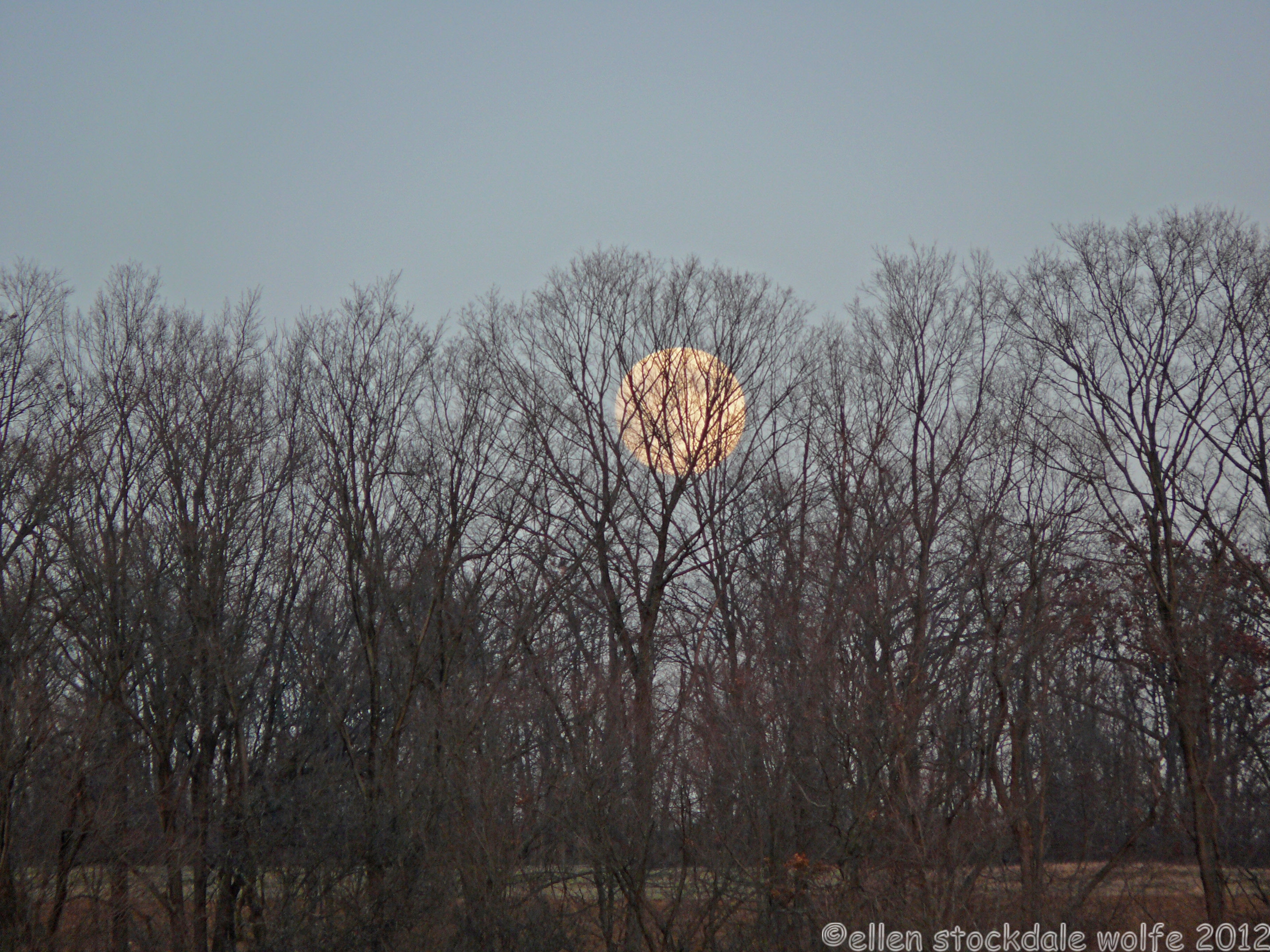
Winter is dying
and dead trees
are coming to life.
Your sap is starting to flow
bringing forth birthing buds
of spring as
people clammer
for the greenery of summer.
But I love you most
when you are naked, nude, and vulnerable,
stripped bare of beautiful-to-be sure
spring/summer finery.
I mourn your fleeting filigree
on this snow-showery day
of comforting gloom and grey
and feel kinship with you
as you stand staunch against the cold
and stark against the feathery flakes of white.
I think you most beautiful
in your bare-arm-intricacy,
and lace-like, linear patterns
drawn against a back-drop of sky,
as you reach for the Almighty.
Homage to Mondrian
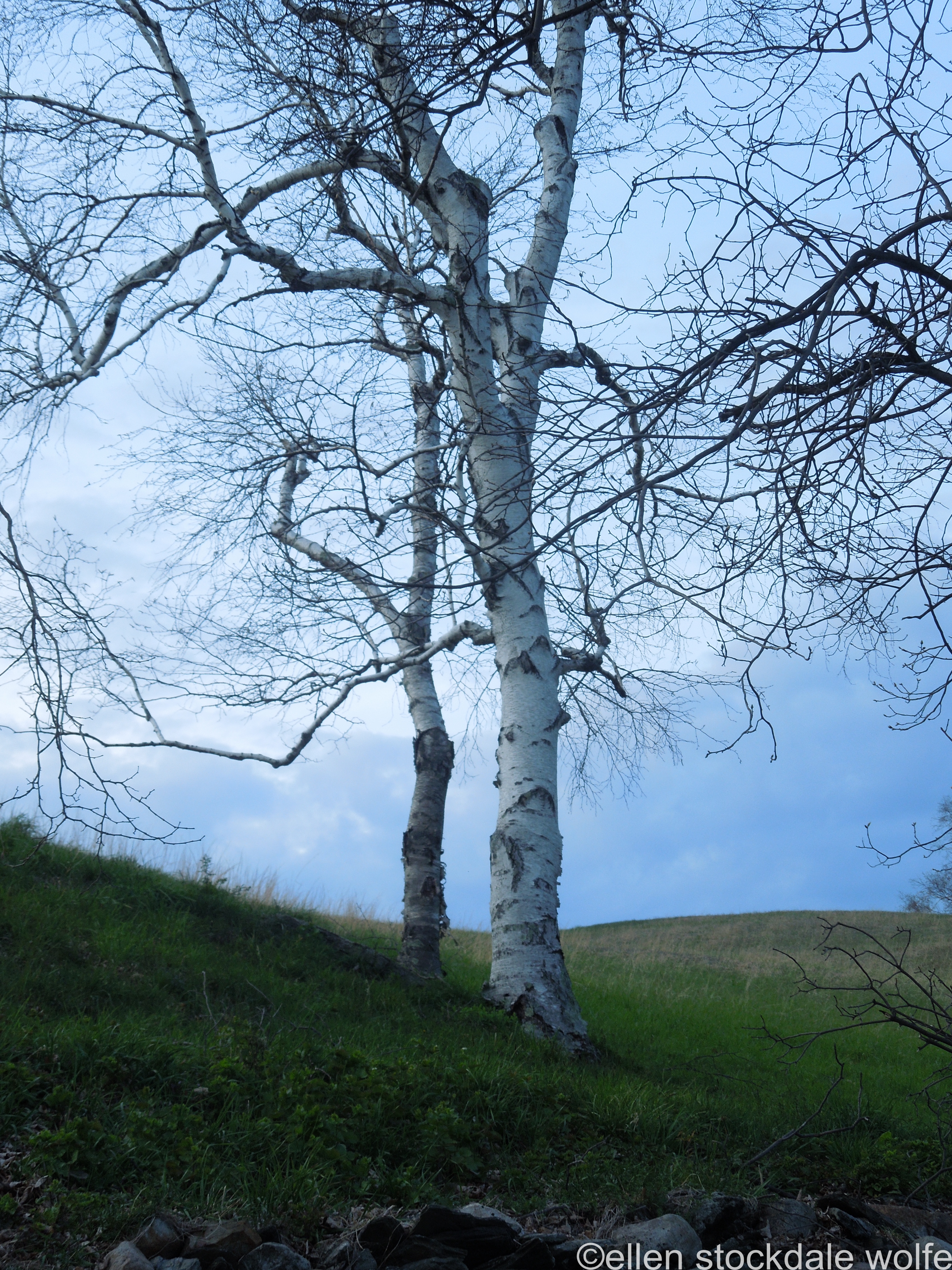
Piet Mondrian (1872-1944) was a Dutch painter who believed in the spiritual in nature. His art was an expression of that spirituality. He believed that the trees, the verticals in nature, were the masculine principle, and the earth, the female. Together the union of the male and female constituted the beauty of creation. He started out painting vibrant trees and eventually wound up painting complete abstractions of vertical and horizontals with primary colors– very unlike his early landscape painting, but the underlying principles were the same.
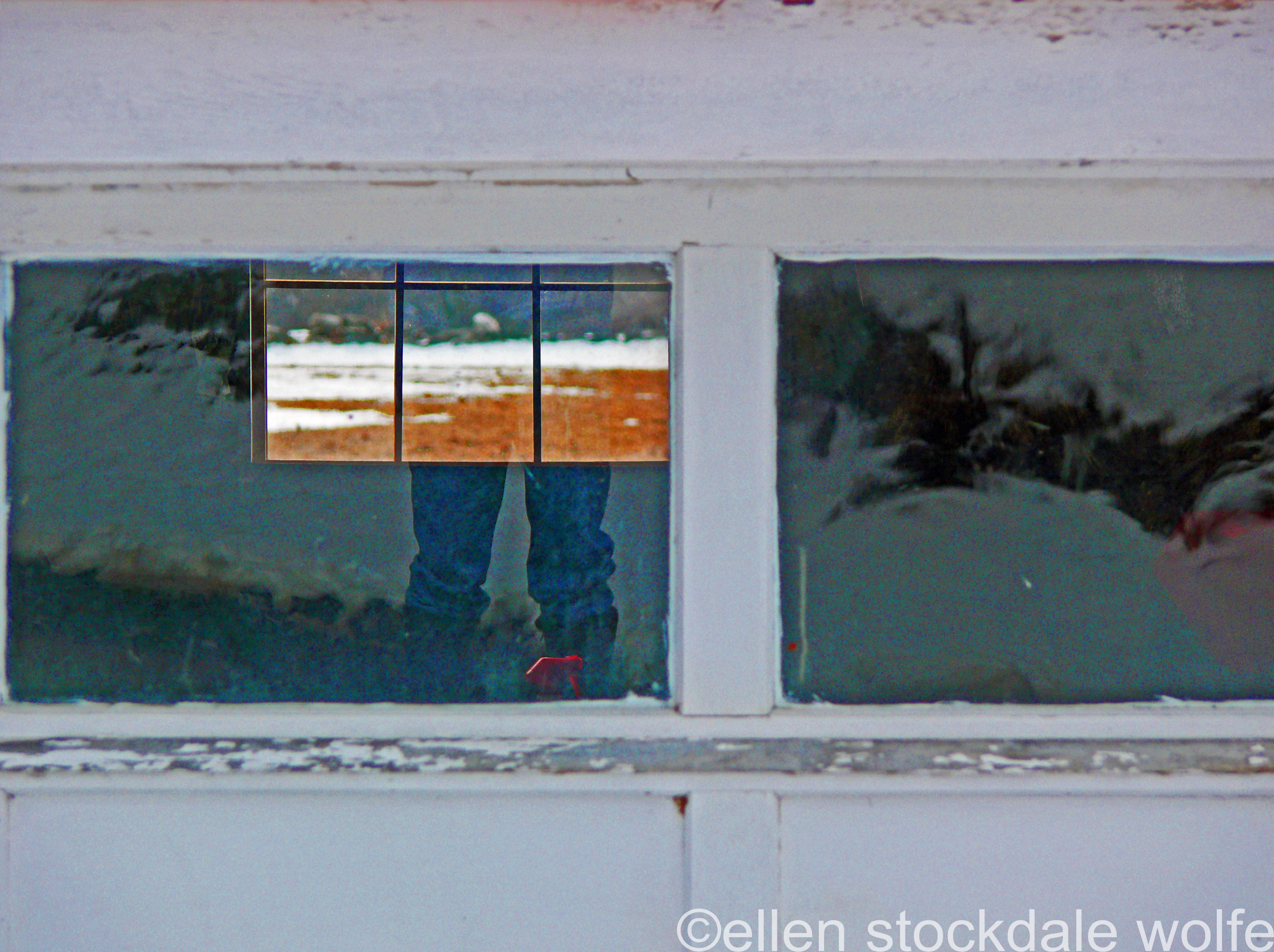
Blue Jean Blues

I am stuck in a blue pen,
all cramped up,
branded in blue,
while the blue jeans roam free.
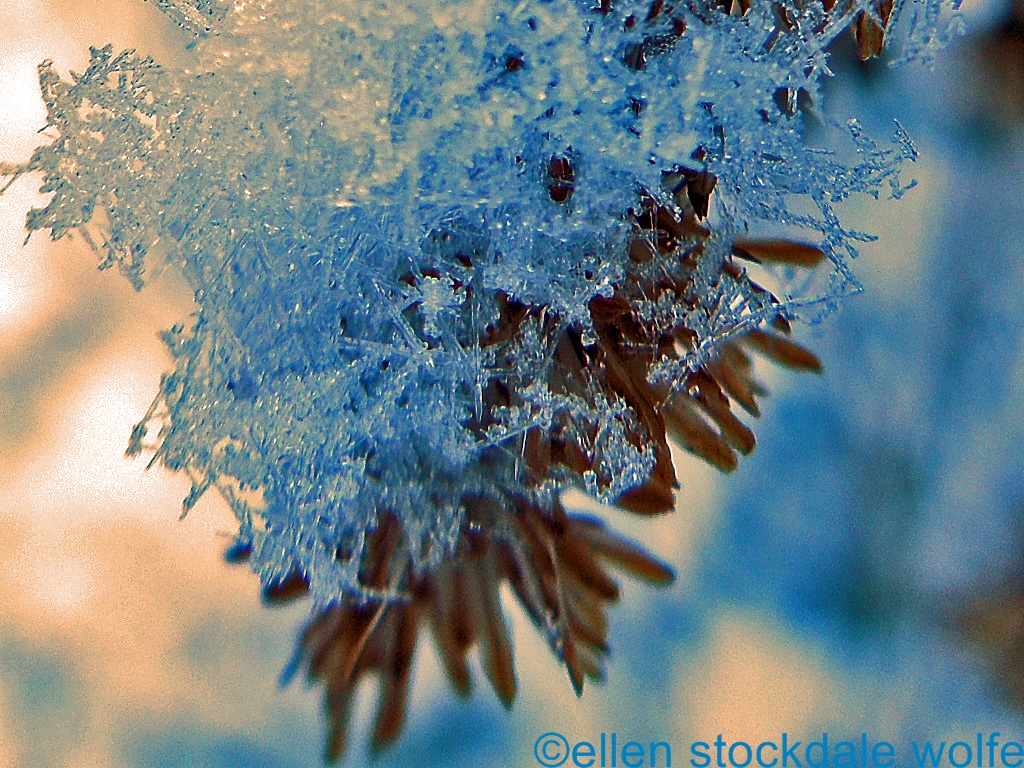
Diamonds in the Marsh

Scintillating snow melts
and fills a pre-Spring marsh
full of sparkling jewels
where bedazzled frogs
soon will hide.
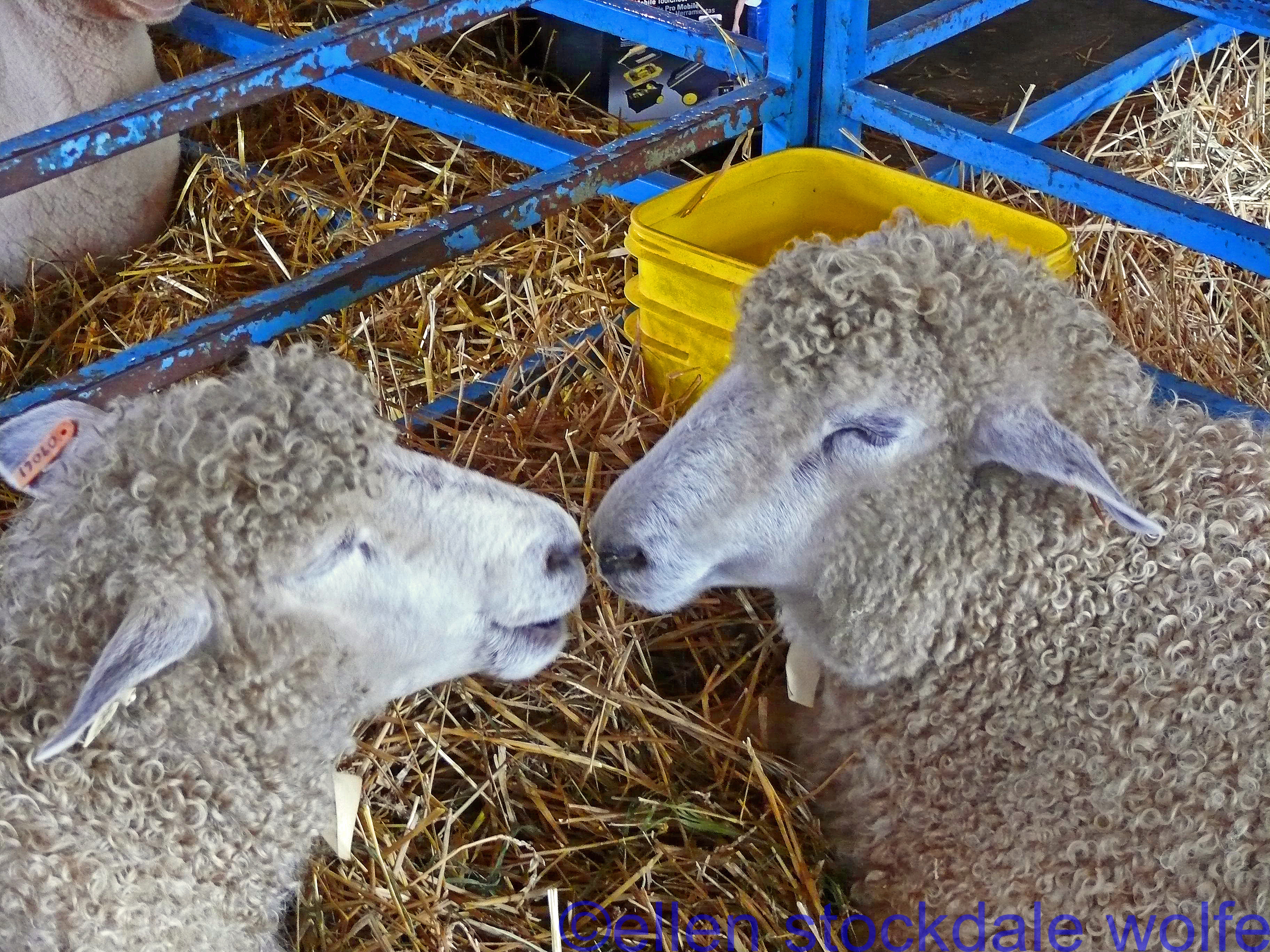
The Wooly Bully

I ask you– do I look like a bully?
My winter’s growth will soon be shorn
and I will be the “bullied.”

Full Moon Blues

Lunacy prevails
The foundations of daily life are crumbling
It is all “Maya”
a dream we are living thinking it is reality
We have no choice but to go on
All that matters is love
and God is Love.

Iced Reflections
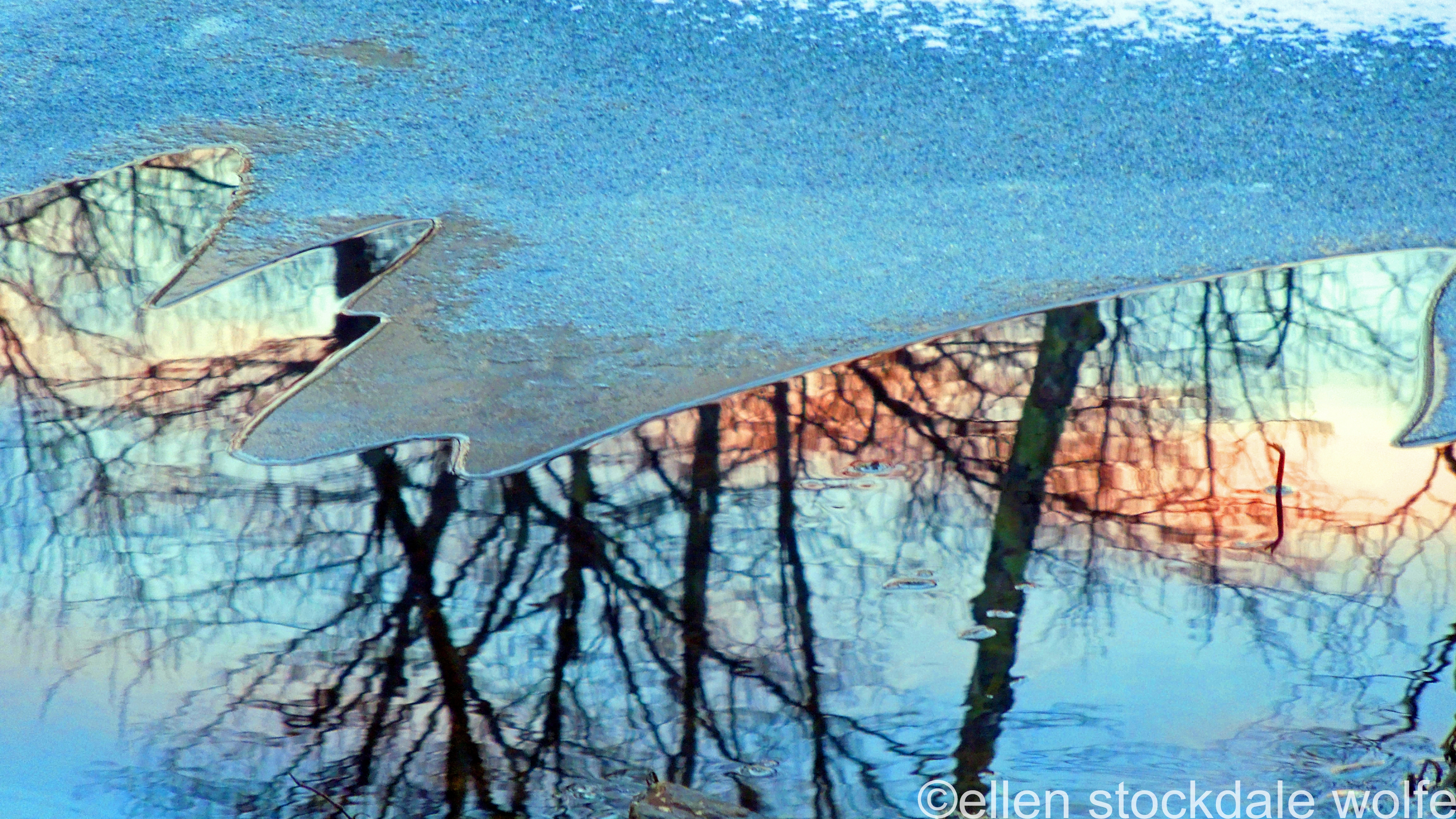
The fluid, monochromatic, abstract form of the ice
Over the intricate, colored lattice work of the reflections of trees
Water in its various states each with its mysterious qualities.

The Microcosm and the Macrocosm

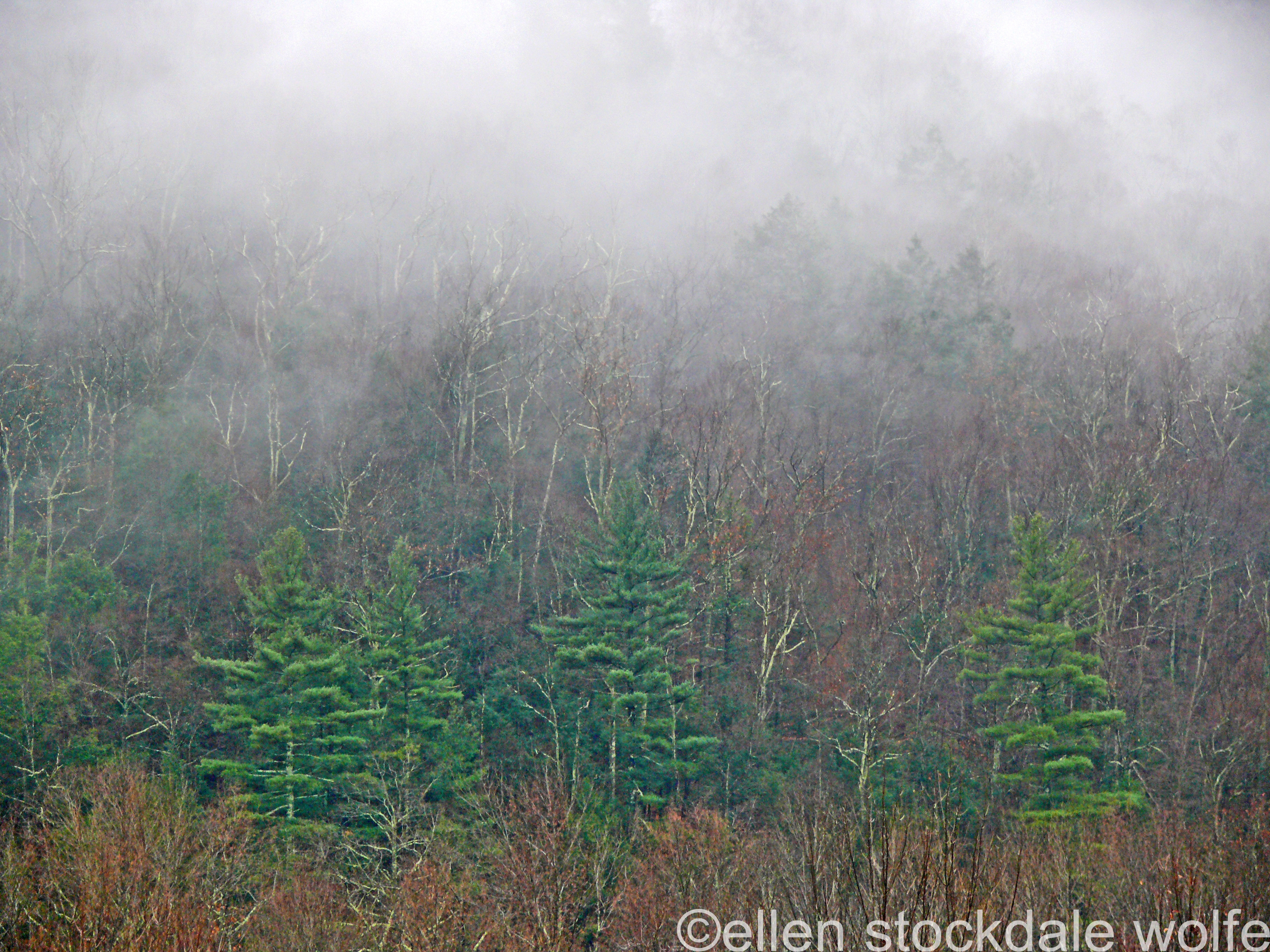
Grace flows through the limbs of a tree reaching skyward, its intricate patterns of branches pleasing the eye– just as grace flows through the orderly, spikey branches of frost on a window.
Patterns repeated ad infinitum in all creation.
A microcosm of the macrocosm and a macrocosm of the microcosm.
God’s breath breathes through all.



Old Barn with Window View

Could not resist the lovely curve of the roof of this little red barn– some might call old age sag.
Vestigial Remnants of Hibernation?
It is frigid outside and has been for a long time. It is very cold in many parts of the country. The holidays have come and gone. The hoopla of the inauguration is over. Now begins the nitty-gritty of hard winter work. I find myself listless and not wanting to go outside or exercise or paint or take pictures or do much of anything I usually love to do. I have a cold but that does not excuse this lassitude. When I go to my favorite deli, I find that Terry, the sandwich lady, is in the same mood. “I was ready to go home the moment I came in,” she says. My husband was dour and I was sour. What is the meaning of this discontent? Could it be some vestigial remnant of human hibernation? While man has never hibernated, science finds his metabolism slows down in winter and he becomes less active. Binging on food and drink over the holidays may not be the sole reason for weight gain in winter. Perhaps we should be sleeping off the extra pounds.
I who love winter and live for fall each summer, find myself longing to hear the music of the spring peepers. It is months away– well about a month and a half away. They signal for me the first harbingers of new life. Terry, who also loves winter, tells me today she is sick of winter as she makes our sandwiches. Perhaps it is this string of Arctic air and grey days and icy road conditions and snow every few days. Perhaps, and more likely, it is the human condition to always be dissatisfied.
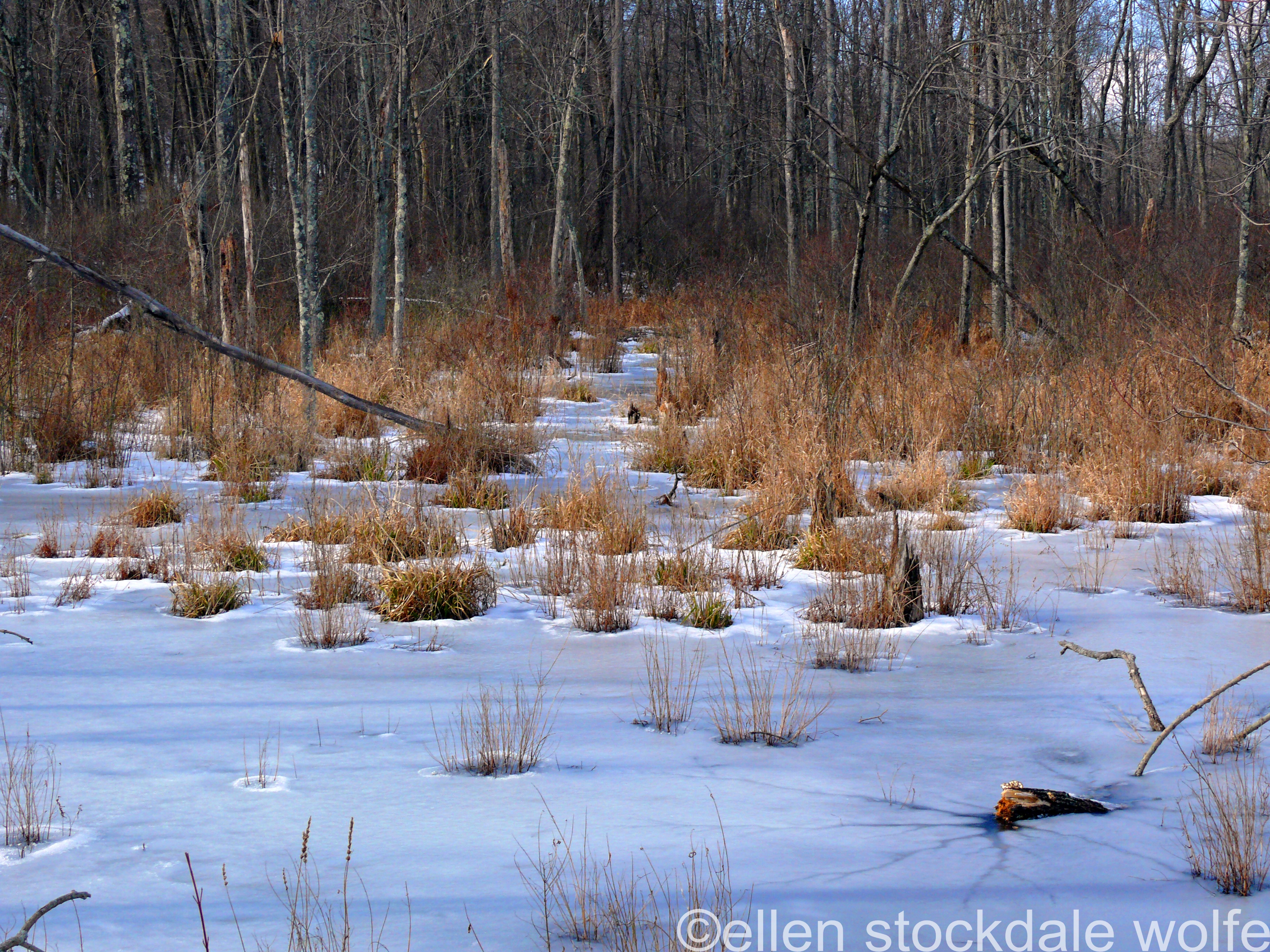 Hibernaculum for turtles and other animals
I miss the squirrels. It has been so cold and snowy they seem to be laying low in their nests. Judging from the tracks in the snow the animals most on the move are the deer. And as much as I love the silence of winter, I find myself longing for the sweet dulcet music of birdsong at mating season in spring.
We bought a calendar for the new year with a celestial map of the sky for each month so you can find the constellations in the night sky. We have yet to go out with flashlights and match the map with the canopy of stars. It has been too overcast or too cold or too something. But my dazzled psyche is humbled by the view of the stars through the stripped down trees that we see from bed every night.
Then again maybe it is laziness. Too many sugar highs in December have led to a deep low in February. And after a tease of spring one day in which the temperature reached almost 60 degrees we were let down even further. Not liking being unproductive, I think I can overcome this. But maybe I should just go with the flow and accept a period of inactivity, let the land lay fallow, so that an increase in productivity may eventually result.
I know I should focus on what is positive. Winter is the season of silent beauty that I so long for in the summer heat. I delight in the quiet of winter days. The snows bring a hushed stillness good for the soul. It is a time to regroup. Spring will come. Hopefully if man has not destroyed all the vernal pools, the spring peepers will return. And if pesticides have not destroyed all the birds, sweet mating songs will be sung. And if the weather turns more clement, our spirits will soar once again, and we will be busy bees making honey while the sun shines.


When the Snows Come
Sitting in our living room, with all the little, dairy barn windows alive with falling flakes of snow, it is as if my husband and I were on a ship, floating on a sea of white. The living room in our converted dairy barn has the feeling of a ship cabin, and I think it most beautiful when the snow is falling.
The glass doors in the kitchen give us perfect view of the bird feeder, our television in all seasons. In winter we watch male cardinals, bright red in the stark white, feed and contend with the beautiful, bullying blue jays. And the more modest, gentle, tiny juncos and sparrows touch our hearts with their humility.
One winter, when the snow had covered the ground for a month or so and turned to solid ice, we watched, horrified, as squirrels clawed at the feeder and fought with one another for a chance to feed, making shrill cries of territoriality. The ground was too frozen for them to retrieve the nuts they had buried in the fall. They were fighting off starvation.
Waking up in the morning there is no need for a weather report as we see the snow piled high on the surrounding trees and see the sky through what used to be the hayloft door, now a cathedral window. The thermometer tells us how cold it is though we can feel the chill in the air. We gauge the depth of the snowfall by watching the squirrels running along the limbs of the trees, cleaning off the heavy snow. They seem friskiest just after a snowfall.
And if we are lucky, and the snow is deep enough, we get out our snow-shoes and climb up the hill out back to what we were told was once a Christian Indian burial ground. There are no markers left but the spot has the air of the sacred and it affords mountain views in winter. High on the hill overlooking the valley, it seems a perfect place for a burial ground. The snowfall makes it easier to walk the hill. In the summer the path is too full of saplings and underbrush to walk the “meadow.”
On our half of the meadow there is a squat fir tree which provides a great shelter for deer in a storm and the deer love the meadow. There are a few blown over trees. And as we snow-shoe we see all kinds of animal tracks which we attempt to identify.
Like many barns, ours was built near the road so there is some traffic noise. But in the meadow we are far removed from the road. When it snows, it is so beautiful in the quiet, looking at the animal tracks, and feeling the spirits in the graveyard. A secret, little piece of Paradise. And to stand there in the virgin white silence, and see the abstract patterns of the snow on the surrounding hundreds of trees, is a taste of the Divine.










 MOONSIDE
You must be logged in to post a comment.