Supposed Indifference in Asperger’s

I climbed down
from the tangled branches
of my thoughts
to greet you
but it was too late
you were gone.
Don’t give up on me
I love you can’t you see
but there is such difficulty
all because I am Aspie.
(Click http://www.independentauthornetwork.com/ellen-stockdale-wolfe.html for information on, and to purchase my Bipolar/Asperger’s memoir.)
“Words Can Sting Like Anything”*
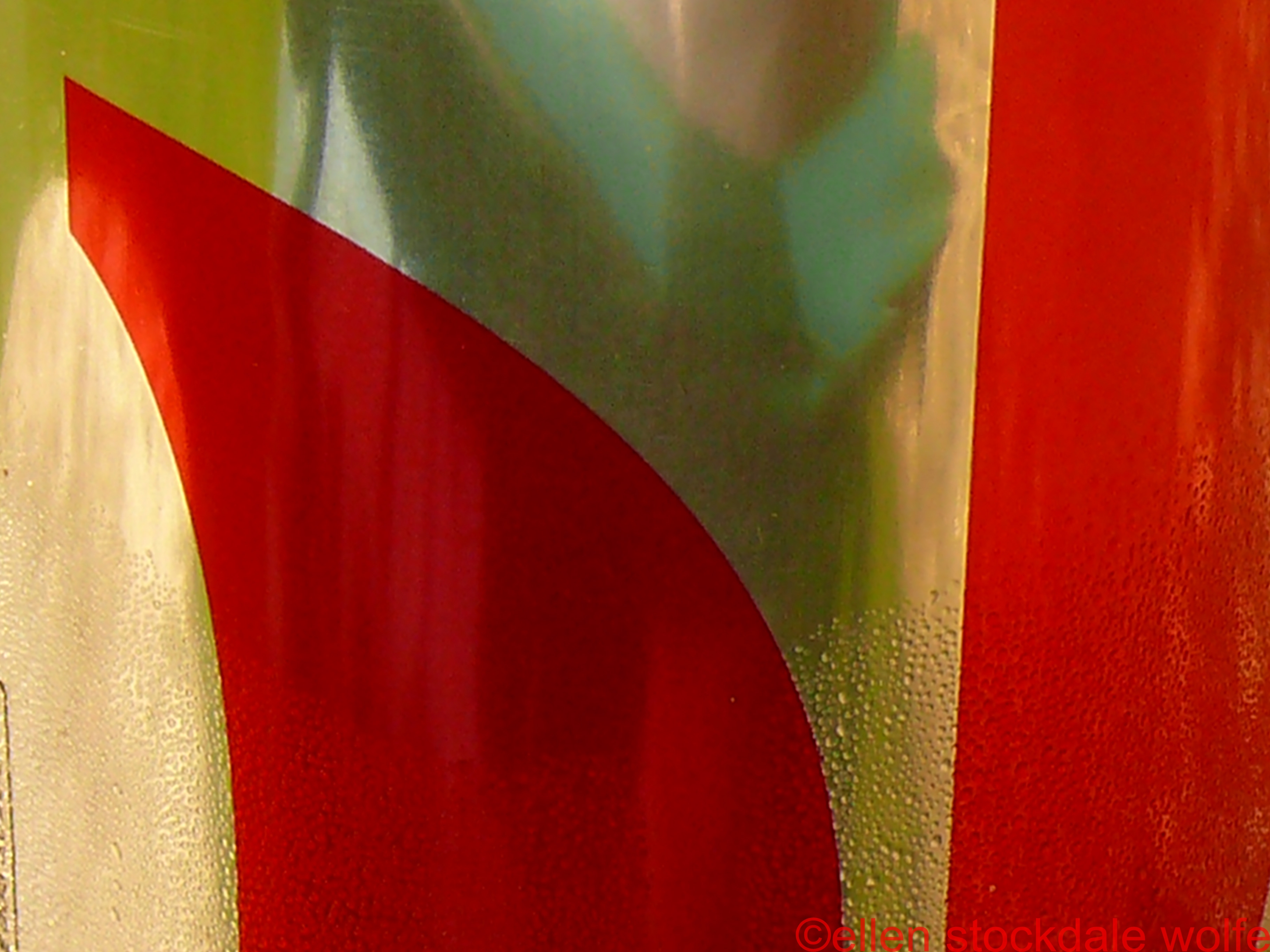
Cool clean cut lines
of cold hearted slashes
gashes of color
drawn blood
sweat beads of fear
you didn’t mean
you didn’t know
how far your words
would go
to hurt.
* Title from the poem by Phyllis McGinley on silence.
Love Surpasses All
A former New York Times columnist and bestselling New York Times author, Andrew Solomon, gives a very moving account of how parental love surpasses all manner of diversity in their children. The first few minutes are scary as he quotes an article from Time Magazine from the 60s. Don’t let that throw you off the beautiful message of acceptance of handicaps and the contribution of those children who are different from a man who is himself a minority and different.
“Living with Fear”
For whatever reason these days are days of high anxiety for me, nervousness to the point of tears. Meditations are “noisy” with all thoughts and negative ones in particular. To deal with this I share with you a helpful 9:06 minute webcast on fear and love with Jack Kornfield and Catherine Ingram.
Two Lips of Forever Love

He didn’t “get it,
the “loss thing,”
when my aunt died mid-April,
and I lost my second mother.
Didn’t “get it” when I lost my first.
This was not the only time
he was lost in oblivion and
puzzled by my tears.
*
He didn’t see me hurting
from the loss of my lineage,
and his lack of empathy for my grief
as he made me meet and greet
a friend the next day, as if all was normal.
This time I balked, bolder and older,
and he agreed it was time to ponder
and talk with his mentor.
*
When he came home
one night days later,
full of hugs of apology,
and tulips on the kitchen counter,
it was a breakthrough for us both.
It took a few days
but what came out
brought tears upon tears.
*
Not having grown up
with emotional displays
he didn’t “get” the meaning of loss.
With no models of grief
he didn’t know how to feel it himself
nor how to give solace,
not just lip service,
to those who had lost.
*
I cried for him.
How very sad, as a child
he didn’t know the love I knew.
He, a sensitive child,
in an icebox family
fraught with frigid emotion,
and warm, deep affection only
from his great-aunt, Dot.
*
He brought me pink tulips,
flowers of a contrite heart,
and held me close
and kissed me
with lips full of apologies
but I was the one
who felt sorry for him
for the years he knew not love.
*
Twenty-eight years ago
God told me “Love this man,
trust him and have faith in him,
and hold him to your heart.”
Many moons later, I love him light-years
more than the day we met
and in then-unimaginable ways
has our love strove for the stars.
*
He has brought me:
kindness and gentleness,
generosity of spirit,
goodness of heart,
and healing humor.
What I have taught him:
the glories of love
and agony of loss.
*
From the beginning
the seed of love was sown
for better or worse
deeply within the parched,
but fertile soil of my imperfect heart.
And he has cultivated the growth
of a stalwart, staid evergreen,
amid the blooming two-lips of forever love.
Violet Reflections

Today the sky reflects violet on the marsh
as statues stand shrouded purple in Catholic Churches.
Today my eyes weep blue tears, mirroring the sky,
at the slights, the fights, the cruelty of human nature.
Mine but pinpricks by comparison
to the persecution, execution and death
of innocents, of earth, of nature
and of He who was known as Jesus.

“For the Truth Shall Set Ye Free”
I first remember things going wrong at age 5.
I am standing in the corner of the bedroom with my mother beside my brother’s crib. She is telling me I am cold and selfish, like my father’s mother whom she hates. I now think she hates me. She tells me I will wind up all alone.
It is just after the births of my brother and sister, only 11 months apart, and my 25-year-old mother, is totally overwhelmed. My brother is the apple of her eye, with Mom’s dark coloring and the looks of her adored Sicilian born-father. My sister is Daddy’s little girl. I remember feeling all alone, and being cold and hard at that age, confiding only in my stuffed lion, Leo. Many, many years later I come to see this cold, hard me as a dissociated self. Many years later my mother apologizes to me. And I apologize to her.
I set out on a life-long struggle to be different from my father’s mother, doing everything to try to be warm and loving like my mother’s Italian family. I fail. With acute stage fright most of the time, I cannot initiate a smile, nor greet people. The most basic social skills are lost to me, much to the chagrin of my parents. Often I cannot respond to people. At times I cannot organize my thoughts well enough to speak. I feel evil and selfish. I want to fit in and can’t. I want to pass for normal and don’t. I want to have a family and never will. I want to find love and it will take me decades to do so.
The “defensive personality” serves me well, covering up many, but not all, of my autistic symptoms. I live dissociated from many of my numerous fears.
My story begins when I break down. My fiancé, Sundra, goes back to Sri Lanka. I change library jobs from a relatively comfortable clerical position in a small library to a position cataloging art books in a huge office. The new job is in a giant room with three different departments and about 40 employees of all ages and ethnicities. There are no cubicles or dividers so everyone can see and hear everyone else. It is as gossip-ridden as a small town. There is no privacy and there are fluorescent lights. It is all too much. But it is here I meet Danielle who is to change my life forever and, later, Jimmy, who becomes my husband. My journey begins when my autistic shell breaks, at age 28, when the “superficial personality”, the dissociated me, falls apart. I seek therapy and am diagnosed with Bipolar Disorder. Not until thirty years later do I find out I have Asperger’s Syndrome, a mild form of Autistic Spectrum Disorder, as well.
I write my story as a message of hope to all those who are as lost as I was, to those who think, as I did, that they cannot find love. I open my heart to help others avoid the suffering I went through and caused. I nearly lost my job and my mind pursuing love. I hurt other people. I could have been seen as a stalker due to my typical Aspie approach to a romantic interest. Love threw me over the brink of sanity and made me psychotic at times. I didn’t know I was Bipolar and my psychiatrist didn’t know I had Asperger’s syndrome.
Finally, I write this book to psychiatrists and other therapists that they may understand their patients who have the same issues and delusions.
From the Prologue to Eye-locks and Other Fearsome Things:
Blind Attraction
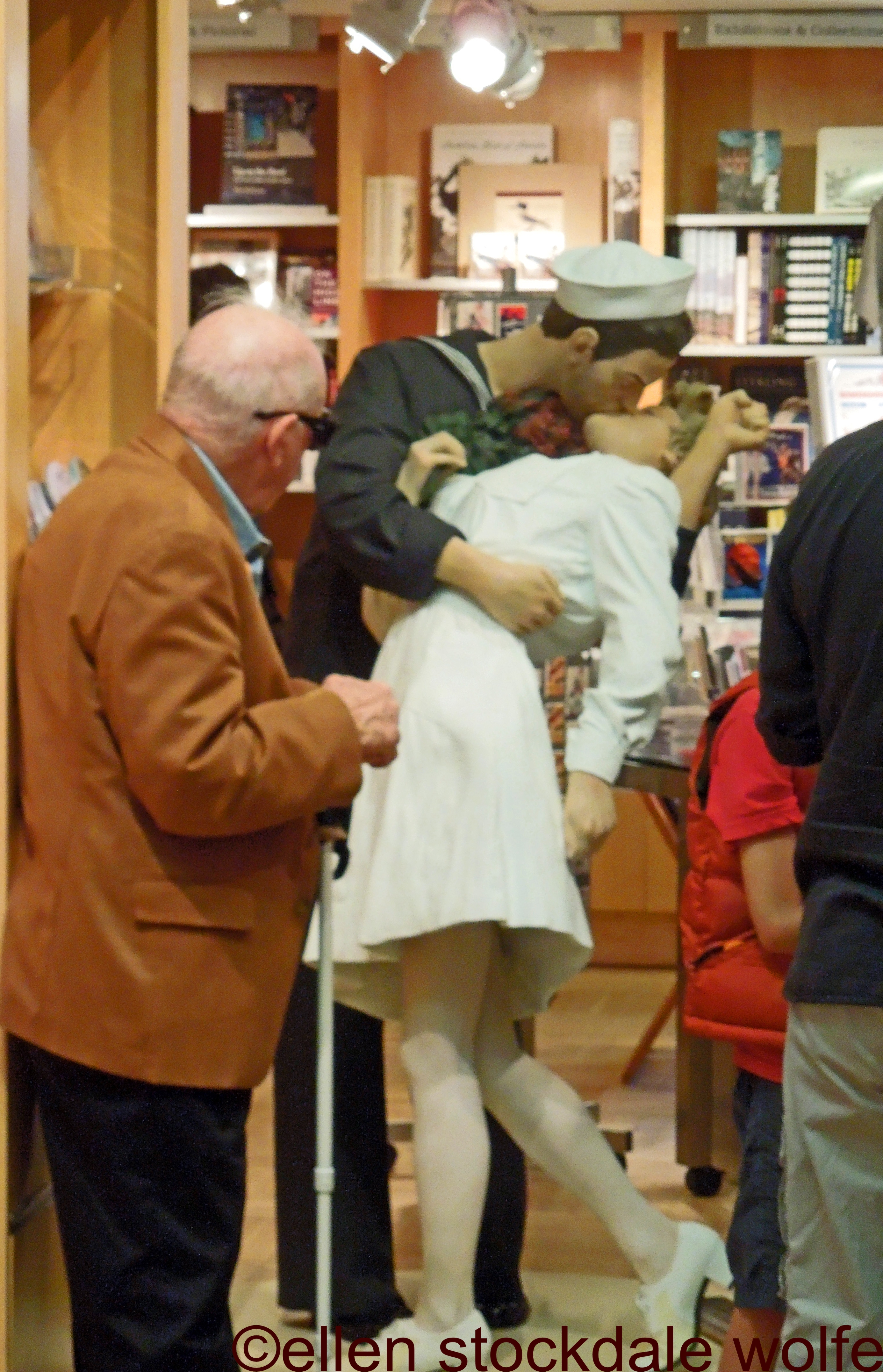
Sometimes
The blind can see
and the seeing are blind.
Attraction goes beyond
Seeing
and becomes
Sensing.
Stars in the Eyes

When I was a little girl of seven, I swallowed the “Prince Charming” myth whole. I cried watching the movie Sleeping Beauty, because I wanted my own prince to come. Then adolescence happened and I found myself a wallflower– not only at socials but in everyday life as well. Few friends and no dates. I had one good friend who was best friends with someone else which somehow negated our relationship. I was painfully shy and full of anxieties. College was a little better. I had my first boyfriend, a run of relationships that mostly went nowhere fast and, again, few friends. High school peers were marrying off. My brief brush with marriage to a Sri Lankan ended when he went back home, promising to return. He never did.
And then it happened, totally out of the blue and beyond my control, I fell in love with an older, West Indian woman at work. I became obsessed with a relationship that was never to be and nearly lost my job in the process. Unable to handle such feelings on so many levels, I went free fall into a downward spiral of depression and psychosis, commonly called a nervous breakdown. It lasted for years. But I still believed in love and Prince Charming (in this case, “Queen” Charming). For years I lived in the netherworld of mental illness, locked in isolation. I explored being gay but like my college relationships, all failed. I will never know the truth of all that happened between the West Indian woman and me. After testing many medications before arriving at the right cocktail, years of therapy taught me about my own fears of love and how to love. I was diagnosed Bipolar but treated as if I had Asperger’s as well, since I could not decipher what in hell’s name was going on in social relationships. I was not officially diagnosed with an Autism Spectrum Disorder until some 30 years later.
One day I grew strong enough to stand up to life. For the first time, I could think of what I wanted in a person and look for it. After all I had been through, I still believed in the “Prince Charming” myth. But he never found me. I found him. He didn’t sweep off my feet. I swept him into my arms. I understood him because he was Aspie like me. I knew if I did not make a move he never would. So, with heart-pounding fear, I asked him out and then he asked me out, and we bumbled along and married 4 years later, after I basically said “now or never.”
We remain happily married almost 24 years later. And so came “happily ever after.” But not exactly as I expected. For one thing there were fights which I hated. I had to learn that this was normal. Then, when my best friend died a few months after my father died, both of cancer, it hit me for the first time. There was no “happily ever after.” I realized that marriage either ended in divorce or death. Both dire. And that one of us was going to lose the other except in the unlikely event we both died together. How could I have been so stupid and not have seen this before??
Today my love for my husband runs deep and I realize I am closer to him than to any other human I have ever loved. I live in terror of something happening to him. As we both approach old age every good moment becomes a treasure I try to engrave on my memory. My husband has blossomed into an empathic, caring clinical social worker. He now expresses his deep affection towards me. Even I, who had a hard time recognizing love, can see this. He still teases me relentlessly. This is his way of showing love. I understand that because my father was the same way. But my husband delights in getting away with teasing me. “What joy!” he said one morning, as he played some mischief on me. “I love this “love thing’!” he said. I never thought he would say that or turn out to be so affectionate and loving. Just as I never thought I would find love. And when I looked at him with love in my heart that morning after the teasing stopped, he said, “What?” We still have trouble interpreting expressions and are still shy of eye contact even with each other. I said what I had read long ago that a child had written. When two people in love look at each other, stars come out of their eyes. A wonderful image that comes as close to “happily ever after” as one can get.
Aspie Empathy
There is a saying in Tibetan, ‘Tragedy should be utilized as a source of strength.’
No matter what sort of difficulties, how painful experience is, if we lose our hope, that’s our real disaster.
By Dalai Lama XIV
Pema Chodron says Pain has its virtues.
Asperger’s Syndrome (AS), an Autistic Spectrum Disorder on the mild end of the spectrum, is often characterized by a supposed lack of empathy. What it really means, and many professionals still do not know this, is that there is a different kind of empathy. An empathy in which we, Aspies, are so overrun with feelings that our system crashes– to use a computer analogy.
For example, my aunt is on death’s door and my cousin calls to give me the news. Suddenly she starts crying hysterically and shouting that her mother can’t die and leave her, that she needs her mother, and conveying a powerful sadness. I start crying, too, and try to say some words of comfort or of wisdom acquired from losing my own parents. All pales and I am reduced to stuttering. Why does this happen? I am overcome with her feelings and feel them myself. And the computer freezes up. System crash– whereas, a Neurotypical (NT) would know what to say and be sympathetic and empathetic and help my cousin. I make vague attempts that wind up as feeble words. Does that mean I am an unfeeling person? No. Ineffectual, yes. And maybe seen as heartless despite my attempt to convey love and sympathy for what my cousin is going through.
Another example shows me as a monstrous teen. I am 15 and my mother gets a phone call and starts crying hysterically. I immediately know it means that Grandpa is dead. I adored my grandfather and had a very special relationship with him. In some ways which I will not go into here, too special in a not-good way, especially for so young a child. I know there is no room for my grief. It is only my mother’s that counts. There is no one to go to with the devastation I feel inside. So how do I express it? Do I cry? No. I say to my father, “I guess we won’t be having hamburgers for dinner.” A totally callous remark. And my father chastises me for being “unfeeling”—for my lack of empathy, when all the time I am in great pain inside. This on the surface is what Asperger’s lack of empathy looks and sounds like. Underneath the surface there is a chaos of feelings rampaging within. Now an NT might actually feel less deeply, but would act and say something appropriate and certainly wouldn’t make a remark like the hamburger one. It is not that I wanted hamburgers– I hated them. To this day, I don’t know why that remark slipped out.
Things like that still happen. I did not get officially diagnosed with AS until age 61, though I knew I was autistic decades before, having worked with autistic children on the serious end of the spectrum. Aspies feel emotion and shut down, just like an overloaded computer. It does not mean that they have no feelings nor empathy. It is a different kind of feeling and empathy. And I have noticed a tremendous reservoir of feeling for animals that can be expressed more easily, for animals are so less threatening and more straightforward than human beings. If I were more intelligent, I would become a vet. Now, whenever I can the chance with an animal, I give Reiki, which many animals respond to quite naturally. It is definitely easier to give Reiki to an animal rather than to a human being. My husband is the one exception. He is a special case, lumped in with non-humans simply because I am so comfortable with him, a high-functioning Aspie himself.
I learned to try to pass for normal– in some ways, quite successfully. I became an expert observer of people though I could not, and still cannot, interpret what I observe. But I owe my success to my mother having a mood disorder which got passed down to me as Bipolar Disorder– and to my father being an alcoholic. Why? Because in order to survive, to minimize fear and pain, I had to become a keen observer of my mother’s moods before she lashed out at me. I would scour her face for every nuance of mood although I still seldom knew what was to come. This extreme vigilance served to protect myself. Similarly with my father. I would study him, scrutinize his behavior when he came in the door on the rare nights he came home when he said he would, and did not stay out drinking. Just because he came home early did not mean he was not drunk. A facial expression, a different gait wherein he tried to walk normally, the way he said hello, would give it away. I became expert at detecting drinking, often knowing long before my mother did that he was drunk and would tell her. She wouldn’t always believe me. I was terrified of my father when he was inebriated. Once, as a very little girl, I heard him sick in the middle of the night and my mother was with him in the bathroom, semi-hysterical, yelling at him for my father was obviously out of control. I felt sick myself, tried to drown out the sounds with a pillow, and was scared to death I would have to run to the bathroom and be ill also. This turned into a life-long phobia and obsession. I loved my father but when he was drunk I didn’t want him anywhere near me. And sometimes, especially when drinking gin, he could be mean. Were his true feelings coming out—“In Vino Veritas” or were they just drunken ramblings of a disturbed mind? For he did have a disturbed mind, an outcome of a tragic childhood and he used alcohol to self-medicate his demons. His father was an alcoholic, too.
Pain has its virtues. I learned to study people and became so astute that it hid my Asperger’s symptoms for years. Female Aspies seem to be better at hiding their disability than males. I learned to study people but I still cannot decipher what expressions mean. I can see something happening on the face but am often still not be able to tell what it means. This just increases what is already acute social anxiety and is hard to translate into socially appropriate responses.
“Tragedy should be utilized as a source of strength.” Certainly my childhood was not a tragedy by any means. But parts of it were tough and those parts made me strong.
Next time you see an Aspie act without empathy, especially a child, you might check in with them to see just what they are feeling. I would wager that they are feeling a great deal and simply cannot process or express their feelings.
Asperger’s Romance, a Feature News Item– Inspiring for all Aspies and Auties
(Click http://www.independentauthornetwork.com/ellen-stockdale-wolfe.html for information on, and to purchase my Bipolar/Asperger’s memoir.)
Traits of Females with Asperger’s by Samantha Craft
(Click http://www.independentauthornetwork.com/ellen-stockdale-wolfe.html for information on, and to purchase my Bipolar/Asperger’s memoir.)
Asperger’s and the lack of empathy myth
www.springerlink.com/content/j2k1732t42110565/
(Click http://www.independentauthornetwork.com/ellen-stockdale-wolfe.html for information on, and to purchase my Bipolar/Asperger’s memoir.)
WELCOME!!
Welcome to samples of my writing showcasing “Eye-locks and Other Fearsome Things.” “Eye-locks” is a Bipolar/Asperger’s memoir in narrative form that describes the triumph of love over mental illness. While not a lesson plan it documents my therapeutic journey to finding love against all odds. Useful for therapists, and for patients with Bipolar Disorder and/or Asperger’s Syndrome. A scholarly, autobiographical case history of my story was the showcase article in vol. 13 no. 1 of Psychoanalytic Inquiry in 1993.
For the full length narrative non-fictional account click http://www.independentauthornetwork.com/ellen-stockdale-wolfe.html for a short bio, a full description, and to purchase my book.

About MOONSIDE…
Learning to love is an ongoing process and I am writing posts on new lessons learned.
All the original abstract painting is posted to advocate for Bipolar Disorder and Asperger’s Syndrome– for it is those very handicaps that feed my art. The more realistic nature art is dedicated to raising consciousness for animals and the environment. All other art work is purely for your enjoyment.
Finally I have also posted selections from my nature writing and poetry. My nature essays were published in a small paper in upstate New York for a year and a half. The poems have appeared throughout my life, coming and going as they please.
This is an award free blog.
All work on this blog is under copyright and may not be used by anyone, for any purpose, without permission.










 MOONSIDE
You must be logged in to post a comment.